

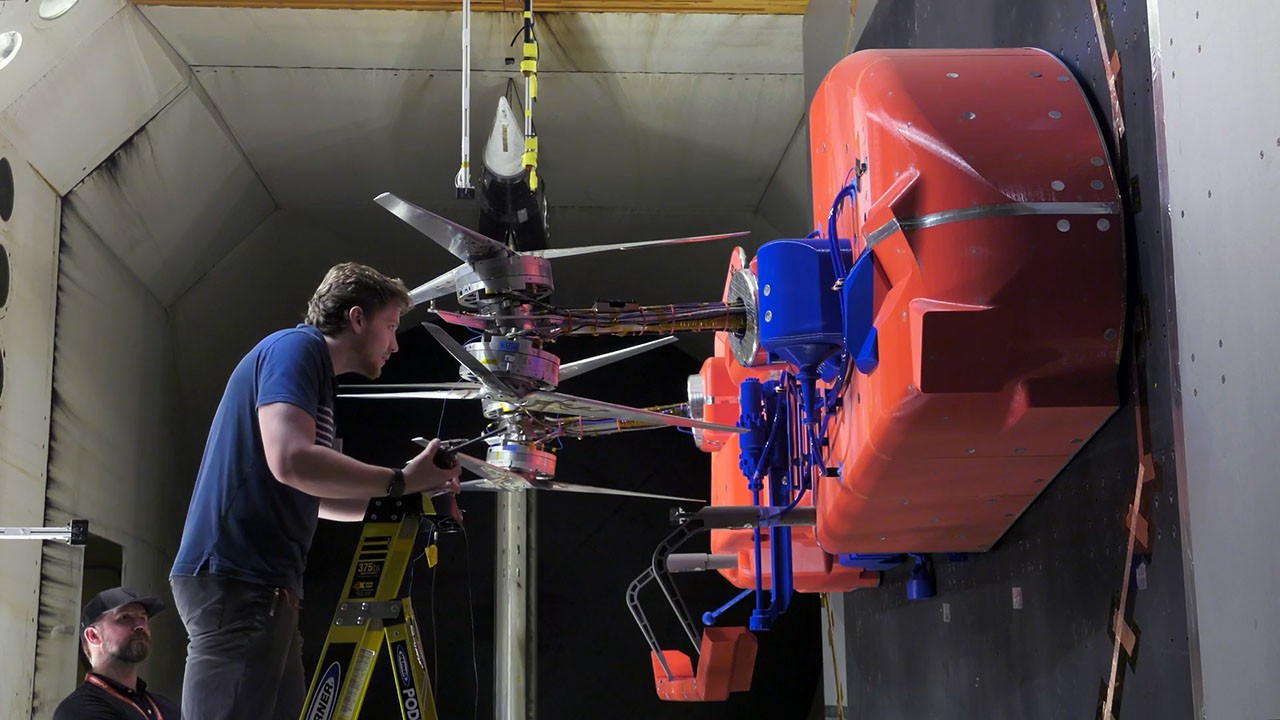
NASA’s Dragonfly mission has advanced through a series of critical development and test milestones, keeping the rotorcraft lander on track for a July 2028 launch on a Falcon Heavy from Kennedy Space Center. The car-sized, nuclear-powered vehicle, designed and built for NASA at the Johns Hopkins Applied Physics Laboratory (APL), will embark on a six-year cruise to Titan and conduct more than three years of flights to multiple sites to investigate prebiotic chemistry and habitability.
According to a NASA program update, hardware fabrication, software development, verification testing, and analysis are progressing toward the mission’s integration and test phase beginning in January 2026. The latest details are available in NASA’s official post: NASA Dragonfly development update.
Key milestones completed
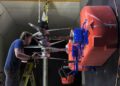
- Rotor system aeromechanics tested in Titan-like conditions at NASA Langley’s Transonic Dynamics Tunnel.
- Ion Trap Mass Spectrometer for the Dragonfly Mass Spectrometer (DraMS) passed acceptance and readied for environmental testing and integration.
- Structural and thermal validation of Solimide-based foam insulation for Titan’s extreme cold.
- Flight radios (APL’s Frontier software-defined radios) built, delivered, and tested for deep-space communications.
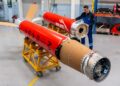
- Aeroshell heatshield and backshell structures fabricated, cured, and thermal-cycle tested at Lockheed Martin; static tests and thermal protection installation are next.
Rotor performance in Titan-like conditions
APL and NASA engineers concluded a monthlong campaign at the Langley Research Center’s Transonic Dynamics Tunnel, using a heavy gas flow to emulate Titan’s dense atmosphere. The test series measured aeromechanical behavior across the rotor system and lander body, including loads and vibration effects, providing data to refine flight envelopes, controls, and navigation algorithms.
Science payload progress
At NASA’s Goddard Space Flight Center, the Ion Trap Mass Spectrometer—central to DraMS—cleared its acceptance review. The instrument is being prepared for space-environment testing ahead of integration, supporting Dragonfly’s plan to analyze Titan’s chemical inventory, including potentially biologically relevant compounds.
Thermal protection and insulation
Dragonfly’s lander body will be wrapped in approximately 3-inch-thick Solimide foam to mitigate Titan’s ambient temperatures near -300 F (about -185 C). Structural and thermal tests in APL’s Titan-environment chamber and NASA Langley’s wind tunnel verified dimensional stability and performance of the insulation under mission-representative conditions.
Communications and avionics
APL completed the Frontier software-defined flight radios that will support cruise and surface operations. The compact, lower-power radios can transmit and receive across a broad frequency range and draw on heritage from missions that span the inner and outer solar system, aligning with Dragonfly’s deep-space link and relay needs.
Aeroshell development
Lockheed Martin finalized fabrication, cure, and thermal-cycle testing of the aeroshell’s heatshield and backshell, advancing the system that will protect the rotorcraft during ballistic entry into Titan’s atmosphere. Upcoming work includes static load testing and installation of the thermal protection system to validate structural margins and heating resilience.
Schedule and launch vehicle
Dragonfly enters integration and test in January 2026, targeting a launch window in July 2028 on SpaceX’s Falcon Heavy. Following arrival at Saturn’s largest moon, the rotorcraft will perform repeated takeoffs and landings to survey varied terrains, collect measurements with a comprehensive science suite, and build a multi-site dataset to assess Titan’s chemistry and geologic history.
For further technical context and program updates, see NASA’s official briefing: NASA Dragonfly development update.












Reading this evokes the sensation of turning over a smooth stone, revealing small but meaningful textures beneath the surface, each detail quietly significant.