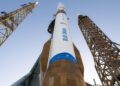
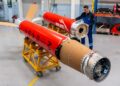
Northrop Grumman’s Commercial Resupply Services mission CRS-23 is set to deliver more than 11,000 pounds of science, maintenance equipment, and station upgrades to the International Space Station, marking the first flight of the larger, more capable Cygnus XL cargo spacecraft. The mission will launch on a SpaceX Falcon 9 from Space Launch Complex 40 at Cape Canaveral Space Force Station. Following arrival, the station crew will use the Canadarm2 robotic arm to capture Cygnus XL and berth it to the Unity module’s Earth-facing port for unloading. Full mission details are provided by NASA in this official overview.
Mission overview
The debut of Cygnus XL increases cargo capacity while continuing a long-running resupply cadence that sustains station operations and research. The spacecraft for CRS-23 is named in honor of astronaut William “Willie” McCool, pilot of STS-107. During approach, NASA astronauts Jonny Kim and Zena Cardman will support the rendezvous, with Kim at the Canadarm2 controls and Cardman monitoring vehicle systems.
What’s on board
- IDA Planar Reflector: Laser target used by visiting vehicles for relative navigation during docking; launched to replace a degraded unit on a future spacewalk.
- Urine Processing Assembly (UPA) Distillation Assembly: Spare unit for water recovery.
- Reactor Health Sensor: Spare sensors for the Water Processing Assembly to monitor reactor performance.
- Pressure Management Device: Intravehicular system for pressurizing/depressurizing station vestibules while conserving air.
- Air Selector Valves (x2): Spares for the Carbon Dioxide Removal Assembly airflow routing.
- Major Constituent Analyzer (MCA) Mass Spectrometer Assembly: Contingency spare for atmospheric composition monitoring.
- MCA Mass Sample/Series Pump Assembly: Contingency spare to route and pump sample gas.
- MCA Sample Distribution Assembly: Contingency spare that isolates and distributes gas samples to the analyzer.
- Charcoal Bed: Spare for the Trace Contaminant Control System to remove high-molecular-weight contaminants.
- Common Cabin Air Assembly Heat Exchanger: Spare to regulate cabin temperature, humidity, and airflow.
- Sequential Shunt Unit: Spare that regulates solar array voltage under high sunlight conditions.
- Solid State Lighting Assemblies: One to replace a failed unit; additional units as spares.
- Remote Power Control Module Type V: Spare power distribution and protection module for 120V DC loads.
- Treadmill Isolator Assemblies (Upper, X, Y, Z): Spares to reduce vibration transfer from crew exercise.
- Pump Fan Motor Controller: Electronic controller for motor windings used in station systems.
- Quick Don Mask Assembly: Replacement crew mask for emergency use with the Pre-Breathe Assembly.
- Anomaly Gas Analyzers (x2): Upgraded units to sense oxygen, carbon dioxide, carbon monoxide, ammonia, and other gases, plus pressure, water vapor, and temperature.
- Nitrogen and Oxygen Resupply Maintenance Kit: One nitrogen tank and one oxygen tank to maintain gas reserves.
- Crew and Equipment Translation Aid Luminaire: Lighting unit to illuminate equipment carts and work areas during spacewalks.
Rendezvous and berthing
After launch and orbital phasing, Cygnus XL will approach the station for a capture by Canadarm2. Ground teams and the onboard crew will then install the spacecraft on the Unity nadir port for cargo transfer. The sequence preserves proximity operations safety while enabling timely deployment of critical spares and life-support hardware.
Why it matters
- Docking reliability: The IDA Planar Reflector replacement sustains precision laser-based navigation for visiting vehicles.
- Life support resilience: Water recovery, air revitalization, and contaminant control spares bolster redundancy and uptime.
- Power and thermal stability: New shunt, heat exchanger, and power modules help maintain energy balance and cabin conditions.
- Crew health and safety: Emergency breathing equipment, upgraded gas analyzers, and exercise isolation hardware support safe, routine operations.
- Gas reserves: Fresh nitrogen and oxygen tanks help maintain atmospheric margins aboard the orbiting laboratory.
Key facts
- Vehicle: Cygnus XL on SpaceX Falcon 9.
- Launch site: Space Launch Complex 40, Cape Canaveral Space Force Station, Florida.
- Destination: Unity module Earth-facing port via Canadarm2 capture and berthing.
- Total cargo: More than 11,000 pounds of supplies, spares, and hardware.
- Namesake: Spacecraft named for astronaut William “Willie” McCool.
CRS-23 continues commercial resupply support for the ISS, pairing an expanded-capacity Cygnus with a proven launch vehicle to sustain research and station systems through a broad manifest of critical hardware.