The International Space Station is preparing for a midweek arrival and capture of Northrop Grumman’s Cygnus XL cargo spacecraft, marking the second resupply in less than a week as the Expedition 73 crew continues high-priority biotechnology investigations and unpacks newly delivered supplies.
Second resupply in a week
Roscosmos’ Progress 93 docked to the Zvezda service module’s rear port at 1:23 p.m. EDT on Saturday, Sept. 13, delivering more than 2.8 tons of food, fuel, and equipment. It launched from the Baikonur Cosmodrome on Thursday, Sept. 11. The crew opened hatches Sunday and began configuring the vehicle and moving cargo into station storage.
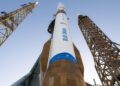
Northrop Grumman’s Cygnus XL lifted off at 6:11 p.m. EDT on Sunday, Sept. 14, from Cape Canaveral Space Force Station carrying over 11,000 pounds of science experiments and station hardware. The freighter is scheduled to rendezvous with the ISS on Wednesday, when NASA astronauts Jonny Kim and Zena Cardman will oversee the approach. Kim will operate the Canadarm2 from the Cupola to capture the spacecraft around 6:35 a.m. EDT as it holds about 10 meters from the station. Ground controllers will then berth Cygnus to the Unity module Earth-facing port for a planned stay of about six months.
Approach and berthing timeline
- Automated rendezvous and hold points on Wednesday.
- Robotic capture by Canadarm2 at approximately 6:35 a.m. EDT.
- Ground-controlled installation to Unity’s nadir port.
Biotechnology and human research highlights
Monday’s work package emphasized biotechnology research to understand microgravity’s effects on human health and enable long-duration missions:
- Human physiology: Crew members collected blood pressure readings and ultrasound artery scans, with cardiac activity monitoring supporting the CIPHER study on heart, brain, and eye function in space.
- Bioprinted tissues: Jonny Kim and JAXA astronaut Kimiya Yui processed liver tissues bioprinted on Earth inside a portable glovebag in the Destiny lab, then placed the samples on an artificial-gravity research platform to assess microgravity responses relevant to vascularized tissue manufacturing.
- Bone health: Zena Cardman treated bone stem cell samples in Kibo’s Life Science Glovebox for preservation and later analysis to inform countermeasures for skeletal integrity.
- On-demand nutrition: Mike Fincke advanced BioNutrients-3 in the Harmony module by preparing yeast, yogurt, and fermented milk samples for incubation to evaluate in situ production of vitamins and nutrients for deep-space missions.
- Earth observation and plasma physics: Oleg Platonov photographed South American landmarks for Earth science and serviced complex plasma hardware that can inform spacecraft design and industrial processes.
Progress 93 post-docking operations
Roscosmos crew members continued outfitting Progress 93 for docked operations, verified Zvezda’s aft docking system, transferred water, and staged additional cargo for station use as unpacking proceeds.
Why it matters
Back-to-back cargo flights sustain Expedition 73 while enabling research aimed at crew health, regenerative medicine, and autonomous biomanufacturing—capabilities crucial for longer missions beyond low Earth orbit with potential benefits for healthcare and industry on Earth.
Source: NASA ISS blog