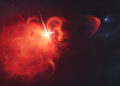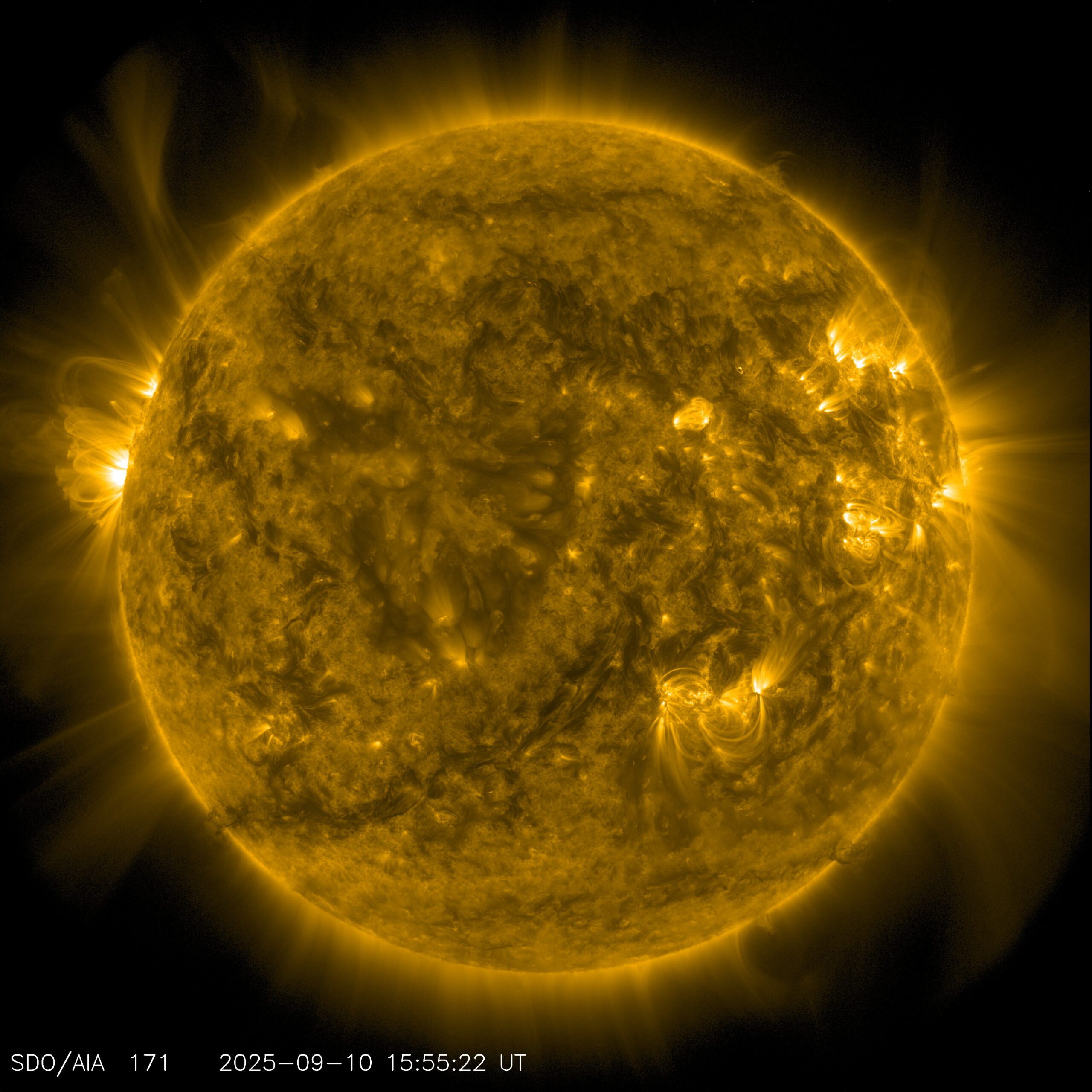
NASA has identified a post-2008 rebound in the Sun’s activity that reverses decades of decline, signaling a period of heightened space weather risks for spacecraft, astronauts, and critical infrastructure. The analysis, published in The Astrophysical Journal Letters, tracks a steady increase in solar wind and magnetic field parameters since the deep solar minimum of 2008, after expectations that the Sun was headed for a historically quiet era. The findings are summarized by NASA here: NASA Analysis Shows Sun’s Activity Ramping Up.
What the data show
Solar activity typically follows an ~11-year cycle, but multi-decade trends can amplify or mute those peaks and troughs. From the 1980s through 2008, sunspot counts and solar wind properties weakened, culminating in the lowest activity levels on record. NASA’s new study indicates that trend ended after 2008, with solar wind plasma and interplanetary magnetic field strength increasing through the 2010s into the mid-2020s, consistent with a broader ramp-up in heliospheric conditions.
The team synthesized heliospheric observations curated in NASA’s OMNI dataset—drawing heavily on long-running assets such as ACE (Advanced Composition Explorer) and Wind—to track changes in plasma density, speed, temperature, and magnetic field strength over multiple solar cycles.
Why it matters for space operations
As activity increases, the likelihood and severity of solar flares and coronal mass ejections (CMEs) rise, with operational implications across government and commercial space sectors:
- Spacecraft reliability: Elevated radiation and charged-particle environments increase single-event upsets, surface charging, and component degradation.
- Launch and mission planning: Higher background radiation and geomagnetic conditions influence trajectory design, safe-mode thresholds, and anomaly response.
- Human spaceflight: Astronaut radiation exposure management becomes more complex for low Earth orbit and deep space missions.
- Communications and navigation: HF/VHF links, GNSS accuracy, and ionospheric conditions become more variable during geomagnetic storms.
- Terrestrial infrastructure: Strong storms can induce geomagnetically induced currents affecting power grids and pipelines.
Monitoring and upcoming assets
NASA and partner missions form a layered monitoring architecture to characterize and forecast the Sun–Earth system. Key contributors include:
- ACE and Wind: Continuous upstream solar wind and energetic particle measurements since the late 1990s.
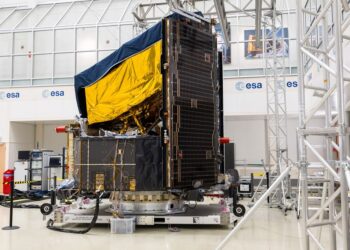
- IMAP (Interstellar Mapping and Acceleration Probe): Targeted to launch no earlier than Sept. 23, it will sample particles and fields to refine models of particle acceleration and the heliosphere’s boundary conditions.
- Carruthers Geocorona Observatory: Focused on geocoronal emissions to improve understanding of near-Earth space.
- NOAA’s SWFO-L1: Dedicated operational space weather monitoring from L1 to support global forecasting.
These data streams feed forecasting and hazard assessment essential for programs such as NASA’s Artemis campaign, commercial crew and cargo operations, and satellite constellation management.
Historical context and predictability
The modern rebound follows extended quiet periods in the historical record, including the Maunder Minimum (1645–1715) and the Dalton Minimum (1790–1830). Unlike the well-characterized 11-year cycle, longer-term modulations remain less predictable. The new analysis indicates that expectations for a prolonged low-activity phase after 2008 have not materialized, underscoring the need for continuous observation and adaptable risk models.
What industry should watch next
With Solar Cycle activity intensifying, operators should reassess environmental design margins and storm response procedures. Priorities include:
- Updating radiation environment assumptions for components and materials selection.
- Revalidating ground and on-orbit anomaly playbooks for elevated geomagnetic conditions.
- Coordinating launch windows and contingency plans with real-time space weather forecasts.
- Integrating upstream solar wind and CME alerts into fleet operations dashboards.
As new missions come online, higher-fidelity measurements and models should improve warning times and event characterization. Until then, conservative planning and proactive forecasting remain the most effective mitigations against a more active Sun.