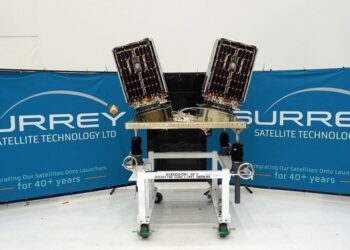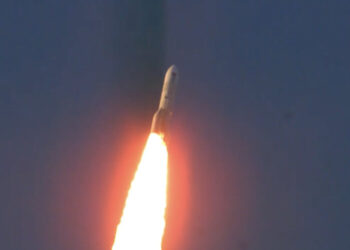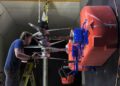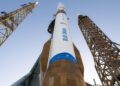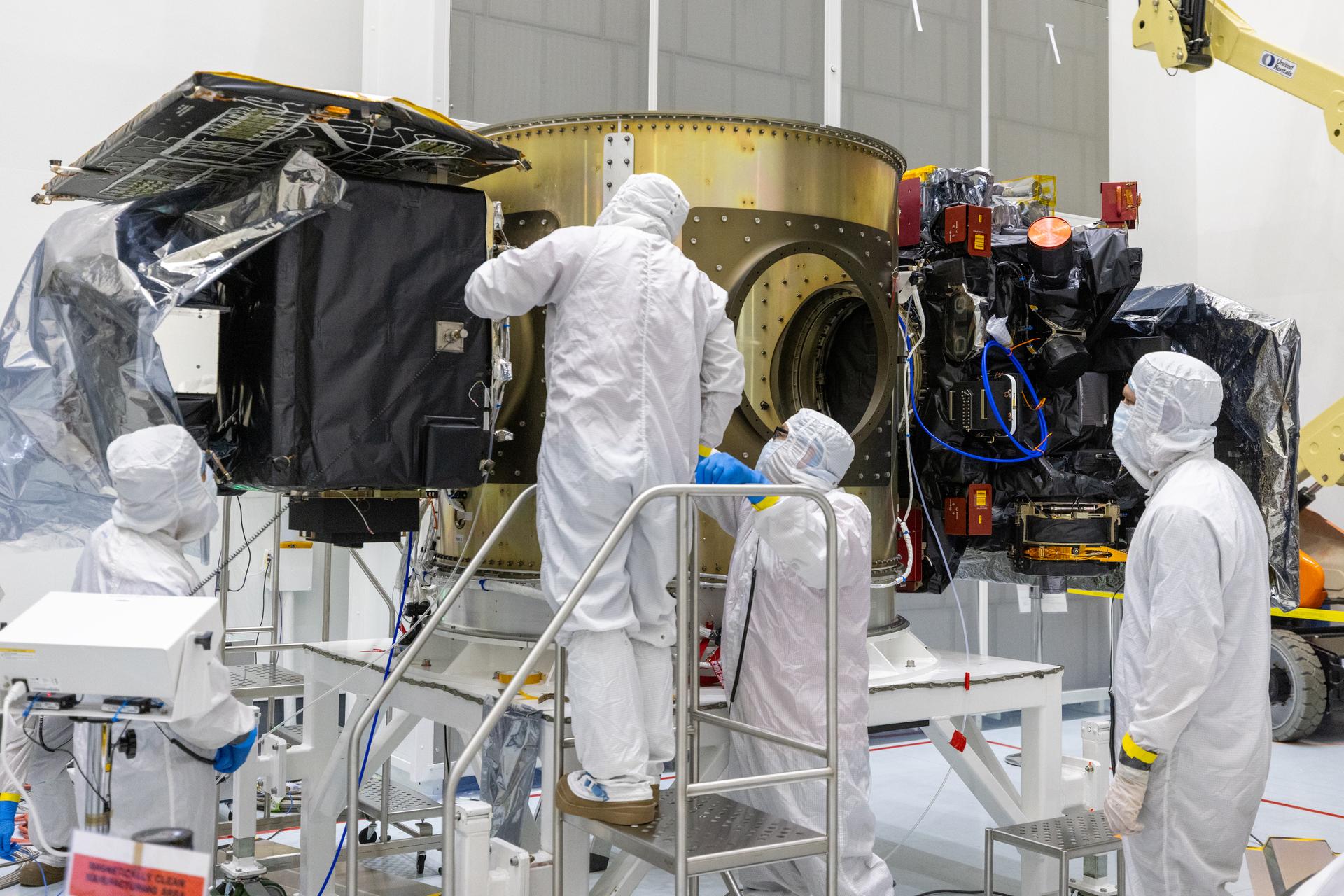
NASA and NOAA have completed a key rideshare integration for the upcoming SpaceX Falcon 9 mission carrying IMAP, SWFO-L1, and the Carruthers Geocorona Observatory. On Sept. 4, technicians mated Carruthers and NOAA’s SWFO-L1 to an Evolved Expendable Launch Vehicle Secondary Payload Adapter (ESPA) ring at the Astrotech Space Operations Facility near NASA’s Kennedy Space Center in Florida. The mission is targeted to launch no earlier than 7:32 a.m. EDT on Tuesday, Sept. 23 from Launch Complex 39A.
Integration milestone
The ESPA ring enables multiple spacecraft to share a single rocket, conserving mass and volume while streamlining access to space. With the two rideshares now secured to the ring, the next major step is attaching NASA’s IMAP observatory to a payload adapter that connects to the same structure, completing the multi-satellite stack ahead of fairing encapsulation.
What each spacecraft will do
- IMAP (Interstellar Mapping and Acceleration Probe): NASA’s heliophysics mission to study how the solar wind interacts with the interstellar medium and to map the boundaries of the heliosphere. IMAP is planned to operate from the Sun–Earth L1 region.
- SWFO-L1: NOAA’s Space Weather Follow-On satellite is designed for continuous monitoring of the Sun and near-Earth space from the L1 point, providing early warnings of solar storms that can disrupt power grids, satellites, communications, and navigation services.
- Carruthers Geocorona Observatory: A NASA observatory focused on ultraviolet emissions from Earth’s geocorona — the outermost reaches of the atmosphere. Its data will inform studies of space weather interactions, planetary atmospheric evolution, and the long-term history of water on Earth.
Launch details and next steps
The three spacecraft will launch together atop a SpaceX Falcon 9 from LC-39A at Kennedy. Following integration of IMAP to the adapter and ring, the payloads will undergo final checkouts and encapsulation before rollout and launch operations. After separation in space, each spacecraft will proceed to its operational trajectory, with IMAP and SWFO-L1 headed to the Sun–Earth L1 environment.
Why it matters
Combining three missions on one launch expands U.S. heliophysics and space weather capabilities efficiently. IMAP’s measurements will refine models of particle acceleration and heliospheric boundaries, SWFO-L1 will strengthen national resilience to solar storms through continuous monitoring, and Carruthers will enhance understanding of Earth’s atmospheric fringes and their response to the space environment.
Schedule details remain subject to change based on vehicle readiness, range availability, and mission processing. For more information, see NASA’s update: NASA rideshares integrated ahead of launch.