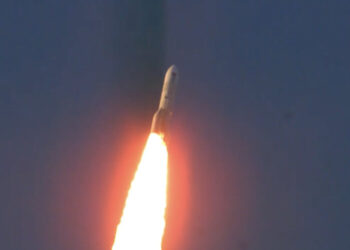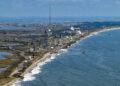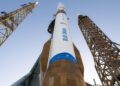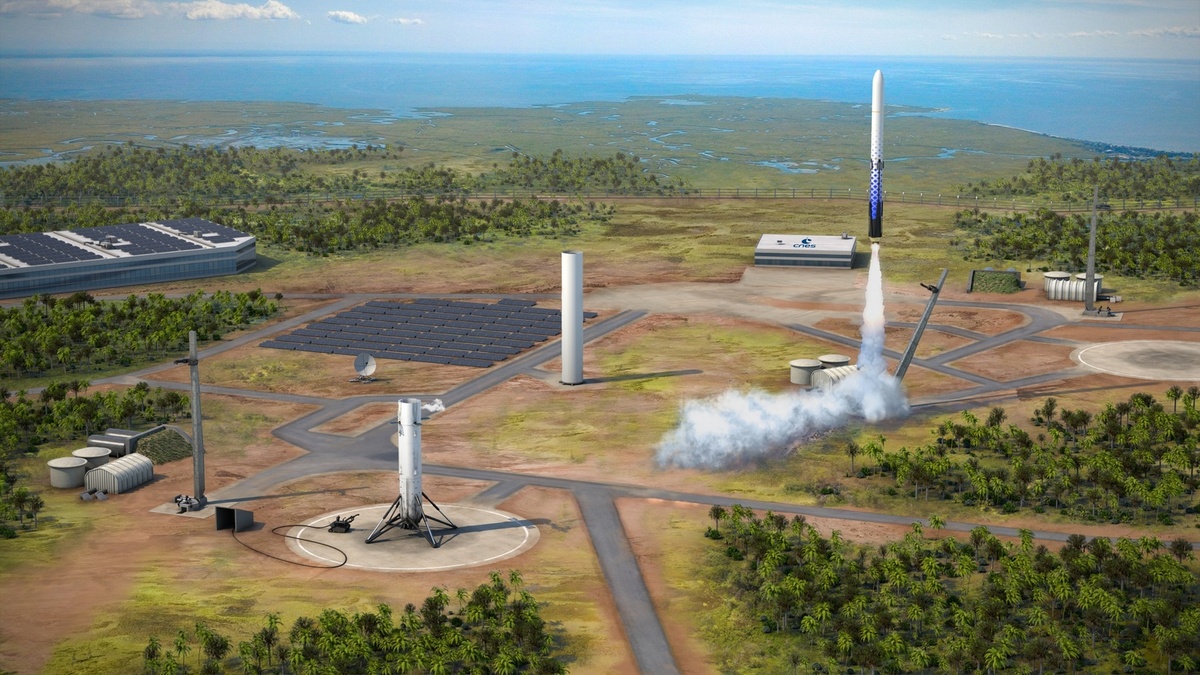
France has revived the historic Diamant launch site at the Guiana Space Centre (CSG) in Kourou as the ELM‑Diamant multi‑launcher complex, opening Europe’s spaceport to a new generation of privately developed micro- and mini‑launchers. Beginning in 2026, these small launchers are slated to operate alongside Ariane 6 and Vega‑C, marking a structural shift in Europe’s access-to-space ecosystem focused on the fast‑growing small satellite market in low Earth orbit (LEO).
Multi‑launcher hub on historic ground
Owned and operated by CNES, the ELM‑Diamant project repurposes the original Diamant pad—where France became the world’s third space power in 1965—into a shared infrastructure tailored to small launchers. The approach leverages existing utilities to reduce refurbishment costs and environmental footprint, with shared facilities funded by CNES through the France 2030 plan for approximately €50 million. Access is limited to vehicles with lift capacity up to 1,500 kilograms to LEO, targeting a range of civil and commercial missions.
Why Kourou matters for small launchers
The CSG combines geographic advantages with decades of operational heritage. Its near‑equatorial latitude and extensive downrange corridor support a wide spectrum of orbital inclinations and launch azimuths, while the site’s low hurricane and seismic risk underpins schedule reliability. CNES coordinates launch operations and ensures safety for people, property and the environment.
- Near‑equatorial location enabling efficient LEO insertions
- 50‑kilometre seaboard supporting diverse azimuths
- Established range safety, logistics and integration services
- Lower weather and seismic exposure compared to many other ranges
Operators, capacity and vehicle profiles
ELM‑Diamant is designed to host up to five micro/mini‑launcher operators. Five firms have entered a feasibility phase via preliminary agreements, with development contracts to follow for site‑specific infrastructure built either by the companies or by CNES upon request. A first development contract has been signed with PLD Space to establish the launch complex for the MIURA 5 rocket, targeting first launch campaigns in 2026. The site will also support preparations and flights of the Callisto reusable first‑stage demonstrator. With its new Operations Centre, the CSG is planning for a combined cadence of roughly 30 to 40 launches per year across all systems.
- Typical vehicles: two- or three‑stage liquid‑propulsion rockets
- Mission set: Earth observation, telecommunications, navigation and technology demonstrations
- Payloads: single spacecraft or multi‑satellite clusters up to 1,500 kg to LEO
Market and policy context
The reconversion of the Diamant site aligns with a decade of sustained demand growth for LEO small satellites. By integrating private small-launch systems into Europe’s flagship spaceport, CNES aims to broaden service offerings, support European industrial competitiveness and enhance strategic resilience in access to space. The shared‑facilities model is intended to shorten timelines and lower barriers for emerging launch providers.
Key milestones
- 2020: Removal of the Diamant gantry and non‑retained facilities
- 2022: Initial earthworks at the site
- 2023–present: Detailed design and construction of shared infrastructure; operator‑specific designs advance in parallel
- 2025: On‑site construction ramp‑up
- 2026: First tests and preparations for initial micro/mini‑launcher flight campaigns
From Diamant to New Space
The Diamant programme—fielded in A, B and BP4 variants—orbited 12 satellites between 1965 and 1975, establishing Europe’s earliest launcher heritage. ELM‑Diamant extends that legacy by enabling New Space operators to fly from Kourou, positioning the CSG as a multi‑tier launch ecosystem serving heavy, medium and small payload classes.
Source: CNES: ELM‑Diamant launch complex