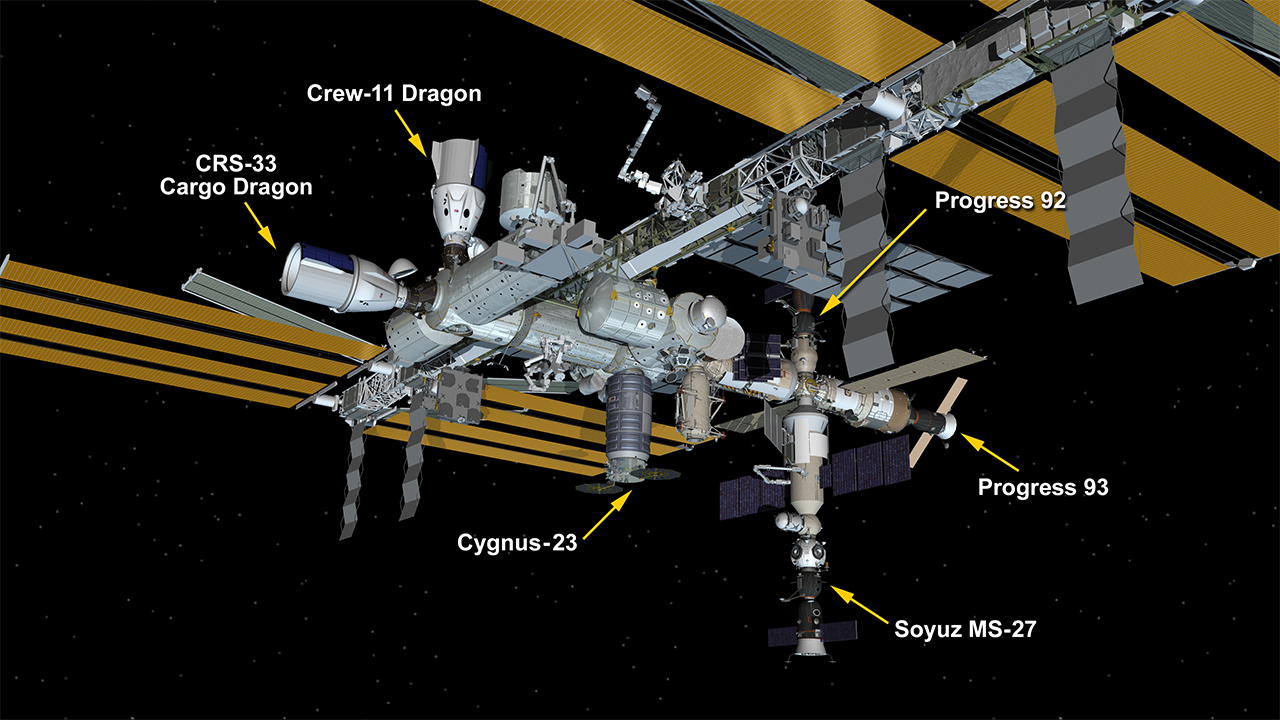
Northrop Grumman’s Cygnus XL cargo spacecraft has been installed on the International Space Station’s Unity module, kicking off NASA’s Commercial Resupply Services mission CRS-23. The larger, more cargo-capable variant arrived after launching on a SpaceX Falcon 9 from Cape Canaveral Space Force Station at 6:11 p.m. EDT on Sept. 14, 2025, carrying more than 11,000 pounds of research and supplies.
Mission at a glance
- Spacecraft: Northrop Grumman Cygnus XL (solar-powered cargo vehicle)
- Mission: NASA CRS-23 commercial resupply to the ISS
- Launch: Falcon 9, 6:11 p.m. EDT, Sept. 14, 2025, SLC-40, Cape Canaveral
- Installation: Unity module, Sept. 18, 2025
- Cargo: >11,000 lb of research investigations and station supplies
- Planned departure: Spring 2026; destructive reentry to dispose of station debris
Traffic on orbit
ISS operations continue amid a busy visiting vehicle schedule. Six spacecraft are currently at the orbital complex, including cargo and crew transports supporting Expedition 73 logistics and research cadence.
- SpaceX Dragon cargo craft
- SpaceX Crew-11 Dragon spacecraft
- Northrop Grumman Cygnus XL cargo craft
- Soyuz MS-27 crew ship
- Progress 92 resupply ship
- Progress 93 resupply ship
Why the XL variant matters
The debut of the XL configuration marks an incremental increase in unpressurized and pressurized logistics capacity for low Earth orbit. The added volume and mass capability are designed to sustain higher-throughput research, technology demonstrations, and consumables delivery while preserving margin for late-load cargo.
Next steps
Cygnus XL will remain berthed through the spring, supporting ongoing experiments and station maintenance. Before departure, the spacecraft will be packed with several thousand pounds of trash for safe disposal via a controlled reentry, where it will burn up in Earth’s atmosphere.
For NASA’s full update, see the agency’s post: Cygnus XL Cargo Craft Installed on Station’s Unity Module.