The Space Feed | Latest Space News
  • Home
  • News
    • Launches
    • Space Technology
    • Human Spaceflight
    • Space Exploration
    • Astronomy
  • Launch Schedule
    • Upcoming Launches
    • Completed Launches
  • Knowledge Base
    • All Missions
    • All Rockets
No Result
View All Result
  • Home
  • News
    • Launches
    • Space Technology
    • Human Spaceflight
    • Space Exploration
    • Astronomy
  • Launch Schedule
    • Upcoming Launches
    • Completed Launches
  • Knowledge Base
    • All Missions
    • All Rockets
No Result
View All Result
The Space Feed | Latest Space News

DSOC Completes Two-Year Demo, Sets Mars-Distance Laser Communications Records

September 19, 2025
in Space Technology

NASA’s Deep Space Optical Communications (DSOC) experiment has wrapped a two-year technology demonstration, setting multiple Mars-distance laser communications records and exceeding its technical goals. Flying aboard the Psyche spacecraft since 2023, the demo validated reliable high-rate laser links over interplanetary distances, laying groundwork for future human and robotic missions that will require far greater bandwidth than traditional radio systems can provide. Full program details are available on NASA’s project page.

Record-setting results

  • Completed its 65th and final optical pass with a closed two-way laser link at a distance of about 218 million miles (351 million kilometers).
  • Streamed an ultra-high-definition test video to Earth on Dec. 11, 2023, from over 19 million miles at up to 267 megabits per second.
  • Surpassed deep-space optical distance records by downlinking Psyche data on Dec. 3, 2024, from roughly 307 million miles away, farther than the average Earth–Mars distance.
  • Delivered a cumulative 13.6 terabits of engineering and test data to ground stations.
  • Demonstrated broadband-like data rates and robust link closure at Mars-class ranges.

How the optical link worked

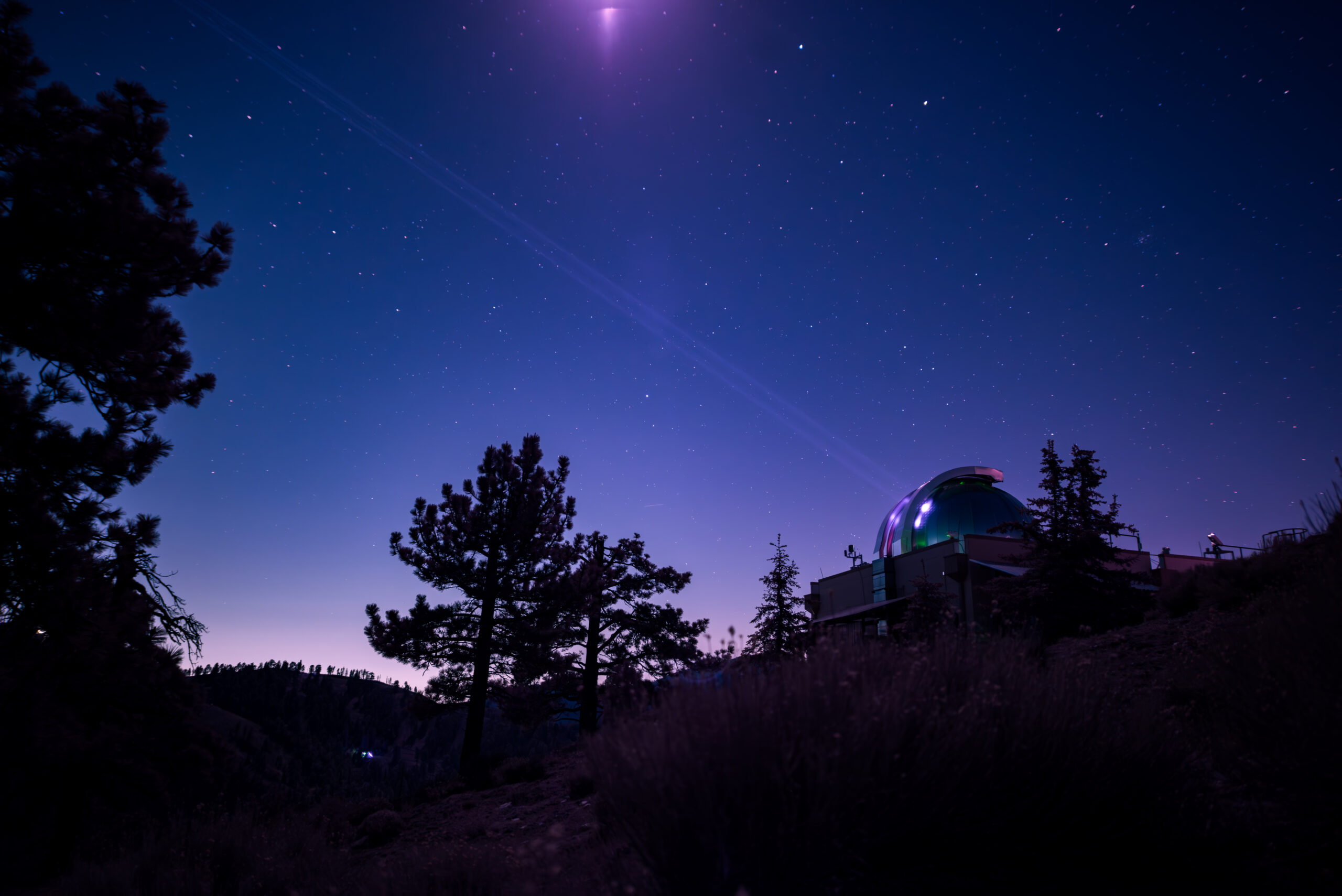
Managed by NASA’s Jet Propulsion Laboratory, DSOC paired a flight laser transceiver on Psyche with precision ground systems. A 3-kilowatt uplink laser from JPL’s Table Mountain Facility sent a beacon that enabled the spacecraft to point its downlink precisely back to Earth. With Earth and Psyche both in motion and one-way light times stretching to several minutes, maintaining alignment demanded exacting pointing and timing.

For downlink reception, the team used the 200-inch Hale Telescope at Caltech’s Palomar Observatory as the primary optical ground terminal. The telescope’s large aperture collected extremely faint, photon-starved signals, which were then processed by a high-efficiency detector array to decode the data. Operations continued through environmental challenges, including weather that periodically closed ground stations, while teams refined procedures and performance over weekly passes.

Hybrid and arrayed reception tests

DSOC also validated hybrid radio–optical reception at NASA’s Deep Space Network (DSN) Goldstone complex. An experimental antenna retrofitted with seven mirrors totaling about 3 feet in diameter received the optical downlink while simultaneously supporting radio-frequency signals. In parallel, the team practiced optical “arraying” by collecting the same signal with Palomar and a 1-meter telescope at Table Mountain, demonstrating techniques to strengthen weak links and add redundancy—methods long used in radio that are now migrating to optical communications.

Implications for Mars and beyond

Deep-space laser links promise major increases in data return—supporting real-time high-definition imagery, faster delivery of science measurements, and more flexible mission operations. As demand grows for bandwidth from the Moon to Mars, optical systems can augment the DSN’s radio infrastructure, easing bottlenecks and enabling richer communications for astronauts and science payloads.

DSOC was funded by NASA’s Space Technology Mission Directorate through the Technology Demonstration Missions Program with support from the Space Communications and Navigation program. The successful conclusion of the demonstration establishes a technical foundation for operational optical terminals on future exploration missions.

Source: NASA
Previous Post

Chandra Spots Early-Universe Quasar Growing Above the Eddington Limit

Next Post

SLS Artemis II to Fly with Strakes After CFD and Wind-Tunnel Validation

Related Posts

Space Technology

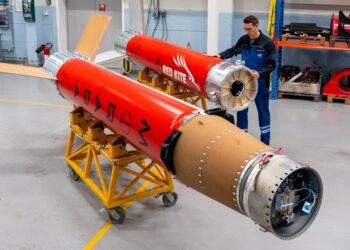
DLR’s MAPHEUS-16 Sets Microgravity Payload Record with Twin Red Kite Motors

November 12, 2025
Space Technology

ESA flags X5.1 flare and fast CMEs driving severe G4 storm with satellite and GNSS risk

November 12, 2025
Space Technology

Sentinel-1D Lifts Off on Ariane 62; DLR to Calibrate SAR for Copernicus Continuity

November 5, 2025
Space Technology

ESA’s AI quake-mapping models move toward operational use under CNES-led Charter

October 29, 2025
Space Technology

ESA’s Henon CubeSat clears CDR to demo deep-space comms, ion propulsion, and solar-storm early warning

October 29, 2025
Space Technology

ISS study maps fin-film condensation to advance spacecraft cooling systems

October 23, 2025
Next Post

SLS Artemis II to Fly with Strakes After CFD and Wind-Tunnel Validation

Leave a Reply Cancel reply

Your email address will not be published. Required fields are marked *

  • Trending
  • Comments
  • Latest

NASA and SpaceX Conduct Crew-11 Dry Run Ahead of Launch

July 29, 2025

SpaceX Dragon Missions: Crew Prepares for Departure and Arrival at ISS

July 30, 2025

NASA Advances Supersonic Parachute Technology for Mars Missions

July 30, 2025

Upcoming Suborbital Rocket Launches from NASA Wallops: July 28-August 8, 2025

July 28, 2025

Dragonfly Mission Hits Major Test Milestones, Targets 2028 Falcon Heavy Launch

1

ESA Initiates Construction of LISA Mission to Detect Gravitational Waves

0

UK-France MicroCarb Satellite Launches to Enhance Global CO₂ Monitoring

0

NASA’s SpaceX Crew-11 Arrives at Kennedy Space Center for Upcoming Launch

0

ESCAPADE Reset to Nov. 13 After G4 Storm; Blue Origin VADR Launch Preserves Mars Trajectory

November 13, 2025

Brazil, INPE and ESA plan uptake of Biomass P-band radar data for Amazon carbon monitoring

November 13, 2025

LOFAR and XMM-Newton confirm coronal mass ejection from a red dwarf, threatening exoplanet atmospheres

November 12, 2025

DLR’s MAPHEUS-16 Sets Microgravity Payload Record with Twin Red Kite Motors

November 12, 2025

Popular Stories

  • NASA and SpaceX Conduct Crew-11 Dry Run Ahead of Launch

    0 shares
    Share 0 Tweet 0
  • SpaceX Dragon Missions: Crew Prepares for Departure and Arrival at ISS

    0 shares
    Share 0 Tweet 0
  • NASA Advances Supersonic Parachute Technology for Mars Missions

    0 shares
    Share 0 Tweet 0
  • Upcoming Suborbital Rocket Launches from NASA Wallops: July 28-August 8, 2025

    0 shares
    Share 0 Tweet 0
  • SpaceX Crew-11 Prepares for Launch: Final Steps Before Hatch Closure

    0 shares
    Share 0 Tweet 0
  • About
  • Advertise
  • Privacy & Policy
  • Contact
The Space Feed

© 2025 Stride Interactive Group

No Result
View All Result
  • Home
  • News
    • Launches
    • Space Technology
    • Human Spaceflight
    • Space Exploration
    • Astronomy
  • Launch Schedule
    • Upcoming Launches
    • Completed Launches

© 2025 Stride Interactive Group