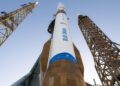
NASA has installed the Launch Abort System (LAS) tower on the Orion spacecraft for Artemis II, marking a major integration step before stacking inside the Vehicle Assembly Building (VAB) at Kennedy Space Center. The tower, approximately 44 feet tall, was mated to Orion inside the Launch Abort System Facility on Sept. 17 as teams prepare the spacecraft for final closeouts and movement to the VAB.
Installation and schedule
With LAS installation complete, technicians will conduct remaining closeout work and functional checks prior to transporting Orion to the VAB for stacking atop the Space Launch System (SLS) rocket. The integrated vehicle will undergo additional testing before rollout to the launch pad ahead of the program’s first crewed mission, currently targeted for 2026.
How the Launch Abort System works
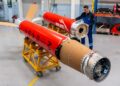
The LAS is designed to rapidly separate the crew module from the launch vehicle in the unlikely event of an emergency during ascent. It integrates three solid rocket motors that operate in a defined sequence:
- Abort motor: Provides the initial high-thrust pull to separate Orion’s crew module from the rocket.
- Attitude control motor: Steers and orients the capsule to a controlled trajectory away from the vehicle.
- Jettison motor: Separates the LAS from the crew module before parachute deployment.
During a nominal ascent, Orion discards the LAS after passing through the most dynamic portion of flight, reducing mass for the remainder of the translunar journey.
Why this milestone matters
- Completes a critical safety integration for crewed operations on Artemis II.
- Advances the VAB stacking flow and integrated test campaign for SLS/Orion.
- Supports certification objectives for human-rating the combined system ahead of a lunar flyby mission.
What’s next
- Finalize closeout activities and verify LAS and Orion interfaces.
- Transport Orion to the VAB for stacking on SLS.
- Conduct integrated testing prior to rollout to the launch pad at Kennedy Space Center.
Source: NASA image article.