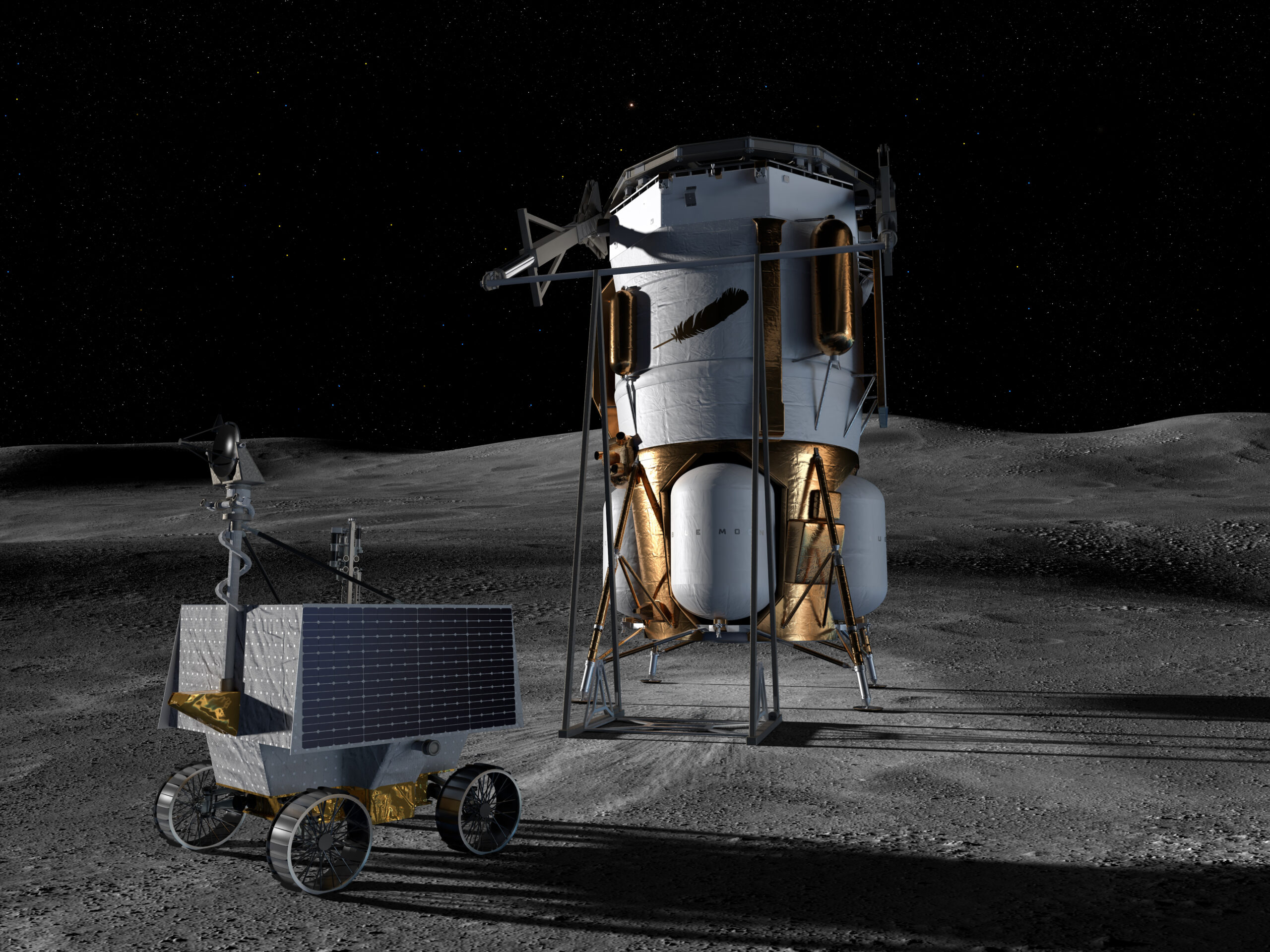
NASA has selected Blue Origin for a new Commercial Lunar Payload Services (CLPS) task order with an option to deliver the agency’s VIPER (Volatiles Investigating Polar Exploration Rover) to the Moon’s South Pole in late 2027. The award, with a total potential value of $190 million, advances Artemis objectives by targeting regions that may host water ice and other volatiles critical for future human exploration and in-situ resource utilization.
What NASA Awarded
The task order, designated CS-7, includes a base phase to design payload-specific accommodations and demonstrate off-loading of the rover from Blue Origin’s lander. An option to execute the actual lunar delivery and safe deployment will be considered after completion and review of the base work and of the first Blue Moon Mark 1 mission. This phased approach is intended to reduce cost and technical risk before committing to the surface delivery.
Timeline and Key Milestones
- Blue Origin’s first Blue Moon MK1 robotic lander is targeted to fly later this year to the lunar south polar region, carrying NASA’s Stereo Cameras for Lunar-Plume Surface Studies and Laser Retroreflective Array payloads.
- Pending successful reviews, a second MK1 lander would deliver VIPER in 2027 to meet the rover’s science window for a nominal 100-day mission.
Mission Objectives
VIPER is designed to traverse the Moon’s South Pole, including small, permanently shadowed regions, to identify and characterize volatile deposits such as water ice. Mapping these resources will inform future landing sites, surface operations planning, and technologies for resource extraction that could enable sustained human presence on the Moon and support Mars-forward exploration.
Roles and Responsibilities
- Blue Origin: Complete landing mission architecture; lander design, analysis, and testing; end-to-end payload integration; mission planning and support; post-landing rover deployment.
- NASA: Rover operations and science planning, with NASA Ames Research Center leading VIPER development and investigations, and Johnson Space Center providing engineering support.
Program Context
This is Blue Origin’s second CLPS lunar delivery award. The VIPER delivery option follows NASA’s prior cancellation of the rover project and subsequent evaluation of alternative approaches to achieve lunar resource mapping goals. The CLPS model continues to leverage U.S. commercial capabilities to accelerate robotic lunar access and build a sustainable lunar economy under Artemis.
Why It Matters
- Resource prospecting at the South Pole could identify accessible ice deposits for life support, propellant production, and thermal management.
- Operational experience in extreme cold and low-sunlight environments will inform Artemis surface strategies.
- The milestone-based contract structure is designed to manage risk while fostering commercial lunar lander maturity.
What Comes Next
Blue Origin will execute the CS-7 base tasks and complete its first MK1 lander mission for NASA review. If NASA exercises the option, the MK1 lander would deliver VIPER to the surface in 2027, enabling the rover’s 100-day science campaign during favorable lighting and thermal conditions at the lunar South Pole.
Source: NASA news release