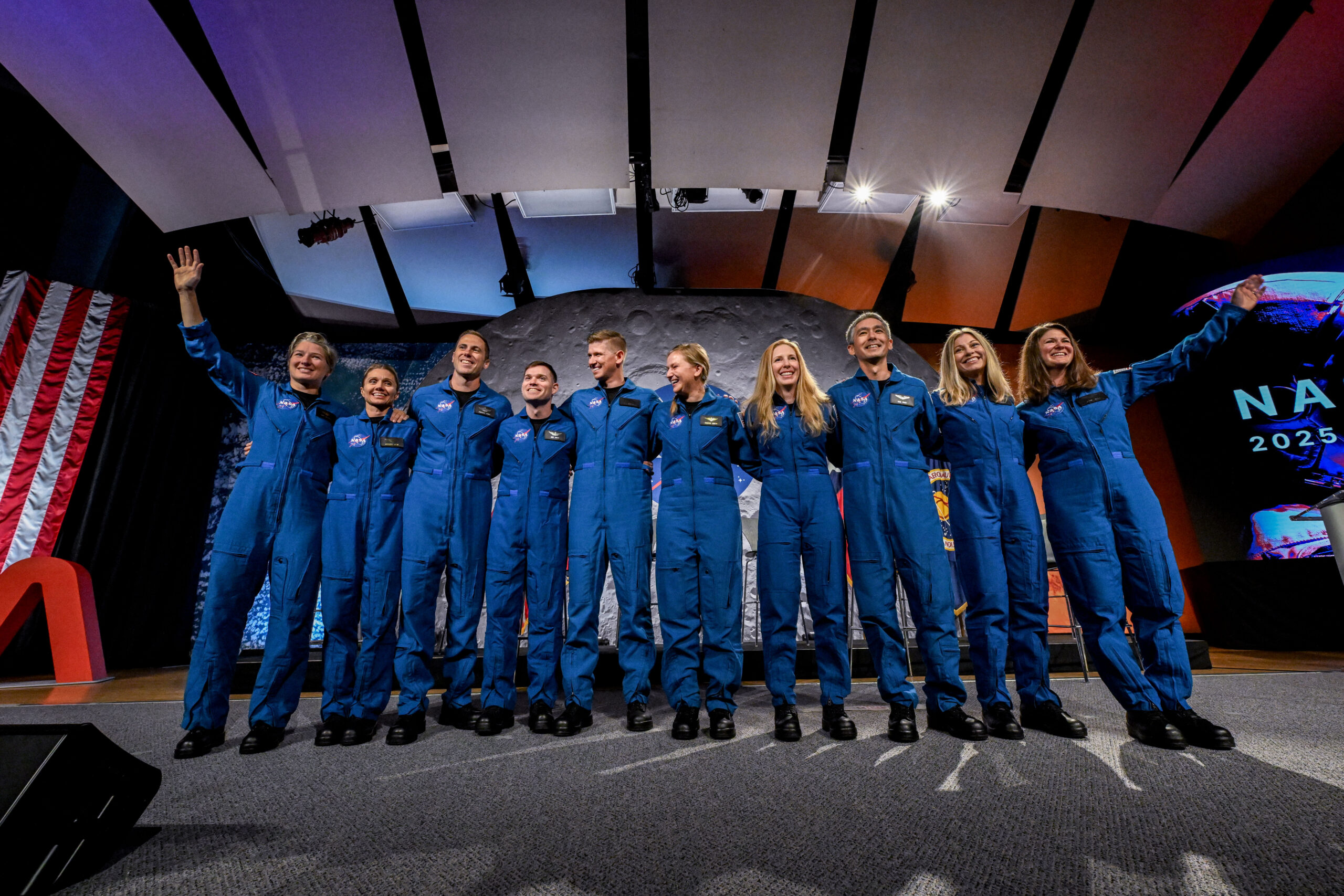
NASA has introduced its 2025 astronaut candidate class, advancing the agency’s long-term plan for sustained human operations in low Earth orbit and future missions to the Moon and Mars. Unveiled on Sept. 22, 2025, the group was selected from more than 8,000 applicants across the United States and will enter a nearly two-year training pipeline before becoming eligible for flight assignments.
Why it matters
The new class strengthens NASA’s astronaut corps at a pivotal moment for human spaceflight. Active astronauts continue science operations aboard the International Space Station while preparing for a transition to commercial space stations and deeper exploration under Artemis. The incoming candidates are expected to support both near-term LEO operations and the agency’s lunar and Mars objectives.
Key facts
- Selected from a competitive pool of 8,000+ applicants nationwide.
- Introduced on Sept. 22, 2025.
- Approximately two years of basic training before assignment eligibility.
- Post-graduation roles may span ISS follow-on missions, commercial LEO destinations, lunar surface and orbital missions, and Mars preparatory activities.
Training and roles
NASA’s candidate curriculum is designed to build operational readiness for a wide range of environments. Training typically includes spacecraft systems, spacewalking proficiency, robotics, expeditionary and survival skills, science operations, and mission planning. The goal is to prepare astronauts to conduct complex research and exploration tasks with increasing autonomy as missions extend in duration and distance from Earth.
Upon graduation, the class will join the active astronaut corps supporting a portfolio that includes ISS science, commercial LEO development, and the Artemis campaign’s stepwise approach to lunar surface operations. Their operational expertise and scientific and technical backgrounds are positioned to contribute to mission safety, crew performance, and sustained presence beyond LEO.
Strategic context
The selection aligns with NASA’s roadmap to transition from the ISS era to commercial LEO destinations while expanding human activity to cislunar space. As lunar missions advance capabilities in habitation, mobility, and in-situ science, the agency is also laying groundwork for eventual Mars expeditions. A robust astronaut pipeline helps ensure mission continuity, workforce depth, and resiliency across parallel programs.
What’s next
- Basic training: roughly two years focused on core skills and certifications.
- Graduation to the astronaut corps and assignment eligibility.
- Roles across LEO operations, lunar missions, and Mars preparation as program needs evolve.
Source
For additional details and imagery, see NASA’s official announcement: NASA’s New Astronaut Candidates.