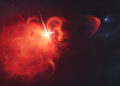
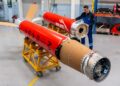
NASA has selected Katalyst Space Technologies of Flagstaff, Arizona, to perform a robotic orbit reboost of the Neil Gehrels Swift Observatory, marking a first-of-its-kind commercial servicing attempt on a government satellite that was not designed for in-space servicing. The demonstration aims to extend Swift’s operational life and prove a scalable approach to uncrewed servicing in low Earth orbit.
What NASA awarded
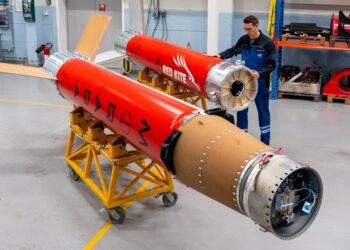
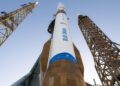
Under a $30 million Phase III award through NASA’s Small Business Innovation Research (SBIR) Program, managed by the Space Technology Mission Directorate, Katalyst will deliver a servicing spacecraft capable of autonomous rendezvous, capture, and orbit raising of Swift. The effort leverages commercially developed technologies to accelerate schedule and reduce cost compared to replacing capabilities with a new mission.
Why it matters
If successful, this would be the first commercial robotic vehicle to capture and reboost a U.S. government, uncrewed satellite not originally built for servicing. Demonstrating this capability could broaden life-extension options for satellites in LEO, support space sustainability practices, and mature on-orbit servicing architectures for future civil and commercial use.
Timing and drivers
Swift’s orbit has been decaying faster than expected due to elevated solar activity increasing atmospheric drag. The reboost is targeted for spring 2026, with NASA monitoring solar conditions and mission readiness that could affect the schedule.
Mission profile
- Spacecraft: Katalyst robotic servicer with capture and propulsion systems.
- Target: NASA’s Neil Gehrels Swift Observatory, launched in 2004.
- Objective: Autonomous rendezvous, safe capture, and altitude raise to extend Swift’s science operations.
- Demonstration scope: A rapid-response servicing mission executed on an accelerated timeline using commercial technologies.
About Swift
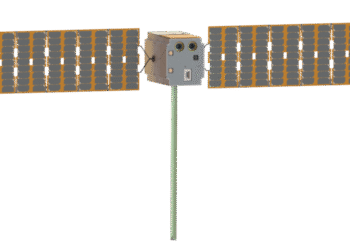
Swift is a multipurpose astrophysics platform that detects and localizes gamma-ray bursts and other high-energy transients, enabling rapid cross-mission follow-up. Over two decades, it has contributed to studies of supernovae, stellar flares, active galactic nuclei, comets, asteroids, and high-energy atmospheric events on Earth.
Program and partners
The SBIR award advances small-business innovation through America’s Seed Fund, transitioning technologies into operational use for national benefit. The Swift mission is managed by NASA’s Goddard Space Flight Center with partners including Penn State, Los Alamos National Laboratory, Northrop Grumman Space Systems, the UK Space Agency, the University of Leicester, Mullard Space Science Laboratory, Brera Observatory, and the Italian Space Agency.
What to watch
- Final servicing architecture and capture approach for a non-cooperative satellite.
- Autonomous navigation and safety readiness reviews.
- Solar cycle–driven drag forecasts affecting the reboost window.
- Potential follow-on applications for life extension of other LEO spacecraft.
Source: NASA news release