The UK Space Agency has awarded £6.5 million to 23 cross-border space R&D projects under the second round of the International Bilateral Fund (IBF), backing collaborations with organisations in Australia, Canada, France, Germany, India, Japan, Lithuania and the United States.
Announced during the International Astronautical Congress (IAC) in Sydney, the funding targets capabilities spanning life sciences, satellite communications, in‑orbit servicing and manufacturing (ISAM), Earth observation, advanced materials and Space Domain Awareness. According to the agency, the UK space sector employs more than 55,000 people and generates £18.6 billion in annual revenue.
Policy and international context
The awards align with the UK’s strategy to expand bilateral R&D with allies and follow recent cooperation milestones, including a NASA–UK Space Agency effort to develop AI models for future exploration missions under the Transatlantic Tech Prosperity framework, and UK scientific contributions to NASA’s IMAP mission launched on 23 September. The announcement also precedes the UK Space Agency’s planned integration into the Department for Science, Innovation and Technology (DSIT) from 1 April 2026.
Selected project highlights
- Americium Radioisotope Stirling Generator, University of Leicester with NASA Glenn, Perpetual Atomics, JHU APL – £499k: advances UK radioisotope power for near‑term flight and broader applications.
- UK‑India 5G from orbit, AccelerComm with Radisys India – £498k: integrates NTN/5G base station technology for satellite demonstrations and joint research.
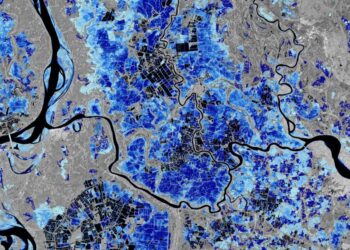
- AquaWatch AUK, SSTL with Pixalytics, Assimila, University of Stirling, RAL Space, CSIRO, Deloitte (Australia) – £479k: mission development for global water quality monitoring.
- Long Baseline Multistatic Radar, University of Birmingham with Goonhilly, University of Manchester, CSIRO, MIT Lincoln Laboratory – £452k: deep‑space object detection and tracking demonstration.
- SLOSH‑CAT, Satellite Applications Catapult with Space Machines, University of Sydney – £447k: fuel slosh sensing and control algorithm validation for spacecraft stability.
- ARGUS, Lúnasa with Space Machines (Australia) – £392k: autonomous RPO integration for a GEO inspection mission.
- RANGER, Lúnasa with Infinite Orbits (France) – £367k: GNSS‑enabled relative navigation toward in‑orbit servicing.
- PROJECT BRIDGE, Frontier Space Technologies with The Exploration Company (Germany) and a US pharma partner – £366k: cargo handling for repeatable life‑sciences research in orbit.
- Project MITHRIL, Lodestar Space with UCL and Impulse Space (USA) – £363k: avionics integration and formation‑flying techniques for responsive SDA.
- UK detector technology for high‑resolution imaging, Open University with BAE Space Mission Systems and University of Arizona – £362k: advances CIS125 detector for Moon/Mars/Earth imaging.
- IN‑DAMMI, Autonomous Manufacturing with Photocentric and APWorks (Germany) – £330k: distributed in‑orbit 3D printing linked to Earth‑based control and AI manufacturability.
- Cosmic Maker II, Photocentric with Voyager Space Nanoracks (USA/Italy) and Novaspace (Germany) – £299k: autonomous multi‑material 3D printing in microgravity.
- BioPTSS, Northumbria University with partners in Canada, Germany and USA – £287k: biofeedback‑integrated blood flow restriction exercise hardware for astronaut health.
- ISAM Biotech Pilot, Kayser Space with King’s College London and COMAT (France) – £252k: microgravity platform for tissue growth and biotech use cases.
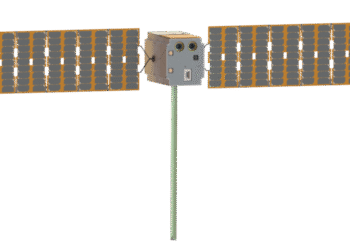
- Beam‑steering conformal antenna with flexible LoRa, University of Leeds with UNSW (Australia) – £150k: lightweight curved satcom system for nano/picosats.
- ETV Phase 1, Meridian Space Command with Alpha Impulsion (France) – £150k: preliminary design of an autophage‑engine logistics vehicle.
- QUIVER, Open Cosmos with Panasonic Operational Excellence Co. (Japan) – £147k: higher‑frequency intersatellite links for real‑time constellation collaboration.
- Project Oracle of Nyx, Lodestar Space with The Exploration Company (Germany) – £135k: onboard threat detection and characterisation payload for SDA.
- Flora Fidelity, Gentian (UK) with Bullfinch Earth (Canada) – £127k: hyperspectral forestry monitoring with AI and in‑situ data.
- IGNITE, Bumblebee with MDA Space (Canada) – £127k: inductive wireless power transfer to replace mechanical connectors on lunar systems.
- Physical emulator interface for microgravity R&D, Elethron with Atmos Space Cargo (Germany) – £127k: computational engines and autonomous materials labs integration.
- Astro‑SANITAS, LinkGevity with Delta Biosciences (Lithuania) – £120k: in‑space tissue‑protection pharmaceutical research.
- RootSpace, Take Root Bio with University of Guelph (Canada) – £99k: space biosystems and climate‑resilient agriculture, including a Martian biosphere digital twin.
Outlook
The IBF awards are intended to strengthen UK‑led international partnerships while accelerating the maturation of critical space technologies from telecommunications and EO analytics to ISAM and Space Domain Awareness. The programme is positioned to support future missions, commercial services and scientific research across low Earth orbit, GEO and deep space.