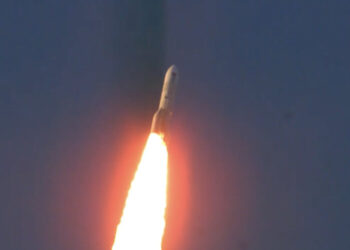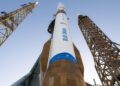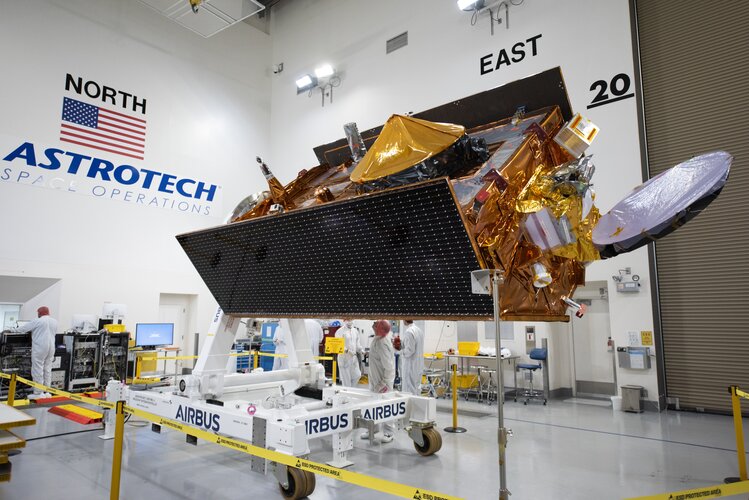
Sentinel-6B has begun its launch campaign at Vandenberg Space Force Base in California, marking the start of final processing for a planned November ride to orbit on a SpaceX Falcon 9. According to an ESA update, the satellite was transferred to the Astrotech Space Operations facility, removed from its transport container, and is now undergoing comprehensive inspections and functional checks ahead of fueling and payload fairing encapsulation. The exact launch date will be announced in the coming weeks.
Launch campaign status
Following a transit by ship from Germany to Texas and overland delivery to California, Sentinel-6B arrived at a NASA facility at Vandenberg in August. After storage, the spacecraft moved to Astrotech for unpacking and detailed verification. Processing now shifts to system-level testing and configuration for integration with the launch vehicle.
Mission role and heritage
Sentinel-6B is the second satellite in the Copernicus Sentinel-6 mission and will carry forward the record initiated by Sentinel-6 Michael Freilich, launched in November 2020. The mission serves as the world’s primary reference for radar altimetry, extending the continuous measurement of sea-surface height that began with the French–US Topex/Poseidon mission in the early 1990s and continued through the Jason satellite series. Maintaining this long-term, stable data set is critical for monitoring global sea-level rise and understanding long-term ocean change.
Instruments and data products
The satellite’s altimeter determines sea-surface height by measuring the time-of-flight of radar pulses reflected from the ocean surface and combining that information with precise orbit data. An advanced microwave radiometer provided by NASA accounts for atmospheric water vapor that can affect radar signal speed, improving the accuracy of height estimates. Beyond climate monitoring, Sentinel-6 delivers operational measurements, including significant wave height and wind speed, supporting near-real-time ocean forecasting and comprehensive sea-state assessment.
Next steps toward liftoff
ESA outlines a short, focused processing flow to prepare for a November launch window:
- Functional testing of spacecraft systems.
- Solar array inspections and checkouts.
- Propellant loading for on-orbit operations.
- Encapsulation inside the Falcon 9 payload fairing.
- Final launch preparations ahead of a November liftoff (exact date to be announced).
Program partners
Although part of the European Union’s Copernicus program, Sentinel-6 is a broad international collaboration:
- European Commission
- European Space Agency (ESA)
- European Organisation for the Exploitation of Meteorological Satellites (EUMETSAT)
- National Aeronautics and Space Administration (NASA)
- National Oceanic and Atmospheric Administration (NOAA)
- French space agency CNES (support)
With Sentinel-6B entering final processing at Vandenberg, the mission remains on track to extend the multi-decadal sea-level record with high-precision data for both climate and operational oceanography. Source: ESA.