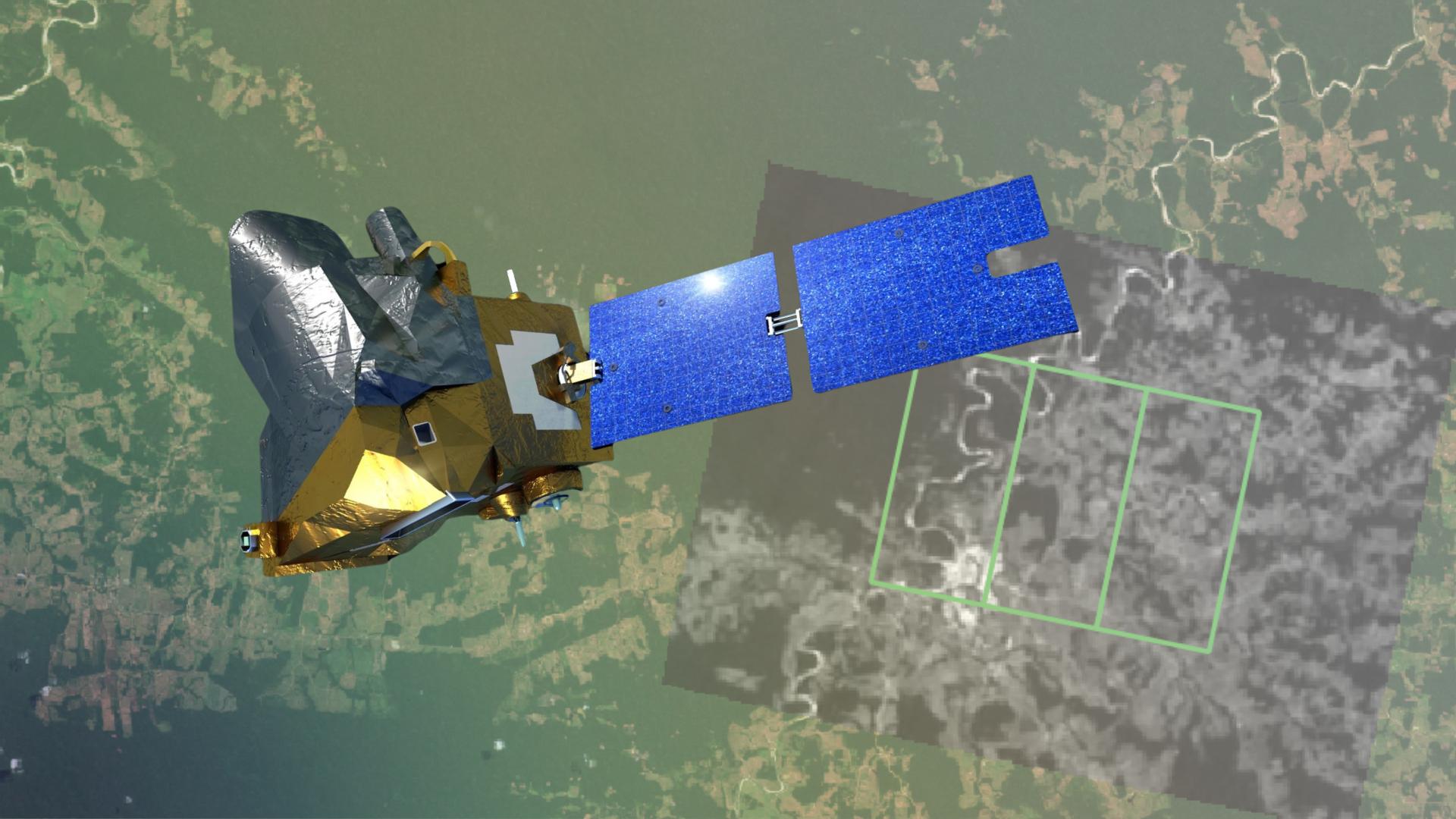
France’s MicroCarb satellite has confirmed the health of its payload with first measurements acquired over Amazonia on 28 August 2025, following its 25 July launch. Early results indicate that both the wide-field imager and the high-resolution spectrometer are operating as designed, clearing the way for in-orbit calibration and the start of routine carbon dioxide retrievals.
Why the Amazon matters
The Amazon basin is a critical region for tracking the global carbon cycle, yet it remains undersampled due to sparse ground instrumentation, dark forest surfaces, and persistent cloud cover. The area’s proximity to the South Atlantic Anomaly also increases radiation-related challenges for spaceborne sensors. Demonstrating reliable observations here is an important milestone for a mission dedicated to precise atmospheric CO2 surveying.
What the first measurements show
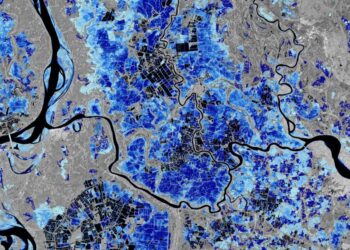
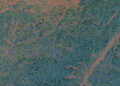
The imager identified cloud-free areas within the equatorial forest, revealing contrasts between urban areas, farmland, and dense canopy. The spectrometer separated reflected sunlight into four spectral bands, resolving absorption lines of carbon dioxide and oxygen that underpin column CO2 estimation once processing is finalized.
- Imager: Cross-checked against European Sentinel-2 data to validate radiometric and geometric behavior.
- Spectrometer: Compared with simulated spectra to verify spectral calibration and in-flight signal performance.
Calibration and next steps
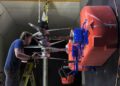
Raw observations were calibrated using pre-launch thermal-vacuum characterizations completed in 2022 and in-orbit references, including a blackbody, an internal lamp, and Sun-pointing sequences. Consistency checks against external sources confirm nominal operation, enabling fine calibration and algorithm tuning ahead of routine CO2 product generation.
- Complete instrument fine calibration in orbit.
- Adjust retrieval algorithms for stable, quality-controlled CO2 outputs.
- Begin regular production of geolocated observations across diverse surfaces and seasons.
Mission context
Developed by CNES with support from France’s PIA investment program, MicroCarb is designed to survey global atmospheric fluxes of carbon dioxide, a principal human-induced greenhouse gas. The mission aims to map major carbon sinks and characterize urban and vegetation emissions through seasonal cycles, expanding European capability in space-based greenhouse-gas monitoring.
Source: CNES update