Europe’s space operations community has run one of its toughest stress-tests to date, putting Sentinel-1D through a simulated solar superstorm patterned on the 1859 Carrington event. Conducted at ESA’s European Space Operations Centre (ESOC) in Darmstadt, the campaign assessed how mission control would safeguard the spacecraft and coordinate across fleets during a worst-case space weather crisis.
A Carrington-scale scenario for Sentinel-1D
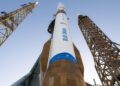
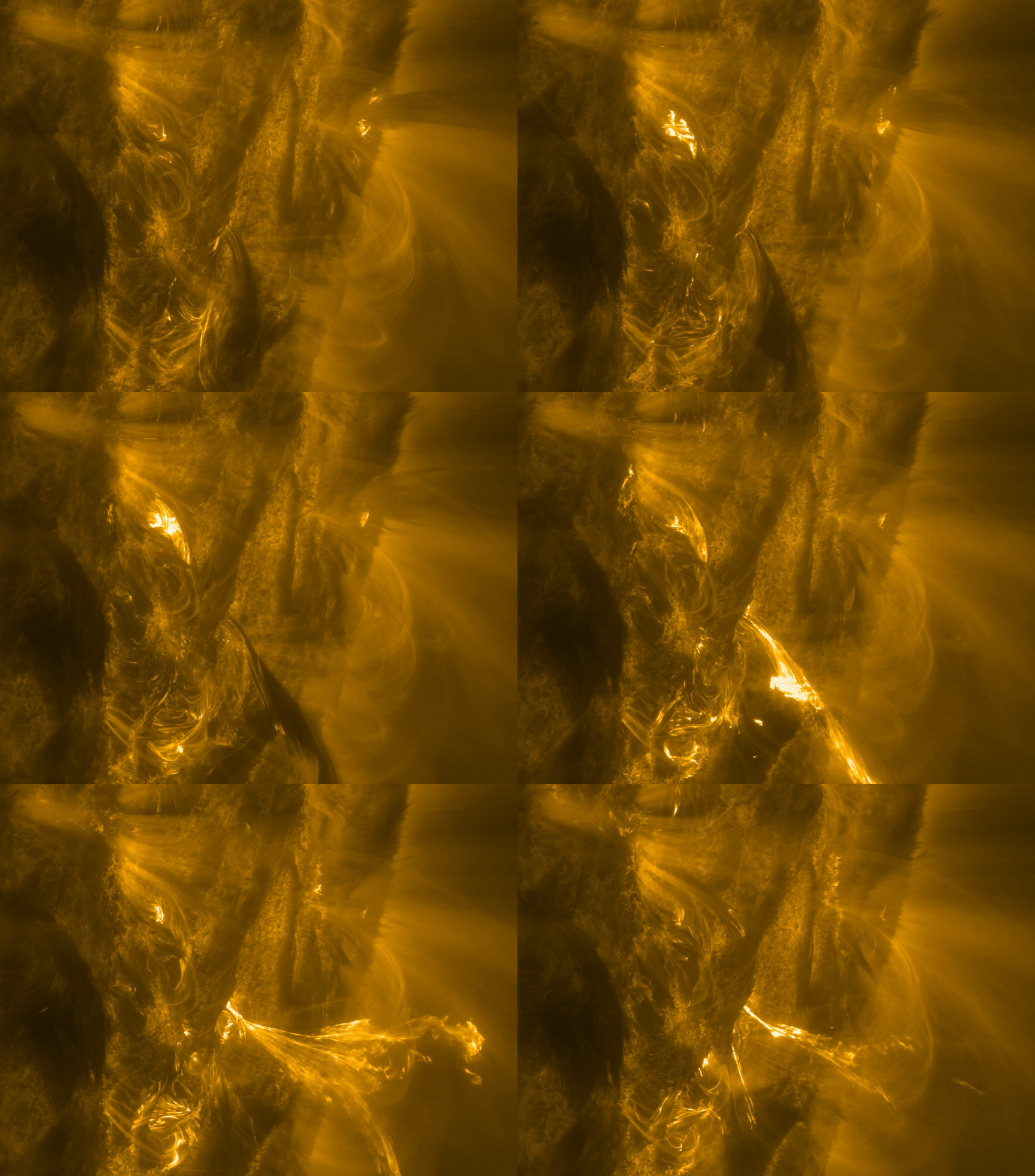
As part of pre-launch preparations for Sentinel-1D, scheduled for 4 November 2025, teams rehearsed early-orbit operations under extreme conditions. Simulation officers modeled an X45-class flare and its cascading effects to validate procedures when navigation is unavailable and electronics are compromised. The exercise included a rare activation of ESA’s Space Safety Centre—inaugurated in 2022—and brought in the Space Debris Office and operations staff from other Earth-orbiting missions to test cross-mission decision-making.
ESA framed the drill as a practical test of resilience: ensuring spacecraft safety, maintaining situational awareness, and managing collision risks in a highly dynamic environment.
Inside the simulated storm
- Minutes after launch separation, a burst of electromagnetic radiation from the simulated flare reached Earth in roughly eight minutes, degrading radar systems, communications and tracking data. Global navigation satellite system (GNSS) services were effectively offline, with ground stations—especially at high latitudes—losing tracking capability under intense radiation.
- Within 10–20 minutes, high-energy protons, electrons and alpha particles arrived, inducing single-event upsets, bit flips and potential permanent component failures onboard affected spacecraft.
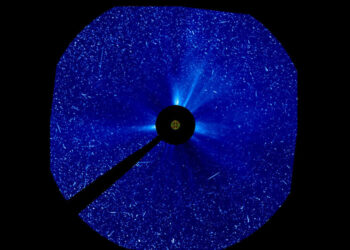
- After 10–18 hours, a fast coronal mass ejection (CME) traveling up to 2000 km/s triggered a severe geomagnetic storm. The scenario anticipated widespread ground impacts, including grid disturbances and induced currents in long conductors, while in space, atmospheric expansion increased drag for satellites in low Earth orbit, shifting trajectories and multiplying conjunction alerts.
Operational impacts and risk management
Mission controllers worked through simultaneous anomalies and uncertainties:
- Atmospheric drag increases modeled up to 400% in local peaks, accelerating orbit decay and raising propellant use.
- Rapidly changing conjunction probabilities complicated collision avoidance, with some maneuvers potentially trading one risk for another.
- GNSS outages and degraded tracking forced reliance on alternative navigation and estimation techniques.
- Temporary star tracker blinding, radiation-induced upsets, and potential damage to sensitive electronics and materials.
- Power system disturbances, including battery charging anomalies, under heightened radiation and thermal loads.
The exercise stressed coordination between flight dynamics, space weather services, debris analysts and multiple mission control teams. The core objective was not uninterrupted service, but controlled degradation, asset protection and informed decision-making amid incomplete and fast-evolving data.
Training takeaways and European preparedness
Running the scenario in a controlled environment allowed operators to refine procedures, validate escalation paths and identify data gaps. The results will inform Europe-wide space weather operational services and bolster resilience for missions across orbits. ESA indicated that such extreme events are low frequency but high impact, making regular, realistic drills essential for preparedness.
Next-generation monitoring: D3S and Vigil
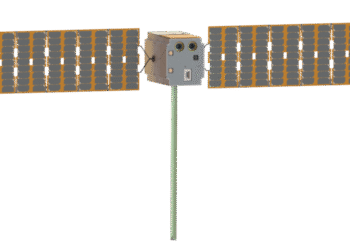
Beyond operations training, ESA highlighted capability growth in forecasting and monitoring. The Distributed Space Weather Sensor System (D3S) will field space weather sensors across multiple platforms around Earth to provide higher-fidelity, real-time data to operators. Further afield, ESA’s Vigil mission to the Sun–Earth Lagrange Point L5—planned for launch in 2031—will offer a continuous side-on view of active regions, enabling earlier detection of hazardous events before they rotate into direct Earth view.
Together, improved monitoring and rigorous rehearsal aim to shorten reaction times, sharpen risk assessments and keep critical assets safe when the Sun unleashes its worst. For additional details, see ESA’s report: Flying through the biggest solar storm ever recorded.