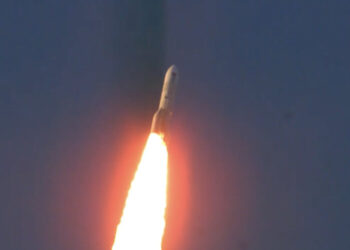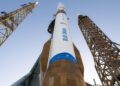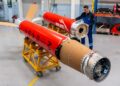
Japan Aerospace Exploration Agency (JAXA) has targeted October 26, 2025 for the launch of the new HTV-X1 cargo spacecraft aboard the H3 F7 launch vehicle, an International Space Station (ISS) resupply mission from Tanegashima. The launch time will be set following updated ISS orbit data and ongoing weather assessments. JAXA has designated a reserved launch period from October 27 through November 30, 2025. Full details are available in the official JAXA press release.
Key details
- Target launch date: October 26, 2025
- Planned time: Around 09:00 Japan Standard Time (final time to be confirmed)
- Reserved launch period: October 27–November 30, 2025
- Launch site: Yoshinobu Launch Complex, JAXA Tanegashima Space Center
- Mission: HTV-X1 ISS cargo resupply on H3 Flight No. 7 (H3 F7)
Launch timing and coordination
The precise liftoff time will be determined by the latest ISS orbital updates to ensure optimized phasing for rendezvous operations. Within the published windows, the final day and time are subject to international coordination for station traffic and operations. JAXA will continue monitoring weather conditions at Tanegashima, with feasibility checks underway on a daily basis.
About HTV-X1 and H3 F7
HTV-X1 is JAXA’s next-generation unmanned cargo transfer vehicle, designed to deliver supplies, equipment, and experiments to the ISS. It succeeds Japan’s earlier HTV series with updated systems and operational improvements aimed at streamlining logistics to low Earth orbit. The mission will launch on the H3 launch vehicle, designated H3 F7 (Flight No. 7), from the Yoshinobu Launch Complex at Tanegashima Space Center.
What to watch next
- Final confirmation of the targeted liftoff time following ISS orbit updates
- Weather conditions at Tanegashima as the date approaches
- ISS traffic and international coordination milestones during the reserved period
The HTV-X1 mission marks a significant step in Japan’s cargo services to the International Space Station, reinforcing redundancy and flexibility in the global station resupply chain while advancing JAXA’s new-generation space transportation capabilities.