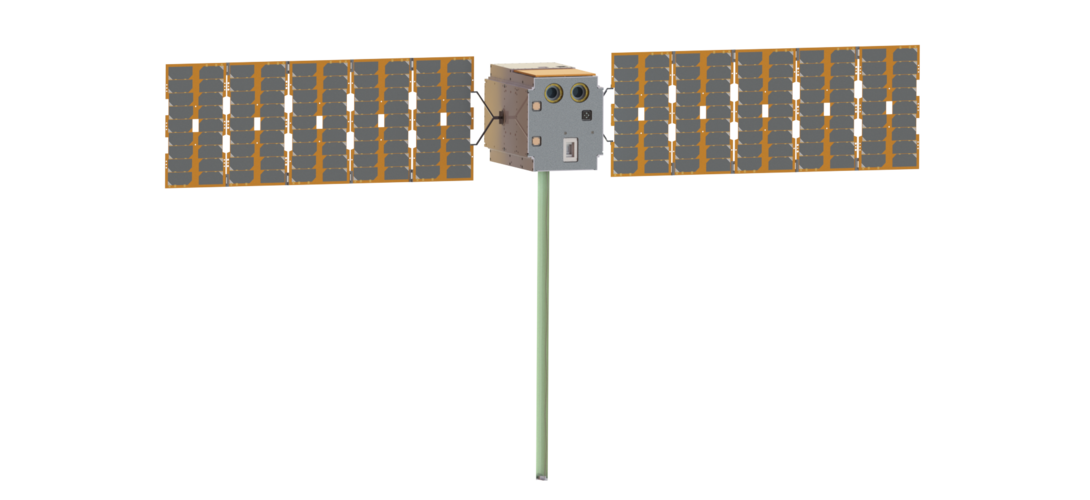
Europe’s Henon CubeSat has cleared its Critical Design Review, advancing the European Space Agency’s first stand-alone deep-space CubeSat toward a planned rideshare launch in late 2026. The mission is designed to independently navigate, communicate with Earth, and conduct space weather measurements while operating millions of kilometers from home.
Key mission firsts
- Stand-alone deep-space CubeSat: Unlike previous small spacecraft that relayed via a mothership, Henon will communicate directly with ground stations.
- Miniaturized deep-space communications: A new compact transponder will enable two-way links via ESA’s Estrack network.
- Electric (ion) propulsion: A first-of-its-kind miniature thruster using xenon will provide sustained maneuvering capability.
- Solar-storm early warning: Miniaturized sensors will target alerts several hours ahead of Earth impact, beyond current L1-based timelines.
From L2 drop-off to a Distant Retrograde Orbit
Henon is expected to deploy as a secondary payload and be delivered near Sun–Earth Lagrange Point 2, about 1.5 million km from Earth. From there, it will use its electric propulsion to enter a Distant Retrograde Orbit (DRO) around the Sun—an orbit family first analyzed by Michel Hénon. Henon’s path will range from roughly 12 million km to 24 million km from Earth. As Earth and the spacecraft both circle the Sun, Henon will appear to trace an elongated loop around Earth when viewed in a rotating frame.
Deep-space comms and propulsion demonstration
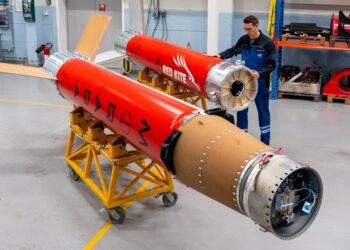
The mission will test a miniaturized deep-space transponder for direct links through ESA Estrack ground stations. Its compact ion propulsion system, powered by solar arrays and fueled by xenon, is intended to deliver precise trajectory control over long durations. If validated in flight, these capabilities could expand the envelope for low-mass, lower-cost missions to destinations such as the Moon, asteroids, or Mars orbits.
Space weather objective: earlier alerts
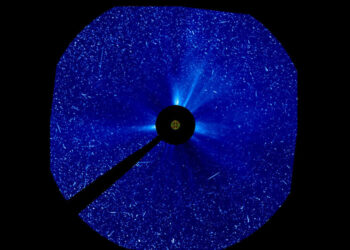
Henon will operate on the sunward side of its DRO to measure solar emissions and interplanetary disturbances. The goal is to demonstrate warning times of approximately 3–6 hours before solar storms arrive at Earth, compared with typical 15–60 minute lead times from spacecraft at L1. The approach is positioned as a pathfinder for a potential future constellation to provide persistent, earlier space-weather alerts to operators of critical infrastructure.
Program status and next steps
Prime contractor Argotec leads spacecraft development, with the craft incorporating three payloads and multiple miniaturized subsystems, including the Curie Power Suite power conditioning and distribution unit. With the detailed design confirmed at CDR, the team is progressing to integrated FlatSat testing of avionics and software, followed by structural and environmental qualification for launch and deep-space operations.
- FlatSat integration and end-to-end functional testing
- Vibration, thermal vacuum, and radiation testing of the flight model
- Launch campaign and rideshare deployment near L2
- Electric-propulsion transfer and commissioning in DRO
- In-orbit demonstrations of deep-space comms, propulsion, and space-weather payloads
Mission at a glance
- Full name: Heliospheric Pioneer for Solar and Interplanetary Threats Defence (Henon)
- Class: Carry-on-sized CubeSat operating independently in deep space
- Target orbit: Sun-centered Distant Retrograde Orbit, ~12–24 million km from Earth
- Propulsion: Miniature xenon ion engine
- Communications: Miniaturized deep-space transponder via ESA Estrack
- Funding: ESA General Support Technology Programme (GSTP)
- Schedule: Rideshare launch planned for late 2026, post-CDR implementation underway
Source: ESA mission page