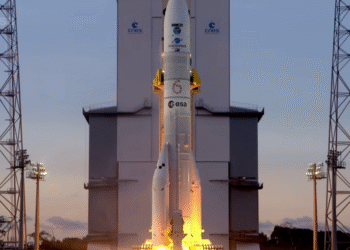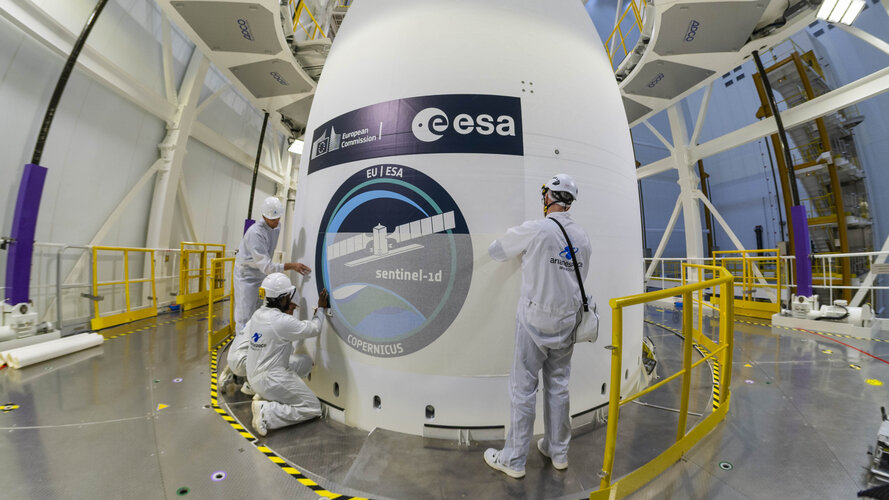
The European Space Agency has scheduled the Sentinel-1D launch for 4 November 2025 and released an online pre-launch briefing detailing mission objectives and user benefits. The spacecraft expands the Copernicus Sentinel-1 radar constellation, which provides routine, wide-area imaging of Earth’s surface to support emergency response, environmental monitoring, maritime safety, and climate services. The briefing video was posted on 30 October 2025 and is available with captions and multiple download options via ESA’s media portal.
How to access the pre-launch briefing
ESA has published a 45-minute media briefing that outlines the mission context and anticipated operations for Sentinel-1D. The video offers closed captions in multiple languages and can be streamed or downloaded in different formats, enabling stakeholders to review technical overviews ahead of launch. View the briefing on ESA’s site: Sentinel-1D pre-launch media briefing.
Mission role within Copernicus Sentinel-1
Sentinel-1D is the next spacecraft in the Copernicus Sentinel-1 series, which employs C-band synthetic aperture radar (SAR) to acquire imagery regardless of daylight or cloud cover. The mission’s continuous radar mapping supports time-critical tasks such as flood and landslide assessment, sea-ice routing and iceberg tracking, ship detection and oil spill monitoring, and long-term measurements relevant to land subsidence, glaciers, and coastal change.
What the briefing covers
- Program context for Sentinel-1 and the role of Sentinel-1D in sustaining radar imaging capacity.
- Overview of observation modes, anticipated coverage, and data cadence for operational users.
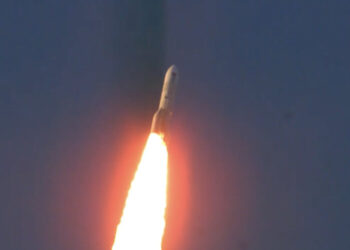
- Launch-readiness status and the sequence leading up to the planned 4 November liftoff.
- Information on media access, captioning, and downloadable briefing assets for offline review.
Why it matters for operators and users
Maintaining continuity in C-band SAR ensures reliable inputs for civil protection agencies, environmental authorities, maritime operators, and research teams. Consistent radar time series are essential for interferometric analyses, event mapping during adverse weather, and regular surveillance of ocean and land surfaces. Sentinel-1D is expected to reinforce service robustness and reduce gaps in coverage for operational and scientific applications.
Key points at a glance
- Launch date: 4 November 2025 (ESA schedule)
- Spacecraft: Copernicus Sentinel-1D (C-band SAR)
- Briefing release: 30 October 2025; length ~45 minutes; captions available
- Applications: Disaster response, environmental monitoring, maritime domain awareness, climate analysis
- Access: Stream or download via ESA’s media page (see link above)
ESA indicates that the online briefing is intended to prepare media and stakeholders for launch activities and early mission operations. Additional updates are expected through ESA’s official channels as the countdown progresses.