Brazilian institutions and the European Space Agency are aligning to accelerate the uptake of data from ESA’s Biomass satellite for Amazon forest carbon monitoring, coinciding with the opening of COP30 in Brazil. The effort aims to convert next‑generation radar observations into operational products for national reporting, climate action and sustainable forest management.
Why Biomass matters
Launched earlier this year, Biomass is the first satellite to fly a P-band synthetic aperture radar, a long-wavelength instrument designed to penetrate dense tropical canopies and sense woody components such as trunks and branches. These observations enable estimates of above‑ground biomass, a key proxy for carbon storage and fluxes.
The mission is engineered to reveal forest structure at multiple scales. Its fully polarimetric design captures different scattering behaviors within vegetation, while repeat passes enable interferometry for forest height retrieval. A dedicated tomographic phase adds vertical profiling, helping separate signals from the forest floor and canopy to map three‑dimensional structure in unprecedented detail.
Brazil readies for early uptake
ESA, Brazil’s National Institute for Space Research (INPE) and the Brazilian Space Agency (AEB) recently met in Belém to plan how Biomass outputs will be integrated into Brazil’s monitoring systems. Priorities include preparing processing pipelines, building local capacity, and organizing independent validation. The goal is early, reliable use of mission products for national and regional applications, including reporting to international climate frameworks.
- Integration with INPE data systems for routine forest assessments
- Training and tools for the Brazilian forestry and remote sensing community
- Protocols for product validation and open‑science collaboration
Applications for Amazon carbon accounting
The Amazon’s persistent cloud cover and complex canopy make optical monitoring challenging. P‑band radar offers an all‑weather complement, supporting:
- Estimation of above‑ground biomass and forest height
- Detection of degradation and recovery beyond deforestation alerts
- Baseline mapping for carbon stock assessments and trend analysis
- Inputs to national greenhouse gas inventories and REDD+ monitoring, reporting and verification
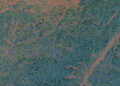
Early test images from northern Brazil to Suriname, including areas of Tumucumaque Mountains National Park, illustrate the mission’s capacity to distinguish structural layers from forest floor to canopy. These examples are being used to refine algorithms and user workflows ahead of full data release.
Commissioning status and next steps
Biomass remains in its commissioning phase, and preliminary datasets are not yet suited for scientific use. However, ESA and Brazilian partners are preparing for transition to routine operations by consolidating processing chains, establishing validation datasets and coordinating with in‑country stakeholders. As data quality milestones are met, the mission is expected to contribute to ESA’s Climate Change Initiative and to operational services under the Earth Action element of the FutureEO programme.
Key capabilities to watch as the mission progresses include:
- P‑band penetration for canopy‑understory separation
- Full polarimetry for structural and biomass sensitivity
- Interferometry for height and change detection
- Tomography for vertical forest profiling
With coordinated planning between ESA, INPE and AEB, Brazil is positioning itself to rapidly operationalize Biomass data for Amazon stewardship, enabling more consistent, transparent and verifiable tracking of forest condition and carbon dynamics.
Source: ESA