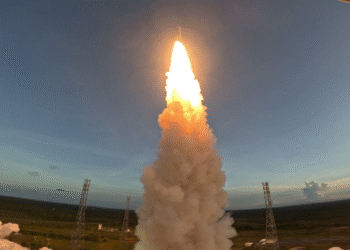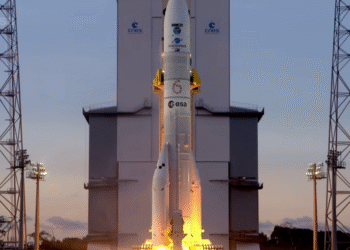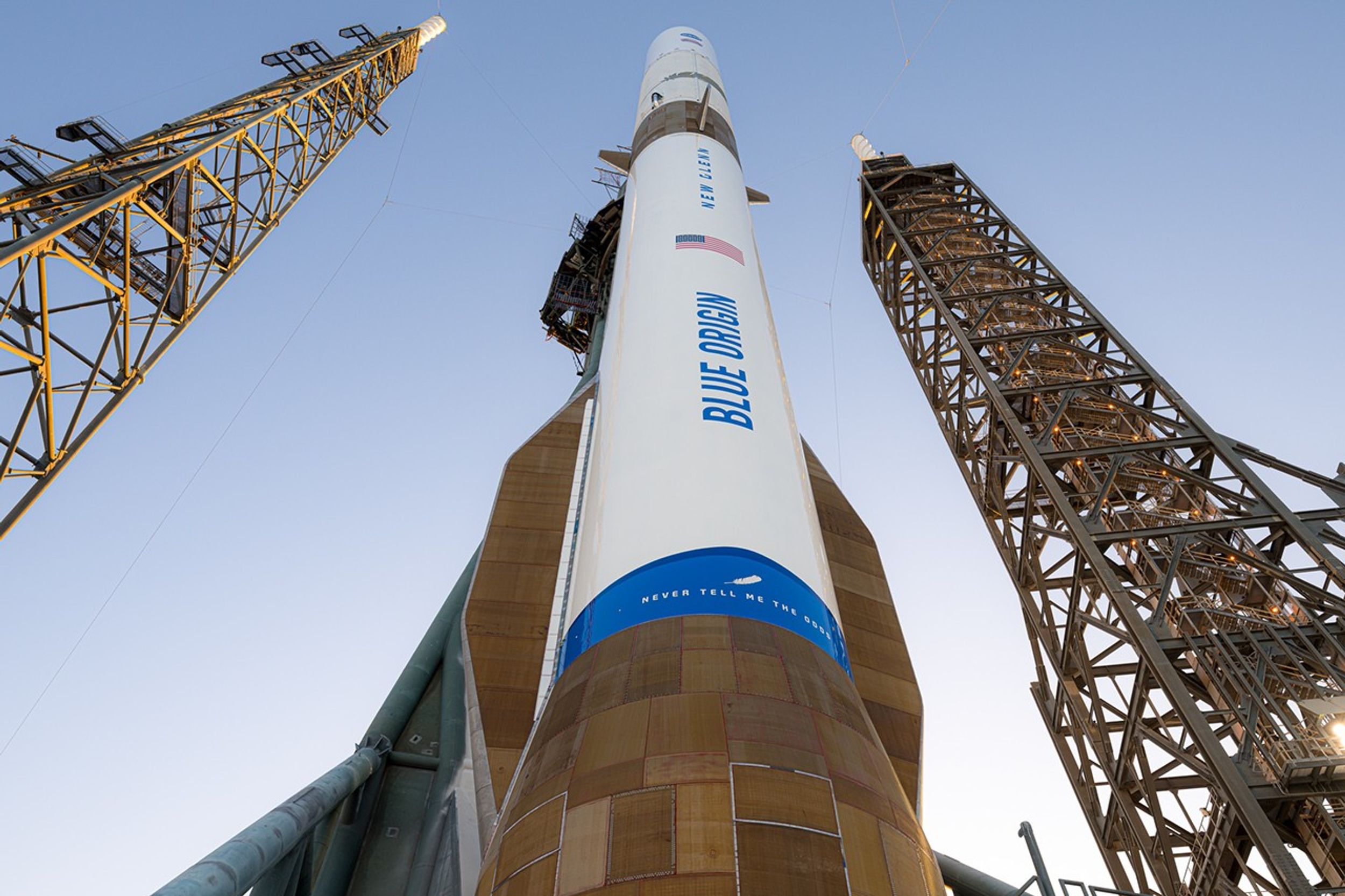
NASA has reset the launch of its ESCAPADE mission to Nov. 13, following a pause prompted by a severe geomagnetic storm. The decision aims to protect early mission operations while preserving the mission’s Mars-bound trajectory under NASA’s VADR launch services arrangement with Blue Origin.
Severe Space Weather Triggers One-Day Delay
A sequence of coronal mass ejections drove strong geomagnetic activity in early November, culminating in a G4-class storm the evening of Nov. 11. Forecasts from NOAA’s Space Weather Prediction Center on Nov. 12 indicated conditions capable of reaching G4 or higher around midday, elevating the risk of radiation and electromagnetic disturbances that can affect spacecraft and ground systems.
Though ESCAPADE’s twin spacecraft are designed to study space weather at Mars, the immediate period after liftoff is sensitive. The commissioning phase includes health checks, establishing communications, and solar array deployment—operations that can be disrupted by heightened radiation and geomagnetic activity. NASA deferred the Nov. 12 attempt to reduce these risks.
Trajectory Design Preserves Mars Opportunity
The schedule adjustment does not jeopardize Mars arrival because ESCAPADE leverages a flexible trajectory. After launch, the spacecraft will detour toward the vicinity of Lagrange Point 2 (L2) and enter an extended Earth-proximity “loiter” phase. With Earth and Mars currently on opposite sides of the Sun, this approach allows ESCAPADE to wait for a more favorable alignment next year, then loop back for an Earth gravity assist that sends the pair toward Mars.
This strategy, enabled by a small-satellite architecture and mission design, decouples the launch date from the traditional, narrow interplanetary window that opens roughly every two years. It effectively broadens access to Mars while maintaining fuel efficiency.
Mission Objectives and Partners
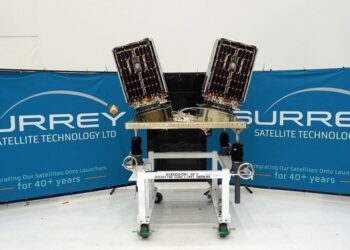
ESCAPADE (Escape and Plasma Acceleration and Dynamics Explorers) consists of two small spacecraft that will study how the solar wind and space weather interact with Mars’ upper atmosphere and magnetosphere. The mission’s measurements are expected to improve understanding of atmospheric escape processes and help develop forecasting capabilities that could support future robotic and human explorers at the Red Planet.
ESCAPADE is funded by NASA’s Heliophysics Division and is part of the Small Innovative Missions for Planetary Exploration program. The mission is led by the University of California, Berkeley’s Space Sciences Laboratory, with participation from Rocket Lab, NASA’s Goddard Space Flight Center, Embry‑Riddle Aeronautical University, and Advanced Space LLC. NASA’s Launch Services Program at Kennedy Space Center procured the launch with Blue Origin under the VADR contract.
Timeline and What to Watch
The next launch window opens Nov. 13 at 2:57 p.m. EST. Following liftoff, teams will focus on spacecraft checkout, communications, and power system deployments before transitioning to the Earth-proximity phase. The gravity-assist maneuver during the next favorable alignment will target Mars arrival and dual-spacecraft science operations in orbit.
- Launch target: Nov. 13, window opening at 2:57 p.m. EST
- Reason for delay: Elevated radiation and geomagnetic conditions from a G4 storm
- Trajectory: L2 detour, Earth-proximity loiter, Earth gravity assist next year
- Provider/contract: Blue Origin via NASA’s VADR procurement
- Objective: Characterize Mars space weather environment and atmospheric escape
These storm-driven precautions underscore the operational impacts of space weather across launch, early orbit operations, and deep space navigation—areas ESCAPADE is designed to inform once on station at Mars.
Source: NASA ESCAPADE blog update