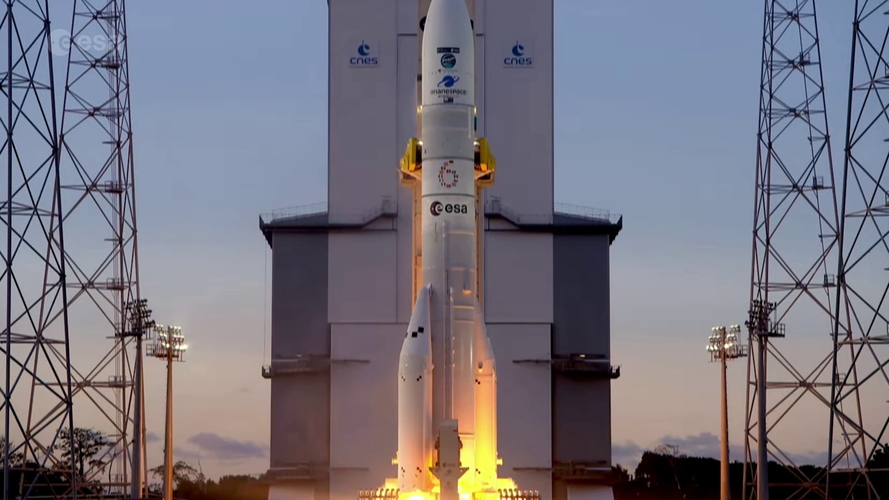
Europe’s Ariane 6 has placed the Copernicus Sentinel‑1D satellite into orbit, advancing the Sentinel‑1 mission toward restored dual-satellite C‑band SAR coverage and enhanced maritime tracking via Automatic Identification System (AIS) updates.
Launch and mission status
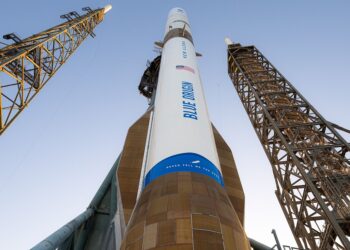
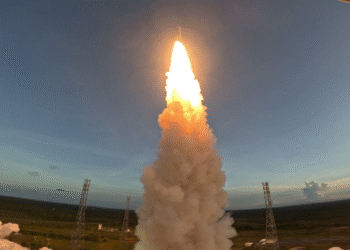
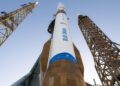
Liftoff occurred on 4 November 2025 at 22:02 CET (18:02 local) from Europe’s Spaceport in French Guiana on Ariane 6 flight VA265. Sentinel‑1D has joined the existing Sentinel‑1C spacecraft, flying in the same orbit roughly 180° apart to optimize global coverage and data delivery. The launch marks a key operational milestone for Europe’s Earth observation constellation as it strengthens the continuity of radar observations used across public, commercial and research sectors.
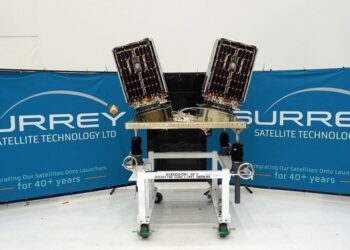
ESA’s Sentinel‑1 mission provides high‑resolution, day‑and‑night, all‑weather imaging of Earth’s surface. Both Sentinel‑1C and Sentinel‑1D carry C‑band synthetic aperture radar to monitor land and sea conditions, ice, and infrastructure. Each satellite is also equipped with an AIS payload to detect and relay ship identification and navigation signals, supporting maritime safety and compliance.
Why dual-satellite SAR matters
Once Sentinel‑1D completes commissioning and calibration, the paired configuration is expected to restore frequent global radar coverage, improving the timeliness and resilience of data streams for critical services. With two spacecraft in the orbital plane, revisit intervals shorten and geographic gaps are reduced, bolstering continuity for applications that depend on reliable updates.
- Emergency management: Faster radar acquisitions for flood mapping, landslide monitoring and damage assessment.
- Environmental monitoring: Consistent time series for land deformation, sea ice dynamics and deforestation tracking.
- Maritime domain awareness: More frequent AIS observations combined with SAR imaging to improve vessel detection and behavior analysis.
AIS enhancement and maritime impact
Sentinel‑1D’s AIS instrument will increase the cadence of vessel identity, position and course observations when fully operational. Coupled with C‑band SAR, this enhances overlap between declared ship positions and radar-detected targets, supporting anomaly detection in busy shipping lanes, coastal approaches and remote ocean regions where terrestrial receivers are sparse.
Next steps
Following separation and initial checkouts, Sentinel‑1D will enter a commissioning phase to validate platform performance, calibrate radar modes and synchronize operations with Sentinel‑1C. After commissioning, the constellation is expected to deliver more frequent and robust data products to Copernicus services and downstream users.
The successful VA265 mission underscores Ariane 6’s role in European access to space and the sustained delivery of operational Earth observation capabilities for civil, environmental and maritime users.
Source: ESA launch highlights