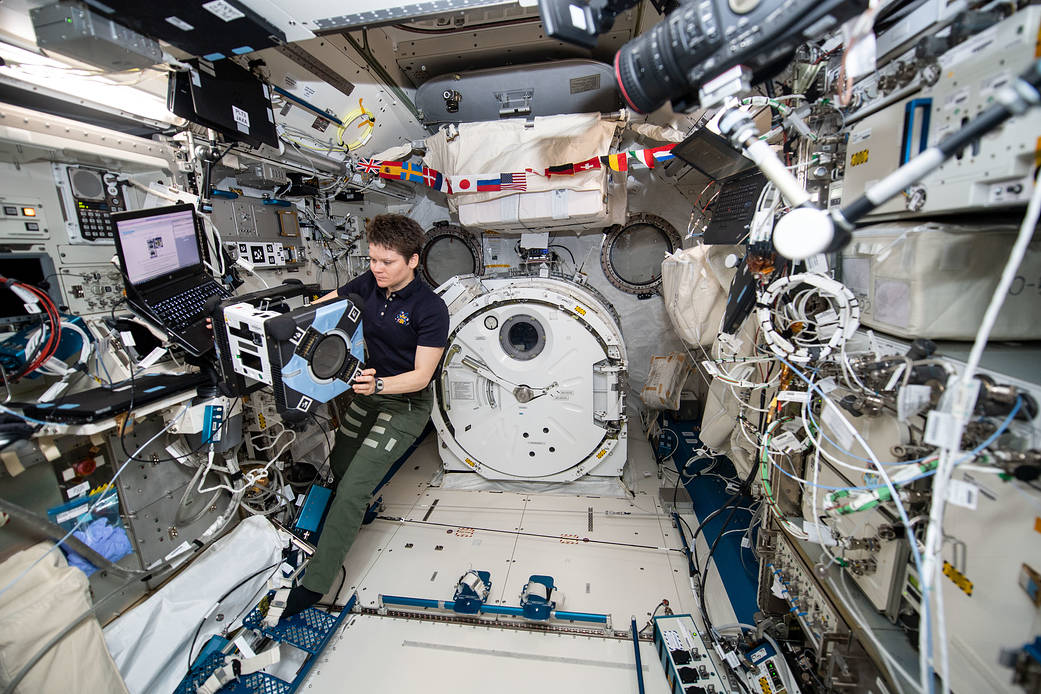
Arkisys has secured a reimbursable Space Act Agreement with NASA to sustain and maintain the Astrobee free-flying robotic platform aboard the International Space Station (ISS). The arrangement extends the operational life of the three-robot system and keeps the platform available for on-orbit technology demonstrations and research in microgravity.
What the partnership covers
Under the agreement, Arkisys will support the Astrobee platform’s upkeep on the ISS and continue enabling partners from industry and academia to use the system for experimentation. NASA issued a call for partnership proposals earlier this year, and Arkisys was selected to help maintain Astrobee’s readiness for investigations that exercise guidance, autonomy, sensing, and human-robot teaming in the station’s microgravity environment.
- Operational maintenance and readiness of Astrobee robots and support systems aboard the ISS
- Support for partner investigations and technology demonstrations in microgravity
- Continuation of on-orbit tests that inform future exploration architectures
Why it matters
As NASA prepares for longer-duration missions at the Moon and Mars, free-flying robots like Astrobee can take on routine inspection and maintenance tasks, provide autonomous monitoring when crews are busy or off-duty, and help validate systems for future spacecraft. Sustaining Astrobee on the ISS provides a relevant operational environment to mature these capabilities without relying on continuous human oversight.
Astrobee at a glance
- Three colorful, cube-shaped robots: Bumble, Honey, and Queen
- Integrated software and a docking station for recharging
- Designed for spacecraft monitoring, alert simulations, and technology experiments
- Launched to the ISS in 2018 and operated alongside astronauts
ISS context and research value
The ISS remains a cornerstone for microgravity research and operations, enabling studies and demonstrations not possible on Earth. For nearly 25 years, NASA has maintained a continuous U.S. human presence on the orbital laboratory. Astrobee contributes to this research ecosystem by offering a standardized, in-space testbed that supports iterative development of systems relevant to exploration, maintenance, and autonomous operations.
What comes next
With Arkisys sustaining platform availability, Astrobee will continue to serve investigators advancing robotics and autonomy for low Earth orbit and future deep-space missions. The work is intended to inform spacecraft design and operations for Artemis-era missions and beyond, where robotic helpers could augment crews and support infrastructure at the Moon and Mars.
Source: NASA: Astrobee Robots Advance Through Strategic Partnership