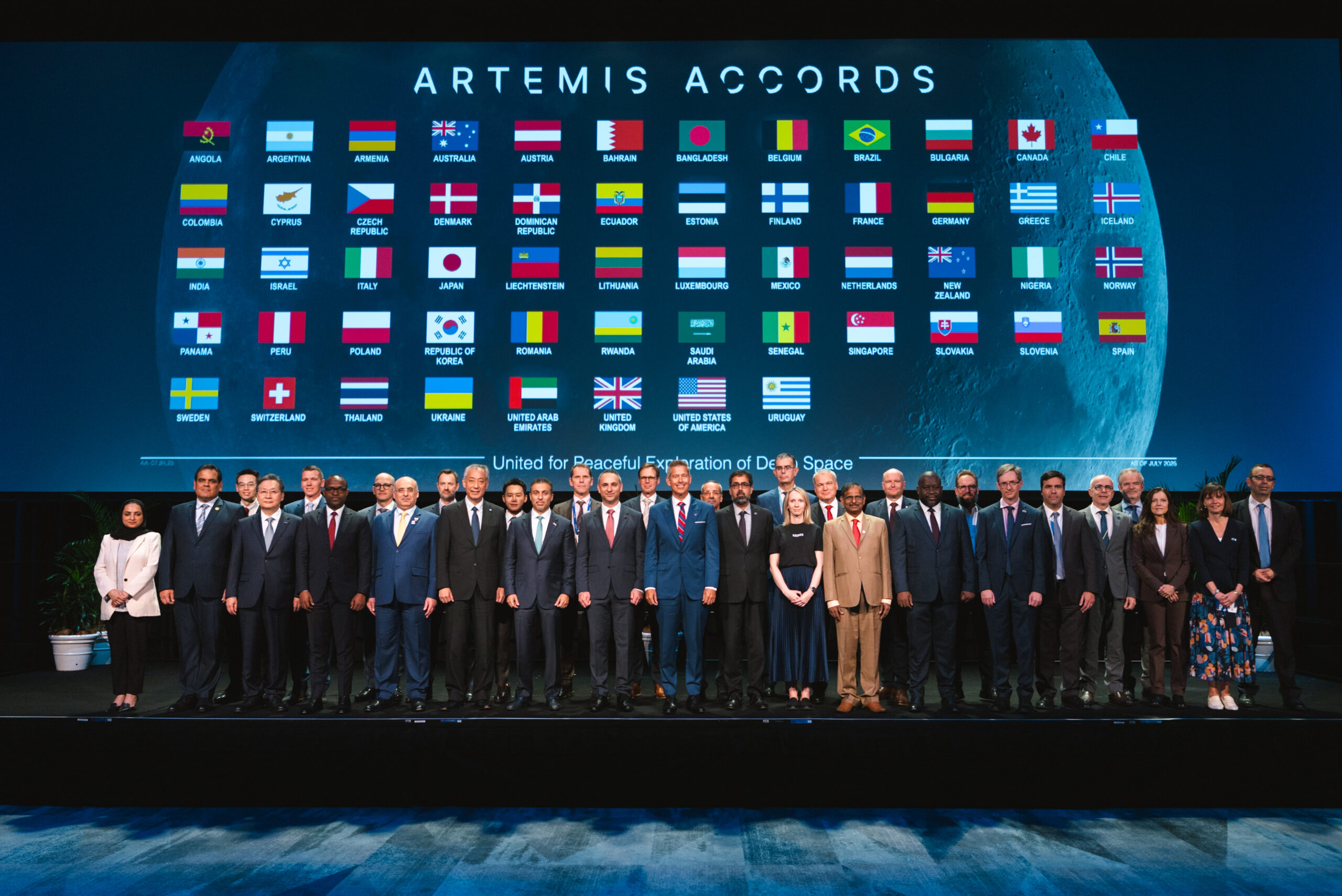
Representatives of the Artemis Accords signatories convened at the 76th International Astronautical Congress (IAC) in Sydney to advance practical steps that strengthen transparency, interoperability, and safety in future lunar and deep-space activities. The principals meeting, co-chaired by NASA, the Australian Space Agency, and the UAE Space Agency, comes ahead of the accords’ five-year anniversary on Oct. 13, 2025. According to NASA, the framework now includes 56 country signatories, accounting for nearly 30% of the world’s countries. Read NASA’s release for full context via the official summary.
Key outcomes from IAC Sydney
Participants focused on turning high-level principles into operational practices for upcoming missions to the Moon, Mars, and beyond. Discussions centered on measures intended to reduce risk, enhance coordination among civil space agencies and industry, and ensure scientific returns are broadly shared.
- Refining non-interference protocols, including early transparency on expected launch timelines, activity descriptions, and planned landing or operations locations.
- Strengthening transparency around mission plans to enable cooperative deconfliction and safer surface and orbital operations.
- Advancing interoperability of systems to enable more efficient joint operations among international partners and commercial providers.
- Expanding policies for scientific data release to maximize accessibility and research impact.
- Enhancing orbital debris mitigation and disposal practices to preserve the long-term sustainability of cislunar and deep-space domains.
- Coordinating on space object registration and reporting beyond Earth orbit, building on recent technical workshops.
Regional engagement and workshops
Organizers highlighted growing participation across regions and pathways for onboarding new signatories. In May 2025, the United Arab Emirates hosted a technical workshop focused on non-interference and space object registration and reporting beyond Earth orbit, contributing procedural detail and best practices to support implementation.
Why it matters
As governmental and commercial missions expand in scope and cadence, common expectations for behavior in space are becoming more consequential. Practical steps on transparency, non-interference, data sharing, and interoperability are designed to reduce operational friction, avoid inadvertent interference, and improve safety for crewed and uncrewed missions. Robust debris mitigation and disposal planning aims to protect key orbital regimes as activity grows around the Moon and in deep space.
Participation and momentum
The Sydney meeting drew representation from dozens of nations, reflecting the widening uptake of the accords since their initial signing in 2020. NASA and partners emphasized continued work through technical exchanges and policy coordination to translate principles into mission-ready norms for surface operations, orbital traffic coordination, and scientific collaboration.
What’s next
More countries are expected to join the accords in the coming months. Partners indicated that further working sessions and regionally hosted workshops will continue to refine implementation details, including notification practices, system compatibility approaches, and standardized reporting to support sustained lunar presence and future Mars exploration.
For additional details, see NASA’s news release: NASA and international partners deepen commitment to the Artemis Accords.