NASA has detailed a suite of performance, safety, and communications upgrades to the Space Launch System (SLS) for Artemis II, the first crewed mission of the Artemis campaign. Building on extensive flight data from the uncrewed Artemis I test, the enhanced Moon rocket is being readied for a roughly 10-day crewed lunar flyby that will validate systems ahead of later missions targeting lunar surface operations and supporting future human missions to Mars. The agency’s overview of improvements is available via NASA.
What changed for Artemis II
While the core SLS architecture remains the same — a core stage with four RS-25 engines, two five-segment solid rocket boosters, the interim cryogenic propulsion stage (ICPS), and adapters linking to Orion — the vehicle incorporates targeted refinements derived from analysis, testing, and Artemis I lessons learned:
- Guidance and proximity ops: The ICPS now carries optical targets to support Orion crew training for manual piloting and practice maneuvers that inform future docking operations.
- Navigation and communications: Upgraded navigation and repositioned antennas aim to maintain continuous links with NASA ground assets and the U.S. Space Force’s Space Launch Delta 45 along the Eastern Range.
- Emergency detection and range safety: An ICPS-based emergency detection capability improves onboard awareness and alerting. The flight safety system incorporates a time delay to ensure Orion’s launch abort system has time to pull the crew capsule clear during a rare in-flight abort scenario.
- Booster separation and timing: Solid rocket booster separation motors are canted an additional 15 degrees to widen clearance. SLS will also jettison boosters about four seconds earlier than on Artemis I, gathering flight data that, if validated, could yield roughly 1,600 pounds of additional payload capacity to Earth orbit on future missions.
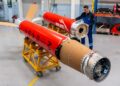
- Aerodynamic vibration mitigation: To counter unsteady airflow observed near booster attach points on Artemis I, engineers added paired six-foot-long strakes at the forward connections on the intertank and requalified avionics to withstand higher vibration environments.
- Power distribution: The core stage power distribution control unit in the intertank has been updated to enhance protection and control of downstream electronics.
Why it matters
Artemis II is designed to demonstrate SLS and Orion performance with astronauts onboard, evaluate life-support and mission operations, and rehearse proximity operations that underpin later lunar rendezvous and docking. The communications and emergency systems upgrades target crew safety and continuous situational awareness, while aerodynamic and separation refinements aim to reduce structural loads and improve margin. Data from early booster separation will help calibrate models that could unlock incremental performance gains for cargo and crewed variants.
Program outlook
The mission plan calls for four astronauts to complete a lunar free-return trajectory and return to Earth, advancing certification for subsequent Artemis flights that will deliver crews and hardware to the Moon’s vicinity and surface. Integration, verification, and range certification activities continue at Kennedy ahead of final readiness reviews. For NASA’s full briefing on the Artemis II SLS configuration and integration progress, see the official update on nasa.gov.