The Space Feed | Latest Space News
  • Home
  • News
    • Launches
    • Space Technology
    • Human Spaceflight
    • Space Exploration
    • Astronomy
  • Launch Schedule
    • Upcoming Launches
    • Completed Launches
  • Knowledge Base
    • All Missions
    • All Rockets
No Result
View All Result
  • Home
  • News
    • Launches
    • Space Technology
    • Human Spaceflight
    • Space Exploration
    • Astronomy
  • Launch Schedule
    • Upcoming Launches
    • Completed Launches
  • Knowledge Base
    • All Missions
    • All Rockets
No Result
View All Result
The Space Feed | Latest Space News

CNES MicroCarb to map global CO2 fluxes with a miniaturized IR spectrometer

October 6, 2025
in Space Technology

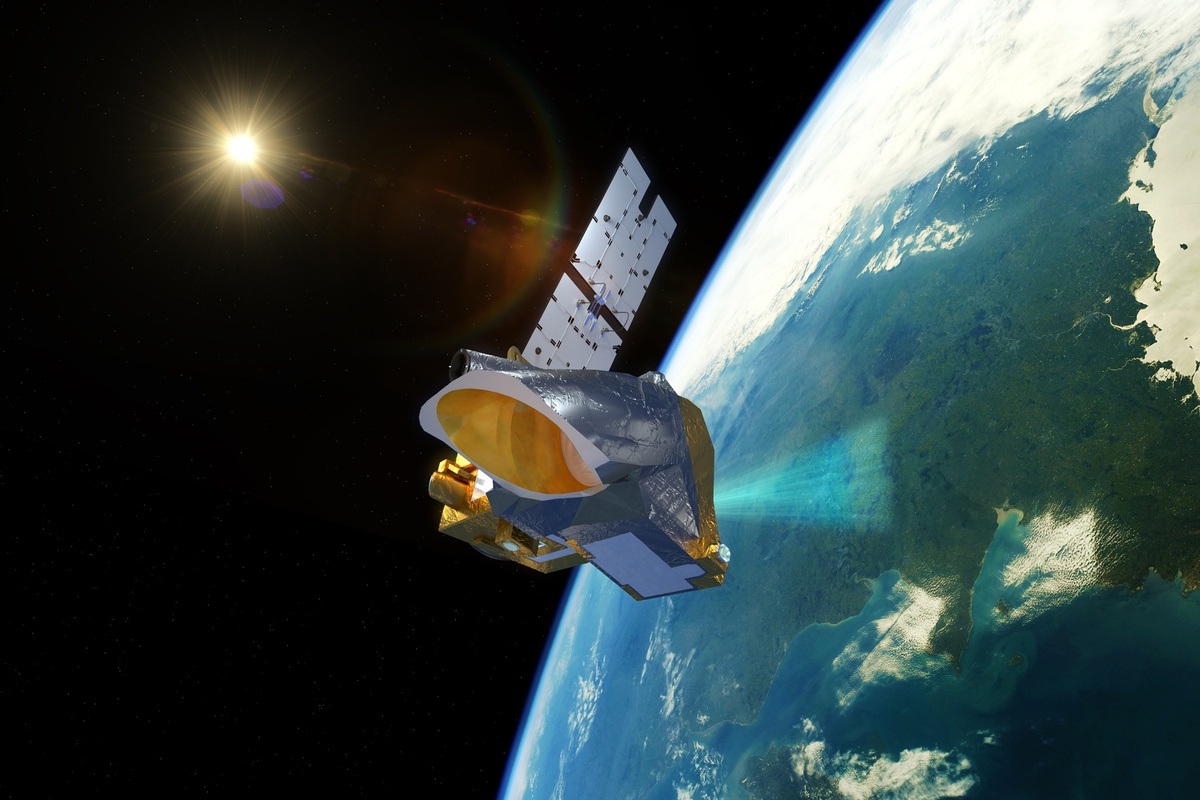
CNES is preparing to deploy MicroCarb, Europe’s first space mission dedicated to measuring atmospheric carbon dioxide, to map global CO2 fluxes with a miniaturized infrared spectrometer. Set for launch on the night of 25–26 July from the Guiana Space Centre aboard a Vega-C rocket, the 180-kilogram microsatellite will operate in a 650-kilometre orbit, providing global coverage approximately every 25 days.

Mission and instrument

MicroCarb will use reflected sunlight over land and ocean to retrieve the proportion of CO2 in the atmospheric column at a native pixel size of roughly 4 x 9 square kilometres. The mission targets measurement accuracy better than 1 ppm, enabling detection of subtle gradients associated with sources, sinks and transport. An additional spectral band spanning oxygen absorption lines will be flown to improve corrections for scattering effects such as aerosols, aiming to enhance precision and data quality.

The spacecraft is built on CNES’s Myriade bus, demonstrating significant miniaturization compared with earlier missions of similar capability. The satellite’s compact design is intended to lower cost and logistics while maintaining high radiometric and spectral performance.

Key specifications

  • Mass: ~180 kg (Myriade platform)
  • Orbit: ~650 km
  • Global revisit: ~25 days
  • Ground sampling: ~4 x 9 km
  • Target accuracy: better than 1 ppm
  • Payload: miniaturized IR spectrometer plus an oxygen absorption band
  • Launcher: Vega-C

Why it matters for carbon science

MicroCarb is designed to quantify global carbon sources and sinks and the exchanges between them, including seasonal dynamics. The mission will augment sparse ground networks with globally consistent measurements, supporting model validation and anomaly detection associated with events such as drought, deforestation or reforestation. After an initial evaluation phase comparing data with ground and balloon observations, operational exploitation over a planned five-year science mission will focus on refining flux estimates and improving understanding of feedbacks between climate and the carbon cycle.

Heritage, continuity and roadmap

MicroCarb builds on the heritage of greenhouse gas missions launched since the 2000s, including Japan’s GOSAT series and NASA’s OCO program. It is intended to help ensure continuity as OCO-2 nears the end of its operational life. The mission was developed by CNES with support from France’s PIA future investment program and contributions from the European Union and the UK Space Agency.

MicroCarb also acts as a precursor to ESA’s CO2M/Sentinel-7 constellation, planned within Europe’s Copernicus program. Whereas MicroCarb focuses on global fluxes, CO2M will target attribution of emissions, distinguishing natural from human-induced sources at higher spatial resolution (on the order of four square kilometres), enabling detailed assessments over cities and industrial regions.

Carbon cycle context

Natural carbon exchanges between sources and sinks amount to roughly 200 gigatonnes annually, driven by processes such as plant respiration, ocean-atmosphere exchange, and decomposition. Human activities add about 10 gigatonnes of carbon each year, disrupting this balance. Approximately half of anthropogenic emissions are absorbed by ecosystems and oceans, while the remainder accumulates in the atmosphere, contributing to the rise in CO2 concentrations from about 320 ppm in the mid-20th century to roughly 420 ppm today. High-precision, space-based observations like those from MicroCarb are central to tracking these trends and informing mitigation strategies.

For further details, see the CNES announcement: Satellites helping to understand the carbon machine.
Previous Post

MicroCarb Confirms Instrument Performance with First CO2 Data Over the Amazon

Next Post

ESA Stress-Tests GNSS Resilience at Arctic Jammertest to Counter Jamming and Spoofing

Related Posts

Space Technology

DLR’s MAPHEUS-16 Sets Microgravity Payload Record with Twin Red Kite Motors

November 12, 2025
Space Technology

ESA flags X5.1 flare and fast CMEs driving severe G4 storm with satellite and GNSS risk

November 12, 2025
Space Technology

Sentinel-1D Lifts Off on Ariane 62; DLR to Calibrate SAR for Copernicus Continuity

November 5, 2025
Space Technology

ESA’s AI quake-mapping models move toward operational use under CNES-led Charter

October 29, 2025
Space Technology

ESA’s Henon CubeSat clears CDR to demo deep-space comms, ion propulsion, and solar-storm early warning

October 29, 2025
Space Technology

ISS study maps fin-film condensation to advance spacecraft cooling systems

October 23, 2025
Next Post

ESA Stress-Tests GNSS Resilience at Arctic Jammertest to Counter Jamming and Spoofing

Leave a Reply Cancel reply

Your email address will not be published. Required fields are marked *

  • Trending
  • Comments
  • Latest

NASA and SpaceX Conduct Crew-11 Dry Run Ahead of Launch

July 29, 2025

SpaceX Dragon Missions: Crew Prepares for Departure and Arrival at ISS

July 30, 2025

NASA Advances Supersonic Parachute Technology for Mars Missions

July 30, 2025

Upcoming Suborbital Rocket Launches from NASA Wallops: July 28-August 8, 2025

July 28, 2025

Dragonfly Mission Hits Major Test Milestones, Targets 2028 Falcon Heavy Launch

1

ESA Initiates Construction of LISA Mission to Detect Gravitational Waves

0

UK-France MicroCarb Satellite Launches to Enhance Global CO₂ Monitoring

0

NASA’s SpaceX Crew-11 Arrives at Kennedy Space Center for Upcoming Launch

0

ESCAPADE Reset to Nov. 13 After G4 Storm; Blue Origin VADR Launch Preserves Mars Trajectory

November 13, 2025

Brazil, INPE and ESA plan uptake of Biomass P-band radar data for Amazon carbon monitoring

November 13, 2025

LOFAR and XMM-Newton confirm coronal mass ejection from a red dwarf, threatening exoplanet atmospheres

November 12, 2025

DLR’s MAPHEUS-16 Sets Microgravity Payload Record with Twin Red Kite Motors

November 12, 2025

Popular Stories

  • NASA and SpaceX Conduct Crew-11 Dry Run Ahead of Launch

    0 shares
    Share 0 Tweet 0
  • SpaceX Dragon Missions: Crew Prepares for Departure and Arrival at ISS

    0 shares
    Share 0 Tweet 0
  • NASA Advances Supersonic Parachute Technology for Mars Missions

    0 shares
    Share 0 Tweet 0
  • Upcoming Suborbital Rocket Launches from NASA Wallops: July 28-August 8, 2025

    0 shares
    Share 0 Tweet 0
  • SpaceX Crew-11 Prepares for Launch: Final Steps Before Hatch Closure

    0 shares
    Share 0 Tweet 0
  • About
  • Advertise
  • Privacy & Policy
  • Contact
The Space Feed

© 2025 Stride Interactive Group

No Result
View All Result
  • Home
  • News
    • Launches
    • Space Technology
    • Human Spaceflight
    • Space Exploration
    • Astronomy
  • Launch Schedule
    • Upcoming Launches
    • Completed Launches

© 2025 Stride Interactive Group