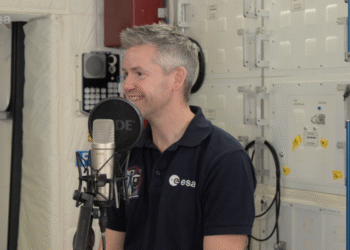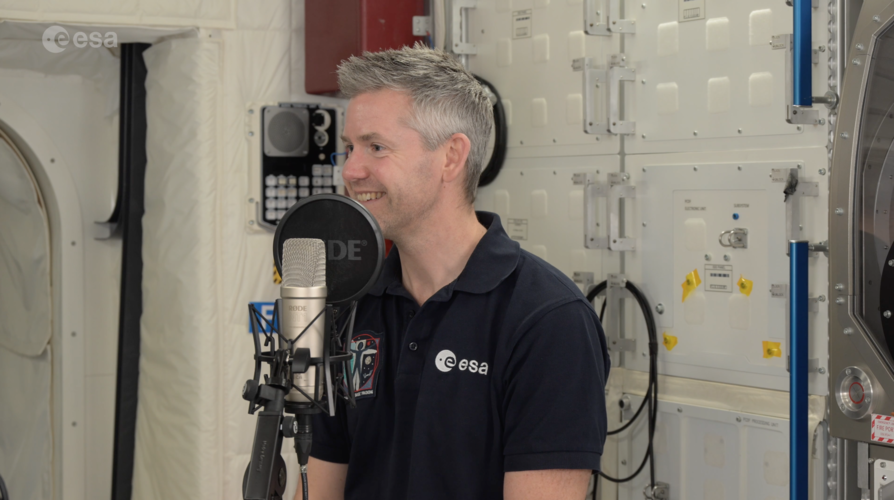
Europe’s efforts to broaden astronaut participation advanced as the European Space Agency reported that its FLY initiative has found no technical showstoppers for sending an astronaut with a prosthesis to the International Space Station. In a newly released ESA Explores episode featuring Astronaut Reserve member John McFall, the agency outlined how the work now shifts toward certifying prosthetic hardware for on-orbit use, refining research proposals, and expanding reserve training activities at the European Astronaut Centre (EAC) in Cologne.
From feasibility to implementation
The FLY study, highlighted in the episode recorded in February 2025 and published on November 11, 2025, builds on parabolic flight campaigns and ground-based trials to examine operational performance and safety in microgravity. Early results indicate that key crew tasks can be adapted effectively with a lower-limb prosthesis, supporting the feasibility of missions to the ISS.
Testing has included parabolic flights to replicate weightlessness and controlled sessions evaluating mobility and exercise, including running in microgravity. These activities help characterize interface stability, mobility constraints, and task execution under spaceflight conditions, informing both design refinements and operational procedures.
Next steps: certification, research and training
With feasibility established, ESA is moving into a structured implementation phase focused on:
- Hardware certification: Advancing prosthetic systems through spaceflight safety reviews for use inside the ISS, including assessments related to materials, mechanical robustness, and integration with crew procedures.
- Scientific proposals: Defining studies on human performance, biomechanics, and adaptation with prostheses in microgravity, with the goal of generating operational data to guide future missions.
- Astronaut Reserve Training: Continuing the ESA Astronaut Reserve Training (ART) curriculum at EAC, covering spacecraft systems, robotics, human behavior, scientific fundamentals, scuba work and survival training to prepare candidates for potential flight opportunities.
Operational implications for the ISS
The study’s outcome suggests that inclusive crew operations can be incorporated into station activities with targeted adaptations. Areas of interest include mobility within modules, exercise countermeasures, maintenance tasks, and emergency preparedness. As certification progresses, procedures and hardware configurations are expected to be refined to ensure crew safety and mission efficiency.
Strategic context
ESA’s work under the FLY initiative aligns with broader goals to expand Europe’s human spaceflight capability and diversify astronaut profiles. By transitioning from feasibility to certification and training, the agency is laying the groundwork for future ISS missions that include astronauts using prosthetic devices, subject to standard programmatic reviews and partner coordination.
Additional materials from the Astronaut Reserve highlight recent training blocks at EAC, including sessions in biology, robotics, and winter survival, underscoring the program’s focus on operational readiness. Further updates are expected as hardware evaluations mature and research campaigns are defined.
Source: ESA Explores: John McFall | Prosthetics, possibility & parabolic flights