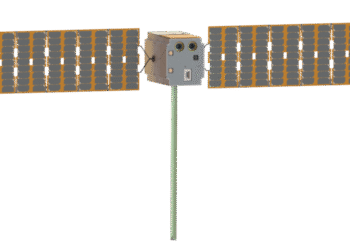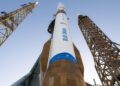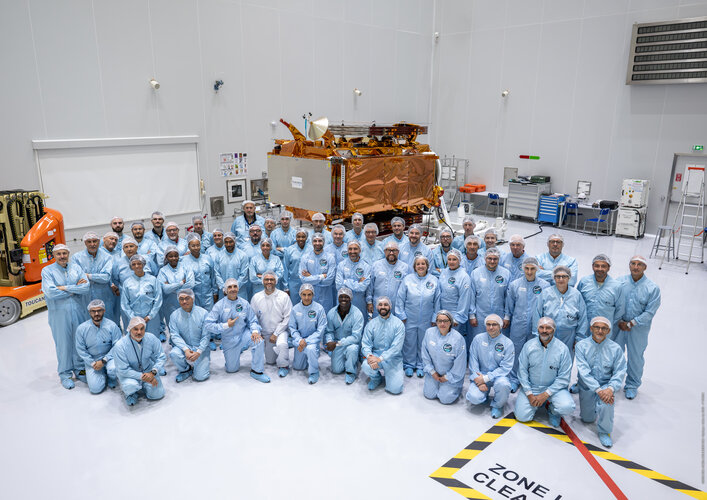
The European Space Agency is preparing Sentinel-1D for integration with Ariane 6 at Europe’s Spaceport in Kourou, following the completion of transport checks and functional testing. Targeted to launch later this year, the fourth satellite of the Copernicus Sentinel-1 radar mission is set to reinforce global C-band SAR coverage and data continuity by pairing with Sentinel-1C, which entered orbit in December 2024. The upgrade is designed to restore the mission’s nominal two-satellite configuration and increase revisit frequency for time-critical applications.
Mission status and launch campaign
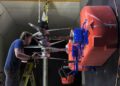
After arrival in French Guiana, Sentinel-1D underwent a pressurization and leak check, power-on, and a suite of functional verifications to confirm subsystem health. The Automatic Identification System (AIS) antenna assemblies—shipped separately—were installed and passed final connectivity tests. With these steps complete, the spacecraft is moving into finalization ahead of fueling and subsequent integration with Ariane 6 for launch from Kourou.
Once in orbit and phased with Sentinel-1C, Sentinel-1D will re-establish the mission’s two-satellite cadence, supporting sustained, reliable delivery of all-weather, day-and-night radar imagery for operational users and scientific communities.
What two spacecraft enable
Operating two identical platforms in the same orbit, roughly 180° apart, improves responsiveness and resilience across services. Key enhancements include:
- Better revisit and coverage: Higher acquisition frequency enables faster change detection and more consistent monitoring across land, ice, and ocean targets.
- Enhanced maritime insight: The onboard AIS works in tandem with C-band SAR to improve ship detection and tracking, with more frequent observations when both satellites are active.
- Streamlined operations: Recent commissioning lessons from Sentinel-1C can be directly applied, reducing time, risk, and complexity as Sentinel-1D enters service.
Payload and navigation upgrades
Sentinel-1D carries a C-band Synthetic Aperture Radar (SAR) for high-resolution, wide-swath imaging independent of cloud cover or lighting. It also supports multi-constellation GNSS—including Galileo—enhancing orbit determination and timing accuracy compared with earlier Sentinel-1 spacecraft limited to GPS. These improvements contribute to geolocation precision and more robust operations.
Priority applications
The Copernicus Sentinel-1 radar series underpins a broad set of operational and research uses where cloud-penetrating, day–night imaging is essential:
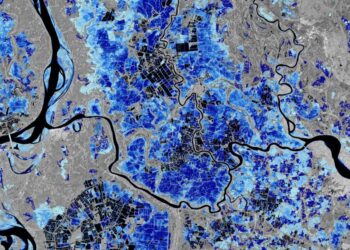
- Rapid mapping for floods, landslides, earthquakes, and other natural hazards
- Maritime surveillance, shipping lane monitoring, and oil spill detection
- Sea-ice mapping, iceberg tracking, and cryosphere dynamics
- Land deformation monitoring for infrastructure and subsidence
- Forestry, agriculture, and wetlands assessments
With Sentinel-1D joining Sentinel-1C, users can expect more frequent acquisitions and improved timeliness—factors that can determine whether an alert arrives too late or in time to guide response.
Test campaign highlights and next steps
ESA reports the following milestones were completed in Kourou to verify spacecraft readiness:
- Propellant system pressurization and leak checks following transport
- Spacecraft power-on and functional status verification
- Subsystem health assessments across platform and payload
- Integration of AIS antennas and end-to-end electrical connectivity tests
With functional testing concluded, Sentinel-1D proceeds to spacecraft finalization, then fueling and launch campaign integration. Once launched and commissioned, the satellite will transition into routine operations alongside Sentinel-1C, restoring nominal revisit performance for Copernicus services.
For more details, see the European Space Agency update at esa.int.