The Space Feed | Latest Space News
  • Home
  • News
    • Launches
    • Space Technology
    • Human Spaceflight
    • Space Exploration
    • Astronomy
  • Launch Schedule
    • Upcoming Launches
    • Completed Launches
  • Knowledge Base
    • All Missions
    • All Rockets
No Result
View All Result
  • Home
  • News
    • Launches
    • Space Technology
    • Human Spaceflight
    • Space Exploration
    • Astronomy
  • Launch Schedule
    • Upcoming Launches
    • Completed Launches
  • Knowledge Base
    • All Missions
    • All Rockets
No Result
View All Result
The Space Feed | Latest Space News

Falcon 9 Coasts Before Final Burn as IMAP, SWFO-L1 Prepare to Separate

September 25, 2025
in Launches

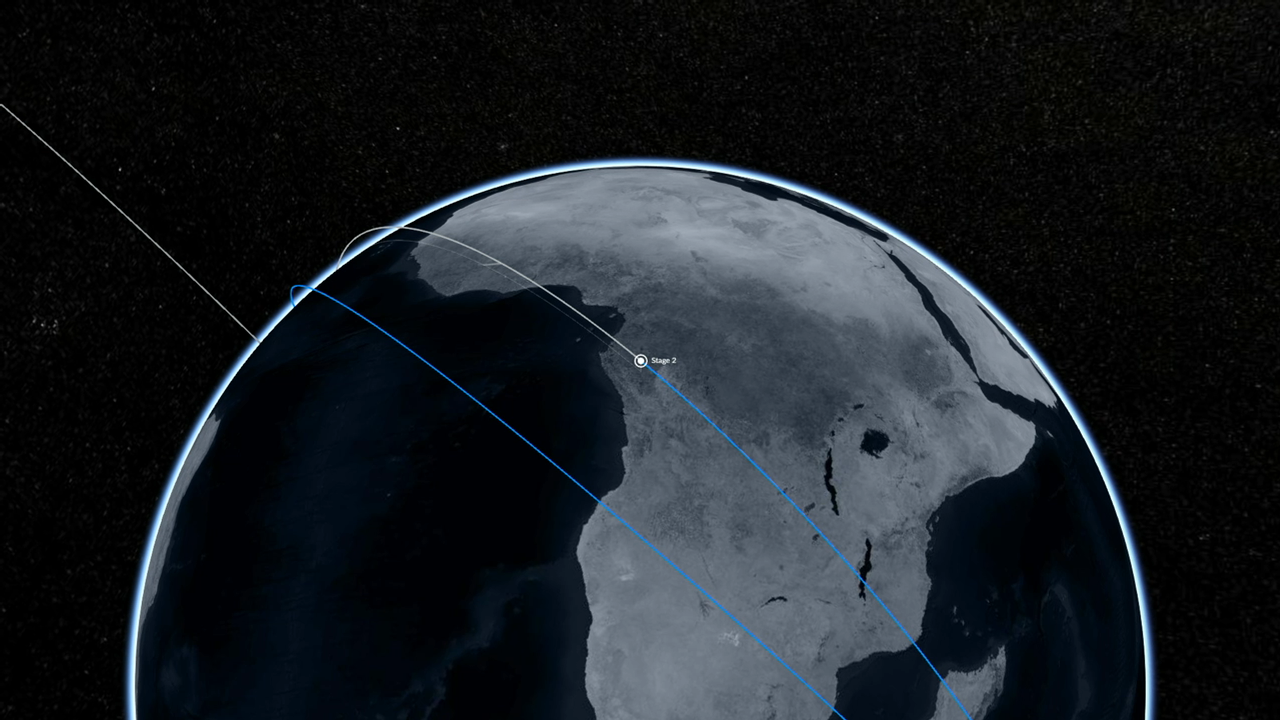
SpaceX’s Falcon 9 upper stage has entered a planned coast phase of approximately 40 minutes ahead of a final, one-minute burn that will place its payloads onto their required trajectories for deep-space operations. According to a NASA mission update, the Interstellar Mapping and Acceleration Probe (IMAP) is expected to separate from the rocket shortly before 9 a.m., with subsequent deployments to follow.

What’s Riding on Falcon 9

The mission carries a set of heliophysics and space-weather assets intended to strengthen scientific insight and operational monitoring:

  • IMAP: A NASA observatory that will map the boundaries of the heliosphere and study how it interacts with the local interstellar medium. IMAP will also provide near-real-time observations of solar wind and energetic particles.
  • Carruthers Geocorona Observatory: A NASA instrument suite focused on imaging the ultraviolet glow of Earth’s exosphere, known as the geocorona, to improve understanding of how solar activity influences the outermost reaches of the atmosphere.
  • SWFO-L1: NOAA’s Space Weather Follow On – Lagrange 1 observatory, equipped to monitor solar wind conditions, measure thermal plasma and magnetic fields, and detect coronal mass ejections using a Compact Coronagraph.

Timeline and Separation Events

The upper-stage coast period is designed to precisely time the brief second burn, optimizing deployment geometry and energy for the outbound trajectory. IMAP’s separation is slated for shortly before 9 a.m., after which additional spacecraft deployments will occur as the stack transitions to mission-specific orbits and transfer paths.

  1. ~40-minute coast on Falcon 9 second stage
  2. ~1-minute final burn to set departure conditions
  3. IMAP separation shortly before 9 a.m.
  4. Subsequent payload separations and commissioning

Science and Operations Impact

IMAP will chart particle populations across the heliosphere and at its boundary, informing models of particle acceleration and transport that affect both scientific understanding and operational space weather resilience. Near-real-time particle and solar wind measurements are expected to support risk assessments for spacecraft and crewed exploration systems, including those tied to the Artemis campaign.

The Carruthers Geocorona Observatory will advance knowledge of the exosphere’s response to solar drivers. The geocorona was first imaged during Apollo 16 using a lunar-deployed telescope designed by George Carruthers; today’s ultraviolet imaging builds on that heritage to refine atmosphere–space coupling models.

NOAA’s SWFO-L1 will head to the Sun–Earth Lagrange Point 1, a gravitationally balanced location providing continuous solar monitoring. Its in-situ measurements and coronagraph imagery are designed to enhance early warning for potentially disruptive space weather events, aiding satellite operators, navigation services, and power grid stakeholders.

Why It Matters

The combined dataset from IMAP, SWFO-L1, and Earth’s exosphere imaging will help close critical gaps between heliophysics research and operational forecasting. Together, these platforms aim to improve the community’s ability to characterize solar activity from its origin to its impacts near Earth and throughout the inner solar system.
Source: NASA IMAP Blog – Coast Phase Begins

Previous Post

CNES CASPEX cameras to ride UAE’s Rashid-2 rover on Firefly’s Blue Ghost in 2026

Next Post

IMAP Separates Cleanly from Falcon 9, Begins Spin-Stabilized Cruise to L1

Related Posts

Launches

ESCAPADE Reset to Nov. 13 After G4 Storm; Blue Origin VADR Launch Preserves Mars Trajectory

November 13, 2025
Launches

Ariane 6 Places Sentinel-1D in Orbit, Expanding Copernicus SAR and AIS Coverage

November 7, 2025
Launches

ESA readies twin HydroGNSS GNSS-R microsats for Transporter-15 liftoff from Vandenberg

November 6, 2025
Launches

Ariane 6 places Sentinel-1D in orbit, restoring dual SAR coverage and enhancing AIS updates

November 5, 2025
Launches

Ariane 6 places Sentinel-1D in orbit, boosting Copernicus SAR and ship-tracking capacity

November 5, 2025
Launches

Ariane 6 deploys Copernicus Sentinel-1D, expanding C-band SAR and AIS coverage

November 4, 2025
Next Post

IMAP Separates Cleanly from Falcon 9, Begins Spin-Stabilized Cruise to L1

Leave a Reply Cancel reply

Your email address will not be published. Required fields are marked *

  • Trending
  • Comments
  • Latest

NASA and SpaceX Conduct Crew-11 Dry Run Ahead of Launch

July 29, 2025

SpaceX Dragon Missions: Crew Prepares for Departure and Arrival at ISS

July 30, 2025

NASA Advances Supersonic Parachute Technology for Mars Missions

July 30, 2025

Upcoming Suborbital Rocket Launches from NASA Wallops: July 28-August 8, 2025

July 28, 2025

Dragonfly Mission Hits Major Test Milestones, Targets 2028 Falcon Heavy Launch

1

ESA Initiates Construction of LISA Mission to Detect Gravitational Waves

0

UK-France MicroCarb Satellite Launches to Enhance Global CO₂ Monitoring

0

NASA’s SpaceX Crew-11 Arrives at Kennedy Space Center for Upcoming Launch

0

ESCAPADE Reset to Nov. 13 After G4 Storm; Blue Origin VADR Launch Preserves Mars Trajectory

November 13, 2025

Brazil, INPE and ESA plan uptake of Biomass P-band radar data for Amazon carbon monitoring

November 13, 2025

LOFAR and XMM-Newton confirm coronal mass ejection from a red dwarf, threatening exoplanet atmospheres

November 12, 2025

DLR’s MAPHEUS-16 Sets Microgravity Payload Record with Twin Red Kite Motors

November 12, 2025

Popular Stories

  • NASA and SpaceX Conduct Crew-11 Dry Run Ahead of Launch

    0 shares
    Share 0 Tweet 0
  • SpaceX Dragon Missions: Crew Prepares for Departure and Arrival at ISS

    0 shares
    Share 0 Tweet 0
  • NASA Advances Supersonic Parachute Technology for Mars Missions

    0 shares
    Share 0 Tweet 0
  • Upcoming Suborbital Rocket Launches from NASA Wallops: July 28-August 8, 2025

    0 shares
    Share 0 Tweet 0
  • SpaceX Crew-11 Prepares for Launch: Final Steps Before Hatch Closure

    0 shares
    Share 0 Tweet 0
  • About
  • Advertise
  • Privacy & Policy
  • Contact
The Space Feed

© 2025 Stride Interactive Group

No Result
View All Result
  • Home
  • News
    • Launches
    • Space Technology
    • Human Spaceflight
    • Space Exploration
    • Astronomy
  • Launch Schedule
    • Upcoming Launches
    • Completed Launches

© 2025 Stride Interactive Group