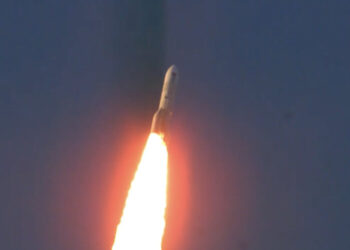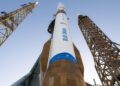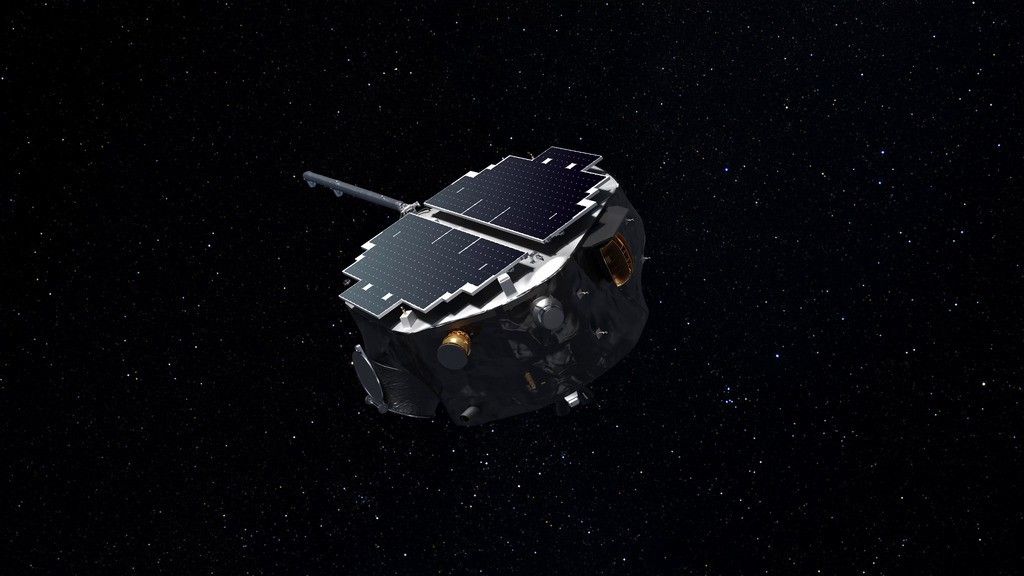
NASA’s Interstellar Mapping and Acceleration Probe (IMAP) is poised for launch on a SpaceX Falcon 9, targeting a trajectory to L1, the Sun–Earth Lagrange Point 1. The mission aims to map the boundaries of the heliosphere—the vast bubble carved by the solar wind that shields the solar system from a portion of galactic cosmic radiation. According to NASA, liftoff remains on track for 7:30 a.m. EDT from Launch Complex 39A at Kennedy Space Center, with a forecast indicating a high probability of favorable conditions. Additional mission details are available in the official NASA IMAP mission update.
Launch Overview
NASA’s Launch Services Program is managing the mission’s launch service. The Falcon 9’s second stage will impart a controlled spin of approximately four rotations per minute before spacecraft separation, releasing IMAP on its transfer to L1. The mission marks the program’s 13th heliophysics launch since 1998.
Spacecraft and Instruments
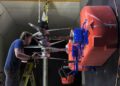
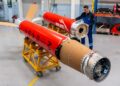
IMAP is a spin-stabilized observatory about the size of a hot tub and roughly 2,000 pounds in mass. The 8-foot (2.4-meter) diameter, 3-foot (0.9-meter) tall spacecraft houses a suite of 10 science instruments, with two instruments fielded in pairs for a total of 12 sensors. The payload is mounted around the perimeter to minimize interference during operations.
- Spin rate: one rotation every 15 seconds to sweep detectors across the full sky
- Propellant load: ~317 pounds (144 kilograms) of hydrazine
- Structure: six internal bays supporting avionics and instrument interfaces
The instrument complement is designed to sample energetic neutral atoms and charged particles, and to characterize the solar wind and interstellar material that shape the heliosphere’s boundary regions.
Power and Attitude
IMAP’s top-mounted solar array converts sunlight into approximately 500 watts of power via 16 strings per panel, each string containing 36 cells. The observatory’s total power demand is less than five 100-watt incandescent bulbs. During ascent, a lithium-ion battery provides power until the arrays deploy. The spacecraft’s spin axis, centered on the array, will be adjusted daily toward the Sun to maintain consistent power and thermal conditions.
Flight Profile to L1
Following separation from the Falcon 9 second stage, IMAP will proceed on a transfer trajectory to L1, a gravity-stable point roughly 1.5 million kilometers sunward of Earth. From this vantage, the spacecraft will conduct continuous sky scans using its spin to build global maps of the heliosphere’s boundary. Commissioning will verify instrument performance and spin balance before full science operations begin.
Why IMAP Matters
By mapping how solar and interstellar particles interact at the heliosphere’s edge, IMAP will refine models of the Sun’s protective bubble and improve understanding of how cosmic radiation varies over the solar cycle. The results are expected to inform radiation risk assessments for crewed missions, enhance space weather forecasting for spacecraft and infrastructure, and provide new constraints on particle acceleration processes operating throughout the heliosphere.
Key Mission Facts
- Launch site: Kennedy Space Center, LC-39A
- Launch vehicle: SpaceX Falcon 9
- Destination: Sun–Earth Lagrange Point 1 (L1)
- Spin-stabilized operations: 1 rotation/15 seconds
- Solar power: ~500 W available; low-power observatory design
- Hydrazine monopropellant for attitude control and stationkeeping
What’s Next
Post-launch milestones include fairing separation, orbit insertion burns by the launch vehicle, spacecraft deployment, initial communications, solar array deployment, and instrument commissioning en route to L1. Once on station, IMAP will begin its prime mission to deliver global maps of the heliosphere boundary and a comprehensive dataset for the heliophysics community.
For mission assets and updates, see the official NASA IMAP page.