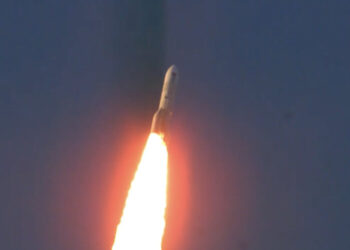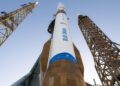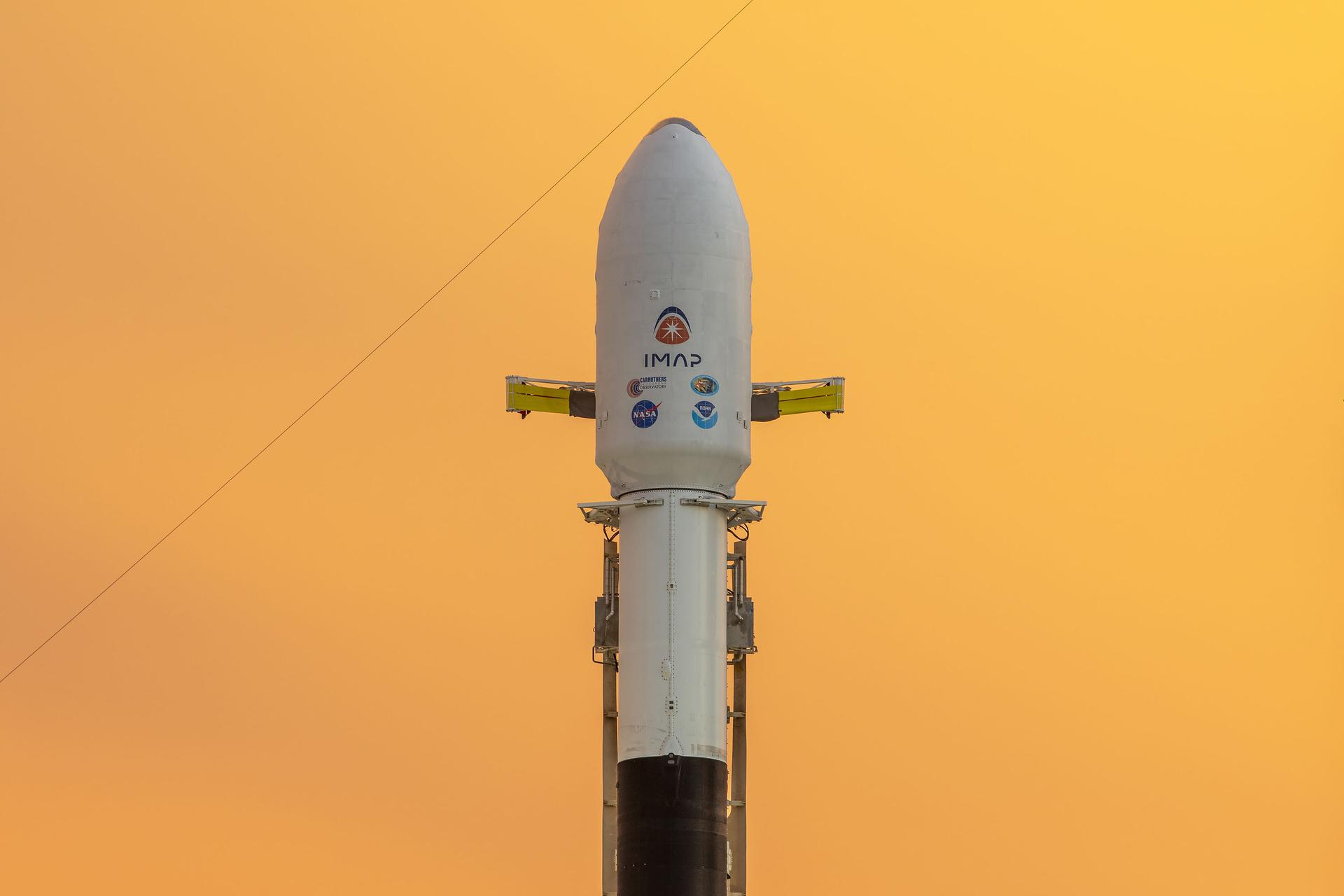
A SpaceX Falcon 9 is scheduled to launch NASA’s IMAP (Interstellar Mapping and Acceleration Probe) mission with two rideshares from Launch Complex 39A at Kennedy Space Center on Wednesday, Sept. 24, no earlier than 7:30 a.m. EDT. The U.S. Space Force’s 45th Weather Squadron forecasts 90% favorable conditions, with the primary concern being the cumulus cloud rule.
Launch plan and payloads
The flight will carry a multi-mission stack focused on heliophysics and space-weather monitoring:
- NASA’s IMAP (Interstellar Mapping and Acceleration Probe)
- NASA’s Carruthers Geocorona Observatory
- NOAA’s Space Weather Follow On–Lagrange 1 (SWFO-L1) spacecraft, headed for the Sun–Earth L1 point
The mission will lift off on a reusable Falcon 9 from Florida’s Space Coast, with standard ascent milestones including first-stage boost, stage separation, and upper-stage burns to deploy the payloads to their respective trajectories.
Weather outlook
The 45th Weather Squadron projects a strong probability of acceptable conditions at T-0. The cumulus cloud rule is the main constraint being monitored, as certain cloud formations can present electrical risks that violate range safety criteria. If weather remains within allowable limits, the vehicle is expected to proceed through fueling and terminal count as planned.
How to watch
NASA will provide comprehensive prelaunch and launch coverage across multiple platforms in English and Spanish:
- Live blog coverage begins at 6:00 a.m. EDT
- Live launch coverage begins at 6:40 a.m. EDT on NASA+, Amazon Prime, NASA’s website, and the agency’s YouTube channel
- Spanish-language launch coverage begins at 6:40 a.m. EDT on NASA+ and NASA en Español on YouTube
- Mission updates will also appear on NASA, NOAA, and Kennedy Space Center accounts on X, Facebook, and Instagram
Schedule at a glance
- 6:00 a.m. EDT: NASA IMAP live blog begins
- 6:40 a.m. EDT: Live launch coverage begins (English and Spanish)
- 7:30 a.m. EDT: Targeted liftoff (no earlier than)
Why it matters
The payloads on this flight aim to enhance understanding and monitoring of solar and geospace conditions. IMAP is designed to explore particle acceleration and the interaction between the solar wind and interstellar space, while NOAA’s SWFO-L1 is intended to provide operational space-weather observations from the L1 vantage point that support forecasting and protection of satellites, power grids, and communications.
Source: NASA update