The Space Feed | Latest Space News
  • Home
  • News
    • Launches
    • Space Technology
    • Human Spaceflight
    • Space Exploration
    • Astronomy
  • Launch Schedule
    • Upcoming Launches
    • Completed Launches
  • Knowledge Base
    • All Missions
    • All Rockets
No Result
View All Result
  • Home
  • News
    • Launches
    • Space Technology
    • Human Spaceflight
    • Space Exploration
    • Astronomy
  • Launch Schedule
    • Upcoming Launches
    • Completed Launches
  • Knowledge Base
    • All Missions
    • All Rockets
No Result
View All Result
The Space Feed | Latest Space News

Inside CADMOS: CNES Prepares and Operates Microgravity Experiments for Sophie Adenot’s Epsilon Mission

October 6, 2025
in Human Spaceflight

France’s space agency CNES is mobilizing its CADMOS center in Toulouse to prepare and operate a new suite of microgravity experiments for ESA astronaut Sophie Adenot’s Epsilon mission to the International Space Station (ISS). The work extends a three-decade track record supporting European human spaceflight, from Mir and the Space Shuttle to long-duration ISS research campaigns. CNES outlined the program and the role CADMOS plays across development and operations in an update published on 6 October 2025.

What CADMOS does

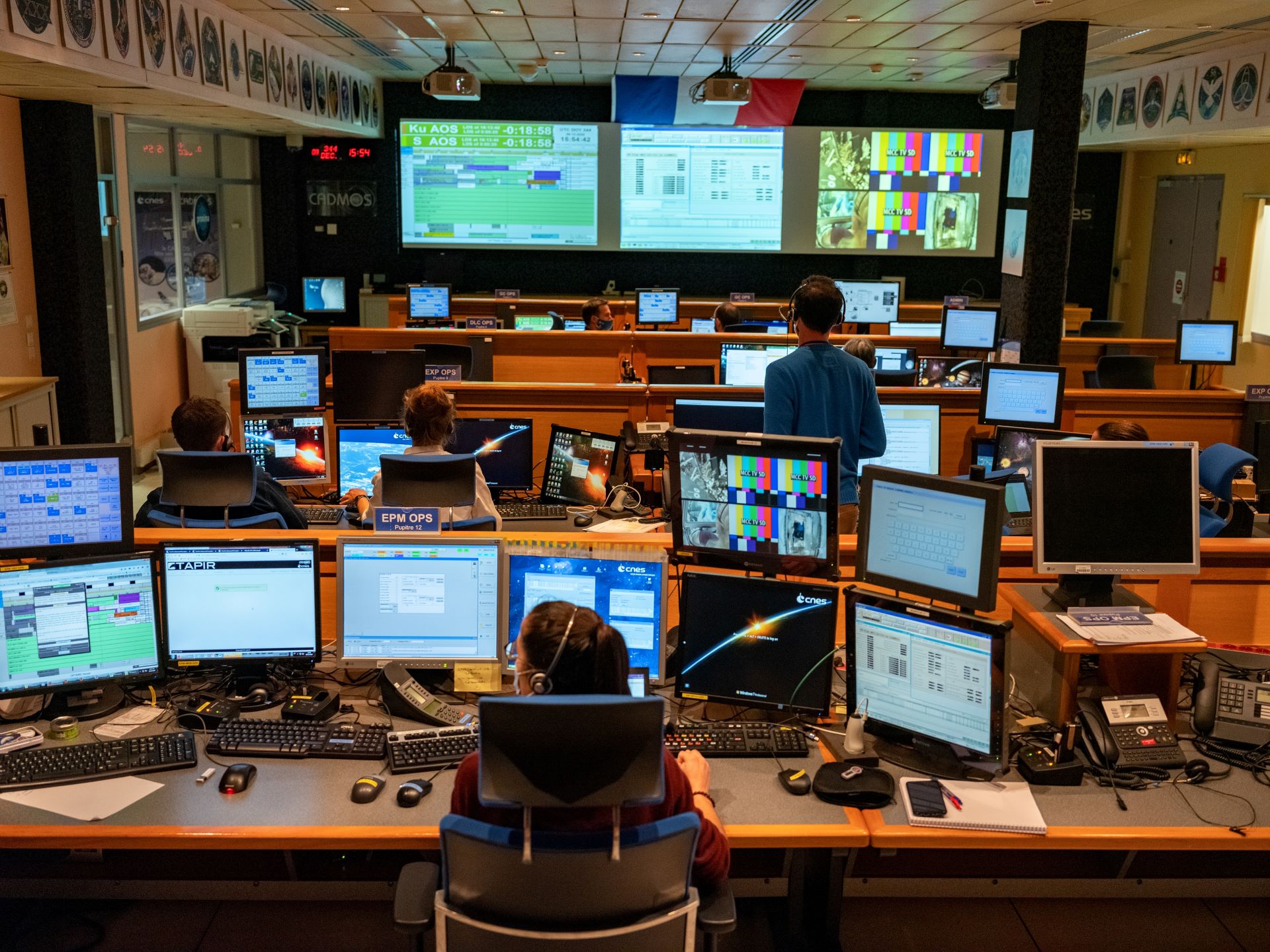
CADMOS, the Center for the Development of Microgravity Applications and Space Operations, was established in 1993 at CNES’s Toulouse Space Centre to structure France’s human spaceflight activities. Uniquely in Europe, it combines end-to-end capabilities: designing and preparing experiments with laboratories and industry, qualifying hardware for flight, and conducting real-time operations with the ISS crew and ground systems. This integrated model spans the full value chain from requirements definition to post-flight data delivery.

How experiments are selected

CNES prioritizes two objectives when selecting ISS investigations:

  • Support for the French and European scientific community that requires access to microgravity for advanced research.
  • Development of technologies that pave the way for future crewed exploration missions.

Projects may be national or conducted in partnership with other agencies such as ESA or NASA, guided by a CNES roadmap that aligns scientific goals and exploration needs.

Why microgravity matters

Microgravity suppresses the effects of weight, thermal convection, buoyancy, sedimentation and hydrostatic pressure, enabling phenomena to be observed that are masked on Earth. Key research domains include:

  • Materials and fluid physics: studies of fluids, plasma, solidification and evaporation.
  • Life sciences: plant and animal biology, exobiology and human physiology, including cardiovascular, neuroscience and organoid research. Space medicine leverages accelerated but reversible physiological changes to advance understanding and countermeasures.
  • Fundamental physics: niche areas such as cold atoms.

From lab concept to in-orbit results

CADMOS converts scientific requirements into flight-ready experiments and mission procedures, then oversees execution and data return. The typical lifecycle involves:

  1. Co-design with research teams and manufacturers to define hardware and protocols compatible with ISS constraints.
  2. Qualification and certification for flight safety and integration.
  3. Launch and installation via cargo resupply missions.
  4. Commissioning and operations from the CADMOS control center, with astronauts acting as subjects or operators as needed.
  5. Ground-controlled investigations when possible, minimizing crew time and maximizing efficiency.
  6. External payloads mounted outside the station when required, as demonstrated by programs such as ACES and Euro Material Ageing.
  7. Data distribution to principal investigators for analysis and publication.

Support for the Epsilon mission

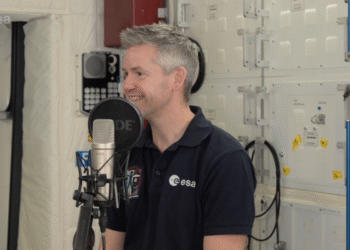
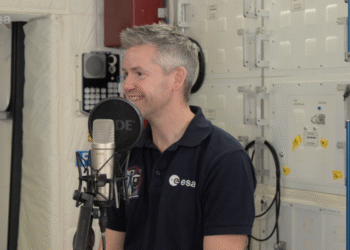
While the ISS is an international laboratory where experiments are typically conducted by any trained crew member, CNES assembles a cohesive national contribution when a French ESA astronaut is on board. For Sophie Adenot’s Epsilon mission, CADMOS is preparing a portfolio spanning science, technology and education to advance programmatic objectives and highlight French expertise. Training and operational support are designed to ensure efficient execution on orbit and rapid science return.

European context and continuity

CADMOS is part of a network of European centers that operate on behalf of ESA. Its integrated development-and-operations role supports Europe’s sustained contribution to the ISS program, ensuring continuity in microgravity research whether or not a French astronaut is currently assigned. The approach is intended to benefit the broader community while maturing capabilities relevant to future human exploration.
Source: CNES – Inside CADMOS: preparing and operating microgravity experiments for Sophie Adenot’s Epsilon mission

Previous Post

IASI-NG Debuts on MetOp-SG: Enhanced Infrared Sounding to Secure Europe’s Weather and Climate Data to 2045

Next Post

MicroCarb Confirms Instrument Performance with First CO2 Data Over the Amazon

Related Posts

Human Spaceflight

ESA FLY study finds ISS missions feasible with prostheses, moves to certification and training

November 11, 2025
Human Spaceflight

ESA study clears path for prosthesis-wearing astronauts as McFall details certification and training plans

November 11, 2025
Human Spaceflight

New Shepard NS-32 Carries Six on Blue Origin’s 12th Crewed Suborbital Mission, Total Reaches 64 Flown

November 9, 2025
Human Spaceflight

New Shepard NS-32 completes 12th crewed mission as Blue Origin total reaches 64 people flown

November 6, 2025
Human Spaceflight

Blue Origin Flies Six on NS-33, Achieving 13th Crewed New Shepard Mission

November 6, 2025
Human Spaceflight

JAXA outlines fresh food manifest on HTV-X1 resupply mission

October 31, 2025
Next Post

MicroCarb Confirms Instrument Performance with First CO2 Data Over the Amazon

Leave a Reply Cancel reply

Your email address will not be published. Required fields are marked *

  • Trending
  • Comments
  • Latest

NASA and SpaceX Conduct Crew-11 Dry Run Ahead of Launch

July 29, 2025

SpaceX Dragon Missions: Crew Prepares for Departure and Arrival at ISS

July 30, 2025

NASA Advances Supersonic Parachute Technology for Mars Missions

July 30, 2025

Upcoming Suborbital Rocket Launches from NASA Wallops: July 28-August 8, 2025

July 28, 2025

Dragonfly Mission Hits Major Test Milestones, Targets 2028 Falcon Heavy Launch

1

ESA Initiates Construction of LISA Mission to Detect Gravitational Waves

0

UK-France MicroCarb Satellite Launches to Enhance Global CO₂ Monitoring

0

NASA’s SpaceX Crew-11 Arrives at Kennedy Space Center for Upcoming Launch

0

ESCAPADE Reset to Nov. 13 After G4 Storm; Blue Origin VADR Launch Preserves Mars Trajectory

November 13, 2025

Brazil, INPE and ESA plan uptake of Biomass P-band radar data for Amazon carbon monitoring

November 13, 2025

LOFAR and XMM-Newton confirm coronal mass ejection from a red dwarf, threatening exoplanet atmospheres

November 12, 2025

DLR’s MAPHEUS-16 Sets Microgravity Payload Record with Twin Red Kite Motors

November 12, 2025

Popular Stories

  • NASA and SpaceX Conduct Crew-11 Dry Run Ahead of Launch

    0 shares
    Share 0 Tweet 0
  • SpaceX Dragon Missions: Crew Prepares for Departure and Arrival at ISS

    0 shares
    Share 0 Tweet 0
  • NASA Advances Supersonic Parachute Technology for Mars Missions

    0 shares
    Share 0 Tweet 0
  • Upcoming Suborbital Rocket Launches from NASA Wallops: July 28-August 8, 2025

    0 shares
    Share 0 Tweet 0
  • SpaceX Crew-11 Prepares for Launch: Final Steps Before Hatch Closure

    0 shares
    Share 0 Tweet 0
  • About
  • Advertise
  • Privacy & Policy
  • Contact
The Space Feed

© 2025 Stride Interactive Group

No Result
View All Result
  • Home
  • News
    • Launches
    • Space Technology
    • Human Spaceflight
    • Space Exploration
    • Astronomy
  • Launch Schedule
    • Upcoming Launches
    • Completed Launches

© 2025 Stride Interactive Group