Northrop Grumman’s NG-23 cargo mission to the International Space Station is carrying NASA’s Zero Boil-Off Tank Noncondensables experiment (ZBOT-NC), a study aimed at advancing zero-boil-off cryogenic propellant storage for future deep-space transportation and on-orbit depots. The investigation builds on earlier ZBOT work to reduce propellant losses caused by self-pressurization, a key hurdle for long-duration missions.
Why zero-boil-off matters
Cryogenic propellants such as liquid hydrogen and liquid oxygen enable high-performance spaceflight and support life support systems, but they are vulnerable to heat leaks. Even with insulation, small heat inputs warm the liquid, increase evaporation, and raise tank pressure. Today, many spacecraft control that pressure by venting vapor overboard, which wastes propellant. Over multi-month transit times, this loss can become mission-limiting. The ZBOT series targets zero boil-off (ZBO) approaches that actively manage pressure and temperature to avoid venting, including fluid mixing strategies and other control techniques suited to microgravity.
What ZBOT-NC will test
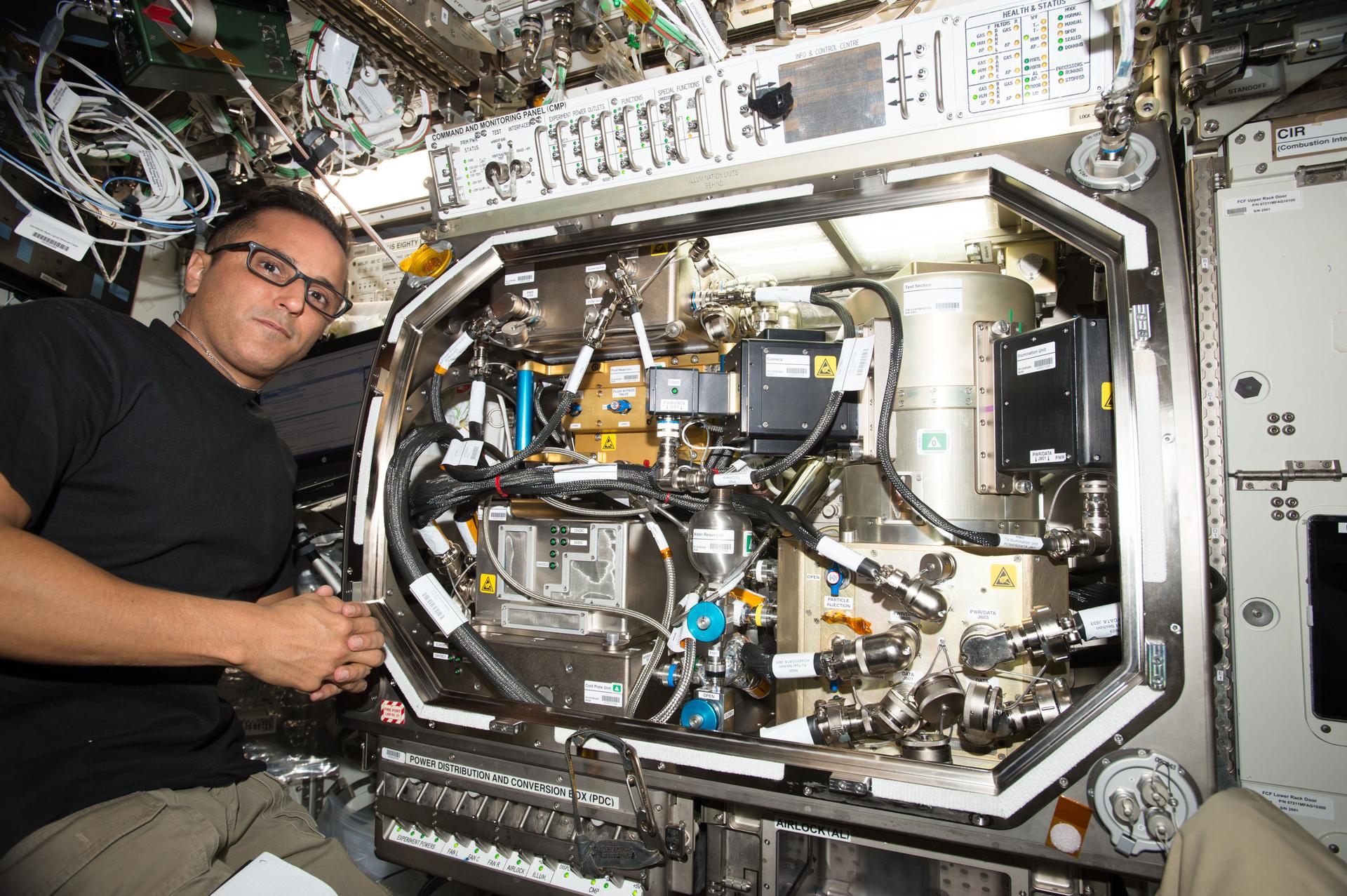
ZBOT-NC focuses on noncondensable gases (NCGs)—species that do not liquefy under typical tank conditions. Even trace NCGs can change how vapor and liquid exchange heat and mass, altering evaporation and condensation rates and complicating pressure control. Operated in the station’s Microgravity Science Glovebox and led by NASA’s Glenn Research Center, the experiment will map how NCGs stratify, how they modify thermal layers near liquid surfaces, and how they affect self-pressurization dynamics. High-fidelity measurements of pressure and temperature will be used to validate and refine models that guide cryogenic tank design and operations in low gravity.
- Quantify how NCG concentration and distribution influence tank pressurization.
- Characterize NCG-induced barriers to heat and mass transfer at liquid-vapor interfaces.
- Validate analytical and computational models for microgravity cryogenic behavior.
- Assess active control methods, including jet mixing, for robust pressure management.
How the experiment will run on station
The ZBOT-NC hardware conducts repeated test sequences under controlled conditions to isolate the role of NCGs in liquid-vapor dynamics. Microgravity allows long-duration, low-disturbance observations that are not achievable on the ground. Researchers will downlink data sets for comparison against predictive tools, closing gaps between ground-based testing and on-orbit performance.
Implications for missions and industry
The findings are intended to reduce risk for Mars-class missions, in-space propellant depots, and upper stages that must store cryogens for extended periods. Improved understanding of NCG effects can inform tank geometries, internal plumbing, sensor placement, and active control schemes that maintain stability without venting. Beyond propulsion, better cryogenic management benefits space observatories and probes that rely on ultra-cold fluids for instrument cooling. On Earth, validated models and design practices can support medical, industrial, and energy applications that require long-term cryogenic storage with minimal loss.
What comes next
ZBOT-NC is part of a broader, stepwise effort to mature cryogenic fluid management. Insights from this investigation will feed into integrated ZBO strategies that couple fluid mixing, thermal control, and guidance for handling NCGs in operational systems. Additional details are available from NASA.