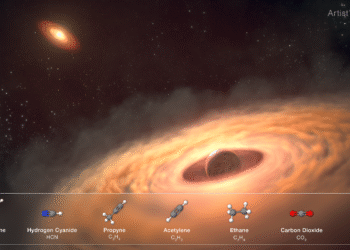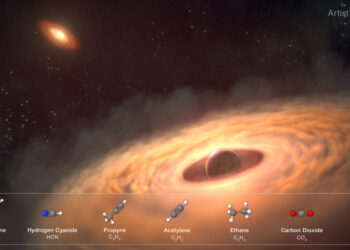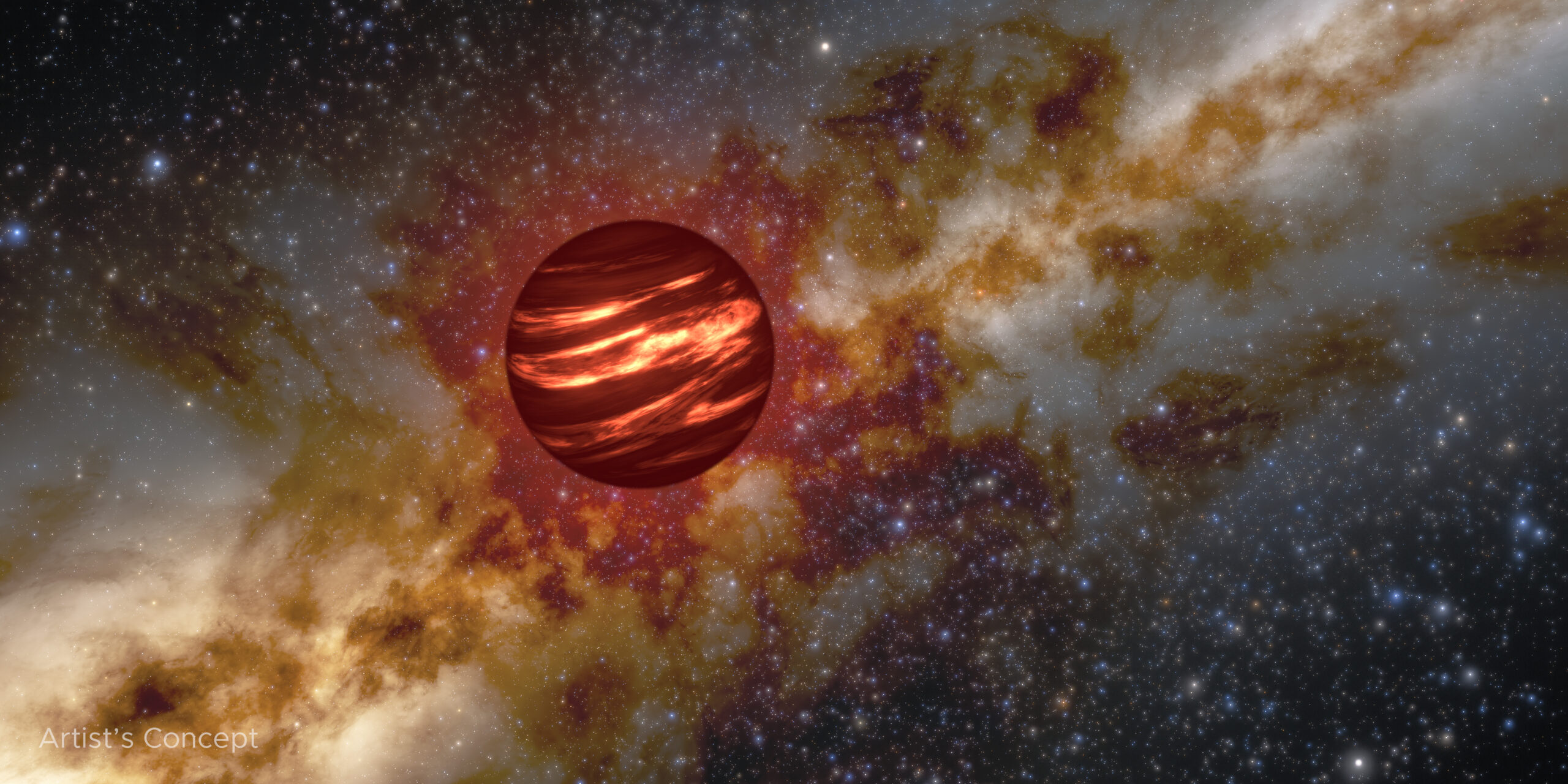
NASA’s James Webb Space Telescope has identified spectral fingerprints of silane (SiH4) in the atmosphere of an ancient brown dwarf known as “The Accident”, offering a new explanation for why silicon-bearing molecules remain elusive in the visible layers of Jupiter, Saturn, and many giant exoplanets. The findings, published Sept. 4, 2025, in Nature, suggest that oxygen availability is a key control on silicon chemistry in giant-planet atmospheres. Source: NASA.
What Webb saw
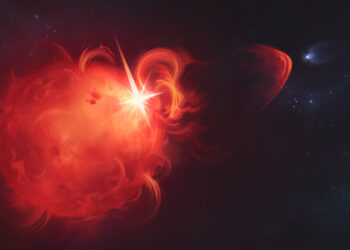
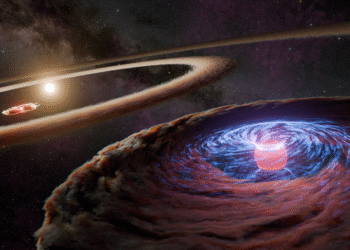
The brown dwarf informally dubbed The Accident was discovered in 2020 by a citizen-science effort using data from WISE/NEOWISE. Located roughly 50 light-years away and likely 10–12 billion years old, it is unusually faint and chemically peculiar. Webb’s infrared spectroscopy revealed features consistent with silane, marking the first clear identification of this molecule in a brown dwarf. Brown dwarfs sit between planets and stars in mass, cool over time, and provide clean laboratories for atmospheric chemistry without the glare of a host star.
Why silicon hides in giant planets
Silicon is abundant in the cosmos, yet silicon-bearing gases are rarely detected in the upper atmospheres of Jupiter- and Saturn-class worlds. At moderate to high oxygen levels, silicon tends to bond with oxygen to form silicates and oxides. On hot giants, these compounds can condense into mineral clouds; on cooler giants, they sink to deeper layers beneath water and ammonia clouds, pushing silicon chemistry below observable altitudes.
The Accident appears to be different because it formed when the universe contained less oxygen-rich material. In an oxygen-poor atmosphere, silicon more readily bonds with hydrogen, allowing silane to persist higher in the atmosphere where telescopes can see it. Webb’s detection supports this oxygen-limited pathway and provides a benchmark for interpreting non-detections of silicon molecules in other giant atmospheres.
Key implications
- Chemical pathways: Oxygen scarcity can favor silane over silicates, altering expected gas abundances.
- Retrieval models: Atmospheric models for brown dwarfs and exoplanets may need updated priors for silicon chemistry and cloud formation as a function of metallicity and C/O ratio.
- Solar system context: The result is consistent with silicon being sequestered at depth in Jupiter and Saturn, beyond current observational reach.
- Brown dwarfs as analogs: Solo brown dwarfs offer clearer spectra than star-lit exoplanets, enabling tests of chemistry relevant to many giant worlds.
Instruments and missions behind the result
Webb’s broad infrared coverage and sensitivity enabled a decisive look at The Accident’s faint spectrum. The object was initially flagged in all-sky data from the Wide-field Infrared Survey Explorer (WISE), later extended as NEOWISE. Together, these missions provided discovery and follow-up pathways linking archival surveys and state-of-the-art spectroscopy.
What’s next
Targeted surveys can now search for silane across older, metal-poor brown dwarfs and giant exoplanets to map where oxygen-limited chemistry emerges. Improved laboratory measurements of silane and silicate opacities, combined with multi-wavelength observations, will refine constraints on temperature, composition, and cloud structure. Comparative studies with Jupiter and Saturn will help determine how deep sequestration and vertical mixing shape observable silicon species.
For full study details and mission context, see NASA’s summary: NASA: JWST study of ‘The Accident’.