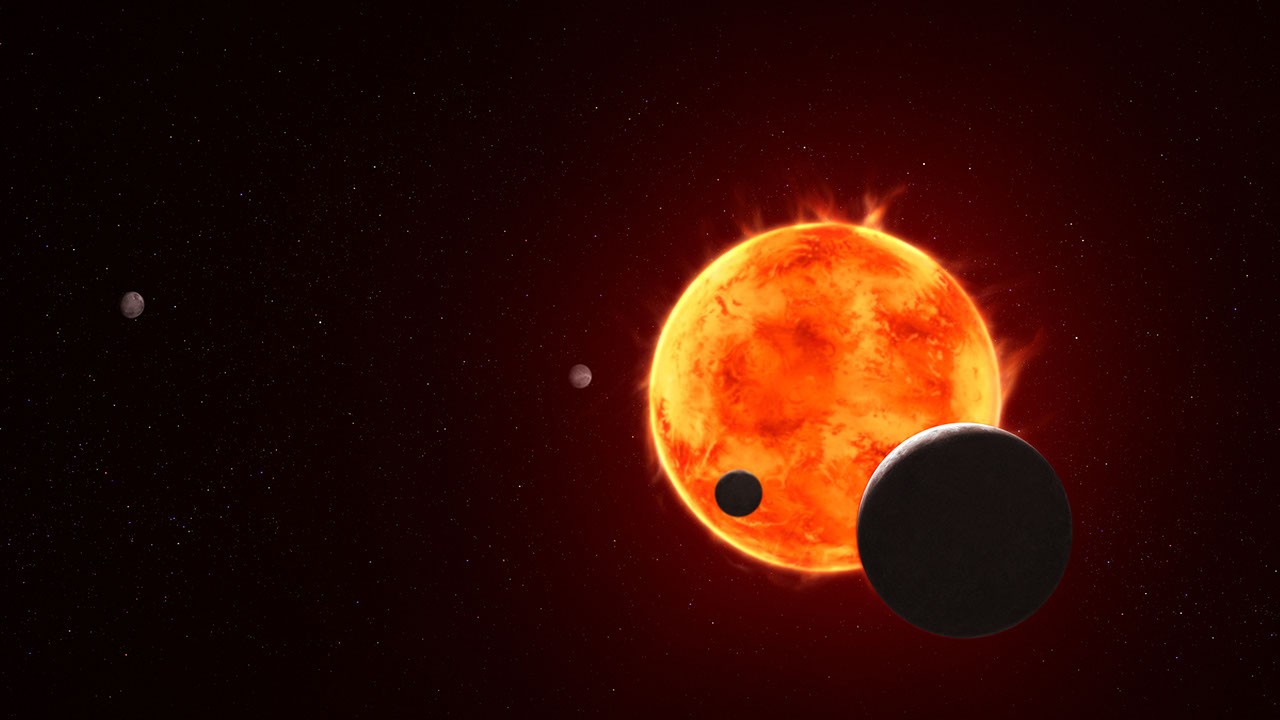
NASA’s James Webb Space Telescope has tightened constraints on the atmosphere of the Earth-sized exoplanet TRAPPIST‑1 e using early transit spectroscopy with NIRSpec and an innovative dual‑transit strategy. Initial results from four transits, detailed in two Astrophysical Journal Letters studies, point to a primary atmosphere unlikely scenario and reduce the likelihood of a Venus‑like, carbon‑dioxide‑dominated state, while leaving several secondary‑atmosphere possibilities open. The observations form a baseline for an expanded campaign now underway.
How Webb probed TRAPPIST‑1 e
Webb’s NIRSpec measured the system as TRAPPIST‑1 e passed in front of its star, capturing wavelength‑dependent dips in starlight that would indicate gases in the planet’s atmosphere. With each transit, the combined signal strengthens, improving sensitivity to specific molecules. The four early transits analyzed so far, gathered by the JWST Telescope Scientist Team’s DREAMS collaboration, deliver the first round of constraints for a temperate, rocky world in the TRAPPIST‑1 system.
Early findings
- No primordial H/He envelope: Stellar activity from the TRAPPIST‑1 M‑dwarf makes a retained hydrogen‑helium atmosphere unlikely, consistent with Webb’s data.
- CO2-dominated atmosphere disfavored: A thick, Venus‑like carbon‑dioxide atmosphere is less likely based on the current spectrum, though not entirely ruled out.
- No definitive atmosphere detected yet: The data do not confirm the presence of a secondary atmosphere; several scenarios remain viable.
- Tidally locked climate expected: Climate states such as a dayside ocean, a substellar “oasis,” or an airless surface remain on the table, depending on atmospheric mass and composition.
Dual‑transit strategy to tame stellar variability
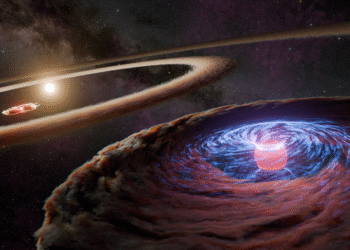
To separate stellar signals from planetary atmospheres around an active red dwarf, the team is timing observations so planets b and e transit back‑to‑back. Planet b, which prior Webb observations suggest is a bare rock, serves as a stellar reference. By comparing planet b’s spectrum with planet e’s taken minutes to hours apart, researchers aim to subtract star‑induced variability and isolate any atmospheric features from TRAPPIST‑1 e. The program includes 15 additional observations designed to sharpen molecular constraints across the near‑infrared.
What could still surround TRAPPIST‑1 e?
Multiple end‑member and intermediate cases remain plausible:
- Airless or tenuous state: If e failed to build a secondary atmosphere, the surface could experience extreme day‑night temperature contrasts.
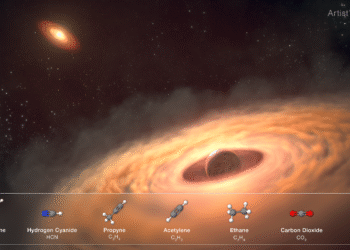
- Thin to moderate secondary atmosphere: A heavier, post‑primordial atmosphere (for example, CO2-rich with trace gases) could stabilize the climate. Limited liquid water is possible if greenhouse forcing is sufficient.
- Climate patterns on a tidally locked world: Depending on heat transport and albedo, outcomes range from a localized substellar melt region to a global ocean under certain atmospheric pressures.
Why this matters
TRAPPIST‑1 e is a benchmark target: Earth‑sized, in the star’s temperate zone, and only about 40 light‑years away. Webb’s early constraints demonstrate the feasibility of precision transmission spectroscopy for rocky, temperate exoplanets and refine target lists and strategies for future observations. The dual‑transit approach is especially relevant for active M‑dwarf systems, where disentangling stellar variability is critical to robust atmospheric detections.
Key takeaways
- Webb/NIRSpec transit data for TRAPPIST‑1 e disfavors a primordial hydrogen‑helium atmosphere and reduces the likelihood of a thick CO2 blanket.
- No atmosphere has been confirmed; several secondary‑atmosphere scenarios remain consistent with current data.
- A dual‑transit method leveraging planet b as a stellar reference is in progress, with 15 more observations planned to isolate potential atmospheric signatures on e.
- Results inform the broader search for atmospheres on temperate, rocky exoplanets around active M dwarfs.
Source: NASA