The Space Feed | Latest Space News
  • Home
  • News
    • Launches
    • Space Technology
    • Human Spaceflight
    • Space Exploration
    • Astronomy
  • Launch Schedule
    • Upcoming Launches
    • Completed Launches
  • Knowledge Base
    • All Missions
    • All Rockets
No Result
View All Result
  • Home
  • News
    • Launches
    • Space Technology
    • Human Spaceflight
    • Space Exploration
    • Astronomy
  • Launch Schedule
    • Upcoming Launches
    • Completed Launches
  • Knowledge Base
    • All Missions
    • All Rockets
No Result
View All Result
The Space Feed | Latest Space News

NASA Carruthers and NOAA SWFO-L1 Launch to L1 to Strengthen Space-Weather Forecasting

September 24, 2025
in Launches

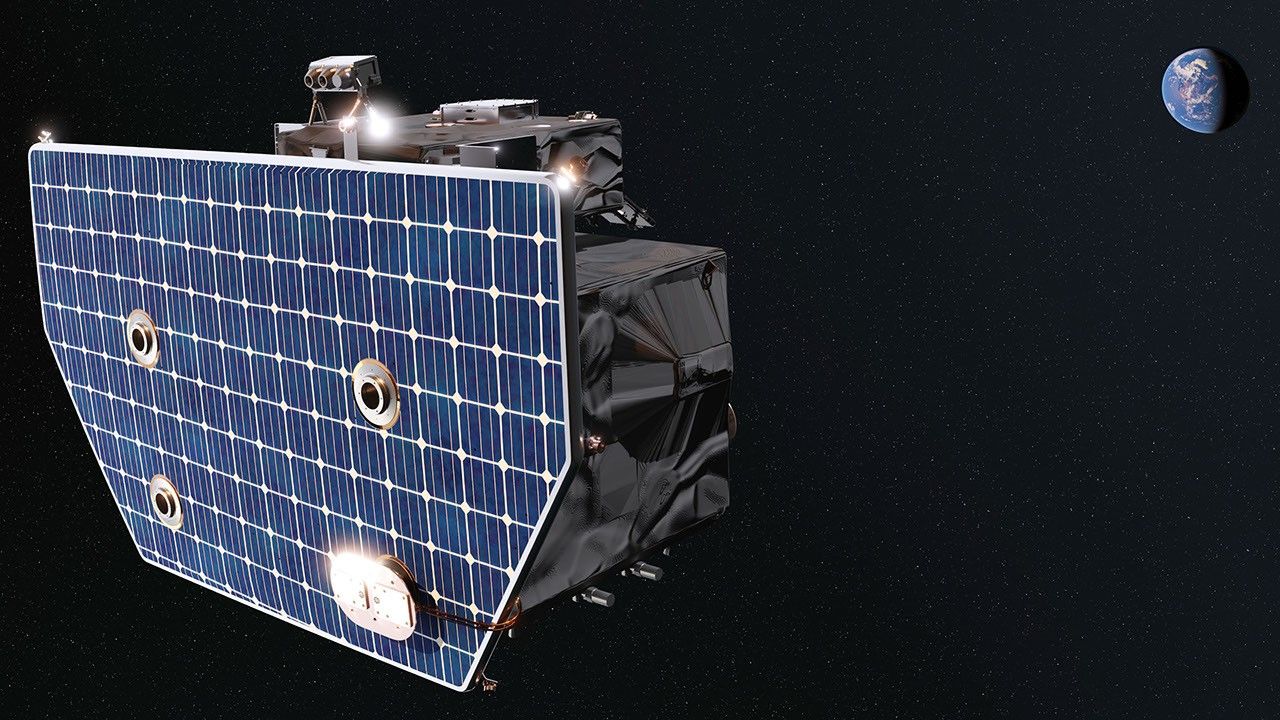
NASA and NOAA are set to expand space-weather monitoring with the launch of the Carruthers Geocorona Observatory and NOAA’s Space Weather Follow On – Lagrange 1 (SWFO‑L1), flying to the Sun–Earth L1 point alongside NASA’s IMAP mission. Liftoff remains on track for 7:30 a.m. EDT on a SpaceX Falcon 9 from Launch Complex 39A at Kennedy Space Center.

From roughly one million miles sunward of Earth, the pair will strengthen real-time observations that underpin space-weather forecasting for satellites, communications, navigation, power systems, and crewed and uncrewed missions.

Missions at a glance

The Carruthers Geocorona Observatory is a small satellite designed to continuously image Earth’s exosphere—the outermost atmospheric layer—using ultraviolet cameras tuned to Lyman-alpha emissions. This enables global tracking of the geocorona, a diffuse envelope of neutral hydrogen that extends at least halfway to the Moon. Global observations of the geocorona have been made only a handful of times prior to this mission. Carruthers is named for Dr. George Carruthers, whose pioneering instrument captured the first image of the geocorona.

NOAA’s SWFO‑L1 is the agency’s first purpose-built space-weather satellite. Operating at L1, it will deliver continuous, real-time measurements of solar activity and the solar wind. These data are intended to improve early warning and forecasting of geomagnetic storms, providing lead time for operators to protect critical infrastructure on Earth and in orbit.

Why L1 matters

Lagrange point 1 offers an uninterrupted view of the Sun and an upstream sampling location for the solar wind before it reaches Earth. This vantage provides early indicators of incoming disturbances and a stable geometry for long-duration atmospheric and heliophysics observations. For Carruthers, L1 supports consistent global imaging of the exosphere’s response to solar variability; for SWFO‑L1, it enables high-cadence monitoring needed for operational forecasting.

Roles and partnerships

NOAA funds SWFO‑L1, manages mission operations, and distributes data products to users. On NOAA’s behalf, NASA’s Goddard Space Flight Center managed spacecraft development, collaborating with commercial partners on the spacecraft and instruments. NASA leads the Carruthers mission to study how space weather influences Earth’s extended atmosphere, complementing NOAA’s operational measurements.

What to watch next

  • Launch and separation: Following liftoff on Falcon 9, the spacecraft will begin their transfers to L1.
  • Commissioning: Post-launch checkouts will prepare instruments for continuous science and operational data return.
  • Data impact: SWFO‑L1 aims to enhance real-time alerts for power grids, aviation, satellite operators, and spaceflight providers, while Carruthers supplies context on atmospheric dynamics at the edge of space.

Together, these missions are designed to tighten the loop between solar monitoring, near-Earth environmental awareness, and actionable forecasting, supporting both national infrastructure and the commercial space sector.

Source: NASA
Previous Post

IMAP to Deliver 30-Minute Radiation Alerts from L1 to Safeguard Missions

Next Post

IMAP, Carruthers Observatory, and NOAA SWFO-L1: Launch Coverage Starts for L1 Space-Weather Trio

Related Posts

Launches

ESCAPADE Reset to Nov. 13 After G4 Storm; Blue Origin VADR Launch Preserves Mars Trajectory

November 13, 2025
Launches

Ariane 6 Places Sentinel-1D in Orbit, Expanding Copernicus SAR and AIS Coverage

November 7, 2025
Launches

ESA readies twin HydroGNSS GNSS-R microsats for Transporter-15 liftoff from Vandenberg

November 6, 2025
Launches

Ariane 6 places Sentinel-1D in orbit, restoring dual SAR coverage and enhancing AIS updates

November 5, 2025
Launches

Ariane 6 places Sentinel-1D in orbit, boosting Copernicus SAR and ship-tracking capacity

November 5, 2025
Launches

Ariane 6 deploys Copernicus Sentinel-1D, expanding C-band SAR and AIS coverage

November 4, 2025
Next Post

IMAP, Carruthers Observatory, and NOAA SWFO-L1: Launch Coverage Starts for L1 Space-Weather Trio

Leave a Reply Cancel reply

Your email address will not be published. Required fields are marked *

  • Trending
  • Comments
  • Latest

NASA and SpaceX Conduct Crew-11 Dry Run Ahead of Launch

July 29, 2025

SpaceX Dragon Missions: Crew Prepares for Departure and Arrival at ISS

July 30, 2025

NASA Advances Supersonic Parachute Technology for Mars Missions

July 30, 2025

Upcoming Suborbital Rocket Launches from NASA Wallops: July 28-August 8, 2025

July 28, 2025

Dragonfly Mission Hits Major Test Milestones, Targets 2028 Falcon Heavy Launch

1

ESA Initiates Construction of LISA Mission to Detect Gravitational Waves

0

UK-France MicroCarb Satellite Launches to Enhance Global CO₂ Monitoring

0

NASA’s SpaceX Crew-11 Arrives at Kennedy Space Center for Upcoming Launch

0

ESCAPADE Reset to Nov. 13 After G4 Storm; Blue Origin VADR Launch Preserves Mars Trajectory

November 13, 2025

Brazil, INPE and ESA plan uptake of Biomass P-band radar data for Amazon carbon monitoring

November 13, 2025

LOFAR and XMM-Newton confirm coronal mass ejection from a red dwarf, threatening exoplanet atmospheres

November 12, 2025

DLR’s MAPHEUS-16 Sets Microgravity Payload Record with Twin Red Kite Motors

November 12, 2025

Popular Stories

  • NASA and SpaceX Conduct Crew-11 Dry Run Ahead of Launch

    0 shares
    Share 0 Tweet 0
  • SpaceX Dragon Missions: Crew Prepares for Departure and Arrival at ISS

    0 shares
    Share 0 Tweet 0
  • NASA Advances Supersonic Parachute Technology for Mars Missions

    0 shares
    Share 0 Tweet 0
  • Upcoming Suborbital Rocket Launches from NASA Wallops: July 28-August 8, 2025

    0 shares
    Share 0 Tweet 0
  • SpaceX Crew-11 Prepares for Launch: Final Steps Before Hatch Closure

    0 shares
    Share 0 Tweet 0
  • About
  • Advertise
  • Privacy & Policy
  • Contact
The Space Feed

© 2025 Stride Interactive Group

No Result
View All Result
  • Home
  • News
    • Launches
    • Space Technology
    • Human Spaceflight
    • Space Exploration
    • Astronomy
  • Launch Schedule
    • Upcoming Launches
    • Completed Launches

© 2025 Stride Interactive Group