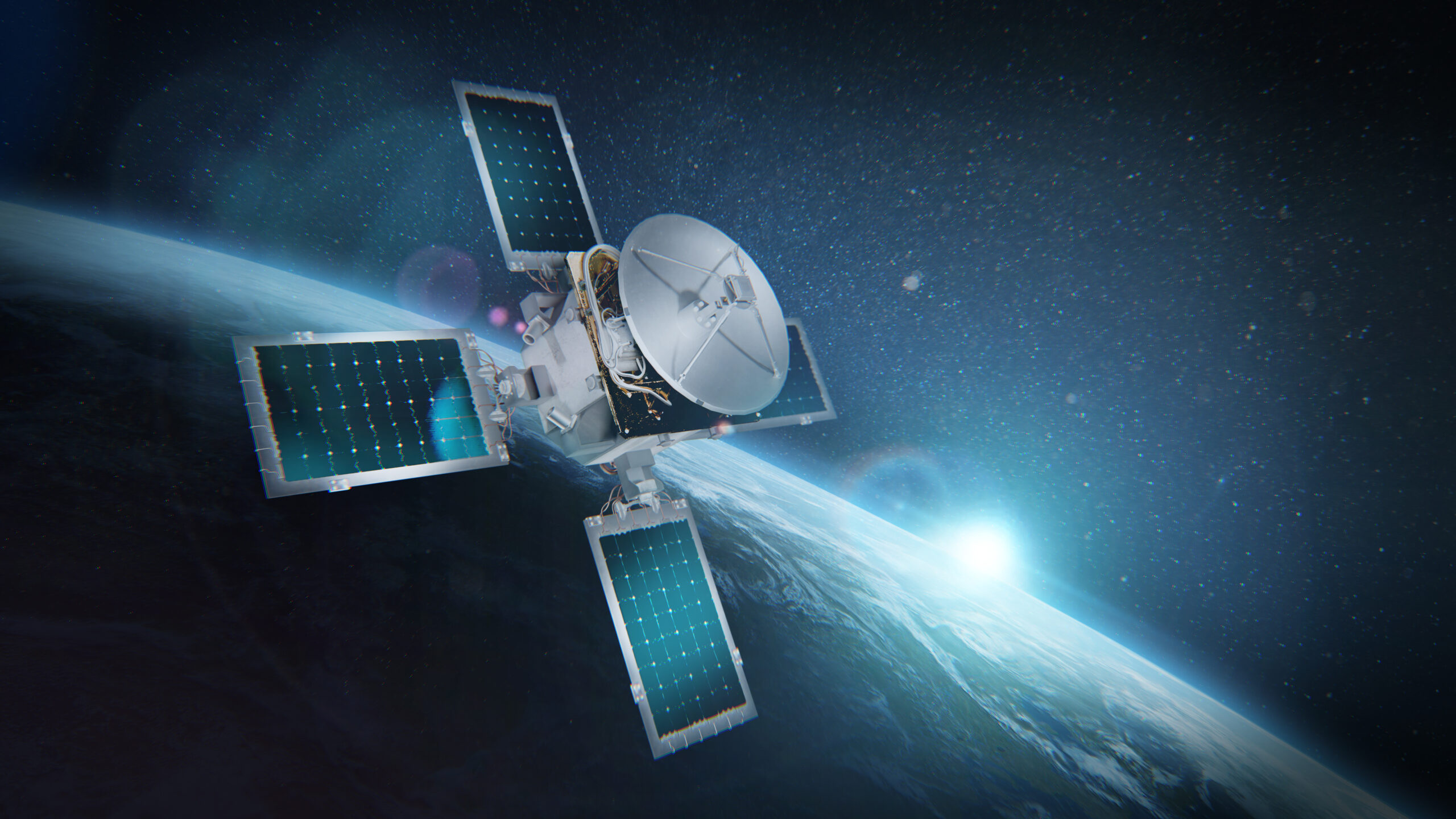
NASA has begun commissioning of the Polylingual Experimental Terminal (PExT), a wideband space communications payload designed to let spacecraft roam seamlessly between government and commercial relay networks. Hosted on York Space Systems’ Bard satellite, the technology demonstration advances NASA’s strategy to transition near-Earth communications services to industry while preserving interoperability with legacy government assets.
What the demonstration aims to prove
PExT is NASA’s first on-orbit test of a “polylingual” wideband terminal. Using software-defined radios, the payload can dynamically switch frequencies and waveforms to connect across disparate networks. In practical terms, that means a single terminal on a spacecraft could establish data links through multiple relay systems without hardware swaps or service interruptions.
- Interoperability across government and commercial relays
- Dynamic frequency and waveform agility via software-defined radio
- Automatic handovers that mimic terrestrial cellular roaming
- Operational resilience through multiple-path connectivity
During early trials, PExT will attempt on-orbit roaming between NASA’s Tracking and Data Relay Satellite (TDRS) fleet, the SES Space & Defense O3b mPOWER network, and Boeing’s High Capacity services on Viasat’s Global Xpress network.
Why this matters for near-Earth communications
For decades, many NASA missions relied on TDRS for near-Earth relay services. In late 2024, the agency signaled a shift: future missions would obtain near-Earth relay capacity primarily from commercial providers. Because legacy infrastructure was not designed for cross-network compatibility, new wideband terminals are a key enabler of that transition. PExT is intended to show how missions can maintain reliable communications while leveraging multiple providers.
- Cost and schedule flexibility: Missions can select services from multiple vendors.
- Coverage and capacity: Access to diverse constellations and orbits.
- Resilience: Redundancy across networks mitigates outages and congestion.
- Scalability: Software updates can add capabilities without hardware redesigns.
Commissioning status and timeline
Following launch on July 23, York Space Systems established first contact with the Bard spacecraft and completed bus commissioning on schedule. Over the subsequent weeks, the team verified command, telemetry, and core functions, including flight computers and navigation controls. With the host spacecraft commissioned, PExT payload commissioning is continuing through September, paving the way for roaming trials across government and commercial relays.
Who built it and how fast it moved
PExT was developed by NASA’s Space Communications and Navigation (SCaN) Program with the Johns Hopkins Applied Physics Laboratory. The payload progressed from concept through design to launch in just over two and a half years, staying within budget while integrating a multi-network architecture into a compact small-satellite payload.
- Program: NASA SCaN
- Payload developer: Johns Hopkins Applied Physics Laboratory
- Host spacecraft: York Space Systems Bard
- Focus: Wideband, software-defined, multi-network interoperability
Networks involved in early testing
- NASA TDRS near-Earth relay infrastructure
- SES Space & Defense O3b mPOWER medium Earth orbit broadband
- Boeing High Capacity services on Viasat’s Global Xpress network
What to watch next
- Initial link tests: Validate stable data transmission and reception through each participating network.
- Roaming handovers: Demonstrate autonomous or commanded transitions between networks without loss of data.
- Performance metrics: Characterize latency, throughput, link availability, and handover success rates across scenarios.
- Software updates: Assess how in-flight reconfiguration can adapt the terminal to evolving provider offerings.
If successful, PExT could inform future mission architectures across low Earth orbit and cislunar operations, supporting a service-based ecosystem where spacecraft connect through the best available relay at any moment. The demonstration may also guide interface standards for government-commercial interoperability and help mission planners evaluate trade-offs among coverage, capacity, and cost.
For more details, see NASA’s announcement: NASA’s PExT, Wideband Space Communications Demo Begins Commissioning.