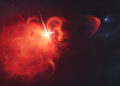
NASA’s confirmed exoplanet tally has reached 6,000, marking a new milestone in the three-decade hunt for planets beyond our solar system. The rolling count, curated by the NASA Exoplanet Science Institute (NExScI) at Caltech’s IPAC, underscores an accelerating pace of discovery and a broadening toolkit that spans space- and ground-based observatories.
Milestone and Momentum
The 6,000 mark arrives roughly 30 years after the first discovery of a planet around a Sun-like star in 1995. NASA’s archive also lists more than 8,000 candidate planets awaiting confirmation, reflecting a maturing pipeline from detection to validation. The database reached 5,000 just three years ago, highlighting faster throughput as surveys and follow-up capabilities improve.
What the Growing Census Reveals
As the catalog expands, statistical trends are sharpening. Smaller, likely rocky planets appear more common than giant worlds, and the galaxy hosts types not represented in our solar system. Discoveries include hot Jupiters skimming their stars, planets around two suns, rogue worlds without a star, worlds circling dead stellar remnants, ultra-low-density “super-puffs,” and planets with extreme atmospheric chemistry. This diversity informs models of planet formation and guides where to search for potentially habitable environments.
How Scientists Find Exoplanets
Most exoplanets are detected indirectly. Each method offers complementary strengths and often requires follow-up to rule out false positives before a candidate becomes “confirmed.” Key techniques include:
- Transit: Detects tiny dips in starlight as a planet crosses its star (Kepler/K2, TESS).
- Radial velocity: Measures stellar wobble from a planet’s gravity using precise spectroscopy.
- Direct imaging: Captures light from the planet itself; fewer than 100 have been imaged due to glare challenges.
- Microlensing: Finds planets when a foreground star-planet system magnifies a background star’s light.
- Astrometry: Tracks minute shifts in a star’s position on the sky to infer planetary companions (e.g., ESA’s Gaia).
Confirmed planets and candidates are curated by NExScI in the NASA Exoplanet Archive, with contributions from observatories and teams worldwide.
Next Phase: Roman and the Habitable Worlds Observatory
NASA’s upcoming Nancy Grace Roman Space Telescope is positioned to expand the exoplanet census significantly. Roman’s microlensing survey is expected to discover thousands of new worlds, especially at wider orbital separations that are difficult for other methods. Roman will also fly the Roman Coronagraph technology demonstration, designed to suppress starlight and directly image faint planets. At peak performance, it aims to image Jupiter-like worlds around Sun-like stars, providing a pathfinder for future missions.
Detecting Earth analogs will require deeper starlight suppression. NASA’s Habitable Worlds Observatory (HWO) mission concept targets the capability to directly image Earth-sized planets around Sun-like stars and characterize their atmospheres for biosignatures. Progress in coronagraphy and related technologies is central to reaching the contrast levels needed, as Sun-like stars can outshine Earth-like planets by factors of roughly 10 billion.
Atmospheres and the Search for Life
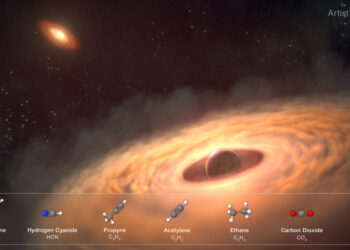
The James Webb Space Telescope has already analyzed the chemistry of more than 100 exoplanet atmospheres, probing clouds, temperature structures, and molecules. While many observed worlds are larger and hotter than Earth, the techniques, models, and instruments being refined today will inform studies of smaller, temperate planets in the coming decade.
Programs, Partnerships, and Pipeline
NASA’s Exoplanet Exploration Program (ExEP), based at the agency’s Jet Propulsion Laboratory, coordinates strategy and technology development across missions and the community. NExScI serves as the science operations and analysis center, hosting the archive and toolsets that help transform candidates into confirmed planets. The global effort draws on assets from NASA, ESA, CSA, NSF-supported facilities, and numerous international partners.
With 6,000 confirmed planets and thousands more on deck, the field is poised to move from counting worlds to characterizing them—an essential step toward assessing habitability at scale.
Source: NASA