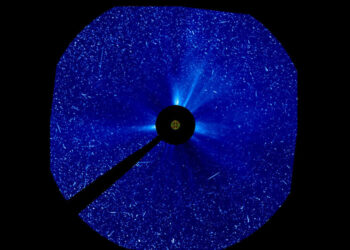
An artificial intelligence effort linking NASA’s Frontier Development Lab (FDL) and KX Systems has demonstrated day-ahead forecasting of space weather conditions that can disrupt satellites, navigation signals, and communications. By applying time-series analytics and machine learning to multi-source solar and geospace data, the team showed it could flag elevated risk windows up to 24 hours in advance, providing operators with actionable lead time to protect assets. The work is detailed by NASA in its overview of the collaboration: NASA Partnerships Allow Artificial Intelligence to Predict Solar Events.
Why it matters
Solar storms that paint the sky with auroras can also trigger ionospheric disturbances, geomagnetic activity, and radiation spikes that degrade GPS/GNSS accuracy, interfere with satellite communications, and increase anomaly rates across spacecraft fleets. As satellite constellations scale and services become more time-critical, reliable early warnings can reduce service interruptions, protect hardware, and optimize ground network utilization.
What the partnership built
Between 2017 and 2019, FDL researchers and NASA scientists worked with KX Systems to adapt the company’s kdb+ analytics stack—widely used in finance for ultra-fast time-series processing—to heliophysics and satellite operations use cases.
- Data fusion: Ingests time-aligned observations of solar activity, ionospheric behavior, and Earth’s magnetic field.
- Feature engineering: Extracts indicators of geospace stress relevant to signal scintillation and geomagnetic disturbances.
- Machine learning: Trains classifiers and forecasters to identify and predict disruptive events affecting satellite links and positioning services.
How the AI model works
- Aggregate: Pulls heterogeneous datasets into a common time base using kdb+ for high-throughput ingestion.
- Learn: Applies ML algorithms tuned for rare-event prediction to capture precursors of satellite signal loss and ionospheric perturbations.
- Forecast: Produces probabilistic alerts for day-ahead risk windows, enabling pre-emptive mitigation.
Results and validation
According to NASA’s summary of the collaboration, the team demonstrated predictive skill for disruptive events with lead times reaching 24 hours. This performance point, achieved in research experiments, suggests that day-ahead alerting can be feasible when models are trained on sufficiently rich solar, ionospheric, and geomagnetic data.
Implications for operators
The ability to anticipate space-weather-driven disturbances is directly relevant to satellite owners, ground-segment providers, and navigation-dependent services. Potential actions include:
- Rescheduling sensitive operations or high-rate downlinks during elevated risk windows.
- Adjusting power, antenna pointing, or modulation schemes to maintain link margin.
- Replanning GNSS-dependent activities or applying enhanced integrity constraints.
- Coordinating ground station resources to minimize contention and outages.
Technology transfer and industry impact
KX Systems, a division of FD Technologies plc, reports that methods refined with NASA informed aspects of its commercial analytics, underscoring how advances in predictive modeling for satellite operations can translate to other time-critical domains such as industrial predictive maintenance. For the space sector, the work highlights a practical route to operationalize AI-driven space weather intelligence using mature, low-latency data infrastructure.
What’s next
Expanding training data with upcoming heliophysics missions, integrating with real-time pipelines from agencies such as NOAA’s Space Weather Prediction Center, and instituting continuous backtesting against operational metrics are logical next steps. Standardized alert formats, confidence measures, and operator playbooks will help ensure that day-ahead forecasts convert into measurable resilience across fleets and services.
Source: NASA Partnerships Allow Artificial Intelligence to Predict Solar Events