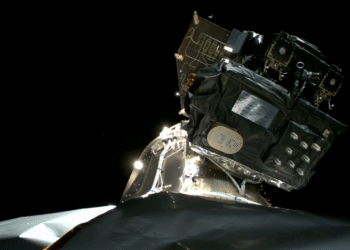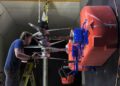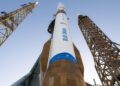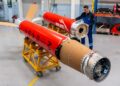
NASA has reestablished communications with the TRACERS mission’s Space Vehicle 1 (SV1) and initiated a plan to recover the spacecraft and begin science operations, according to a NASA blog update published Sept. 11, 2025. The agency said the operations team is assessing spacecraft status and preparing the steps required to transition from recovery to data collection. The update focused on SV1; no additional details were provided about the status of the companion spacecraft.
Mission overview
TRACERS, short for Tandem Reconnection and Cusp Electrodynamics Reconnaissance Satellites, consists of two small spacecraft designed to study how energy and particles from the Sun enter Earth’s magnetic environment. Operating in coordinated orbits, the pair targets Earth’s polar cusps—regions where the planet’s magnetic field lines funnel solar wind toward the upper atmosphere—to investigate the fundamentals of magnetic reconnection, a key driver of space weather.
The mission is part of NASA’s Heliophysics portfolio and is intended to improve models that predict disturbances capable of affecting satellites, navigation signals, and power systems on the ground.
Current status
With contact restored to SV1, controllers are working through a structured recovery sequence to verify the health of the spacecraft and prepare for commissioning and science operations. NASA indicated that further updates will be posted as new information becomes available.
What recovery typically involves
- Telemetry review: Verify power levels, spacecraft configuration, onboard temperatures, and radiation counters.
- Attitude and pointing: Confirm star tracker and gyro performance and ensure stable pointing for communications and science.
- Communications: Characterize link quality, refine ground pass scheduling, and validate command uplinks and data downlinks.
- Software and fault protection: Check autonomy settings, apply patches if needed, and re-enable time-tagged operations.
- Instrument checkout: Sequentially power and calibrate fields and particle sensors before resuming coordinated measurements.
Why it matters
Reliable operations of at least one TRACERS spacecraft would enable high-value measurements in the cusp, where reconnection signatures can be frequent and accessible. Data from TRACERS are expected to sharpen understanding of how solar wind energy couples into the magnetosphere, improving space weather forecasts that inform satellite operators, crewed missions, and high-latitude aviation.
What’s next
- Complete spacecraft health assessments and stabilize routine communications with SV1.
- Begin instrument functional tests and calibrations.
- Transition into commissioning, followed by initial science data collection over the polar cusps.
- Publish additional status notes on the TRACERS blog as recovery progresses.
NASA has not yet provided a timeline for completing recovery activities. The agency said subsequent updates on SV1’s readiness and any information regarding the second spacecraft will be posted to the official TRACERS channel. For the latest status, see the NASA blog update.