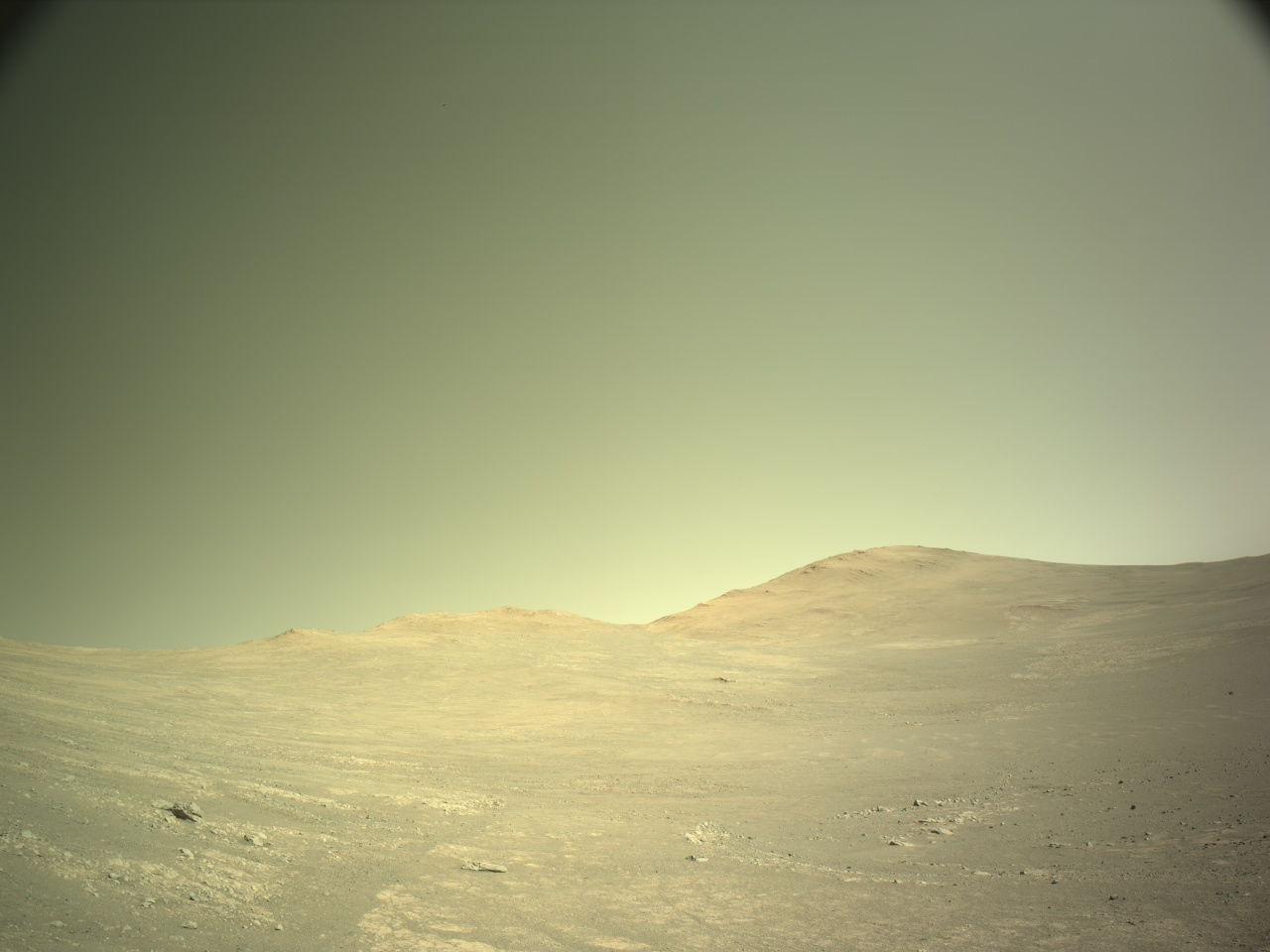
NASA’s Mars Perseverance rover has begun a systematic survey of suspected megabreccia inside Jezero Crater, launching a focused campaign to probe some of the oldest accessible rocks on the Red Planet. After driving northwest of Soroya ridge, the rover entered a boulder-rich workspace known as “Scotiafjellet,” where mission scientists aim to test whether the fractured blocks record cataclysmic impact events tied to the wider Isidis Basin.
Why megabreccia matters
Megabreccia is a chaotic mixture of large, angular rock fragments created by high-energy processes such as ancient asteroid impacts. In Jezero, some clasts may trace back to the gargantuan Isidis impact, which carved a basin about 1,930 kilometers wide just east of the crater. If confirmed, these rocks could contain pieces of deep crustal material, offering rare access to Mars’ interior and a window into the planet’s earliest geologic history.
These outcrops likely predate the deltaic and volcanic units Perseverance studied earlier in the mission, making them prime targets for assessing when and how water interacted with the crust—a central question for understanding ancient habitability.
What the team aims to learn
- Determine whether the boulders are impact breccias, impact-melt-rich rocks, or transported fragments.
- Characterize clast and matrix compositions to identify possible deep-crust signatures.
- Search for evidence of water-driven alteration within or between rock fragments.
- Establish geologic links between Jezero and the broader Isidis Basin region.
- Prioritize targets for potential future sample collection and caching.
How Perseverance will investigate
The campaign is expected to combine high-resolution imaging for texture and context with spectral measurements to assess mineralogy and chemistry. Where warranted, the team can add close-up contact science and abrasion to access fresh rock surfaces, building a stepwise dataset that ties local observations to regional geologic processes. This approach is designed to isolate impact signatures from later overprints such as volcanic deposits or aqueous alteration.
Recent activity and context
Perseverance imaged the Scotiafjellet workspace on Aug. 31, 2025 (mission Sol 1610) using its Left Navigation Camera at local mean solar time 14:52:20. The rover’s move into this jumbled terrain marks the start of a planned, methodical traverse through targets that could refine the early timeline of Mars and clarify the extent of ancient water in and around Jezero.
Bigger-picture implications
Linking Jezero’s megabreccia to the Isidis Basin could anchor a regional framework for early Mars, bridging local stratigraphy with planet-scale impact history. Identifying deep-crust fragments and their alteration state would sharpen models of heat flow, fluid circulation, and habitability during a critical chapter in Martian evolution.
For more details, see NASA’s mission update: Perseverance Meets the Megabreccia.