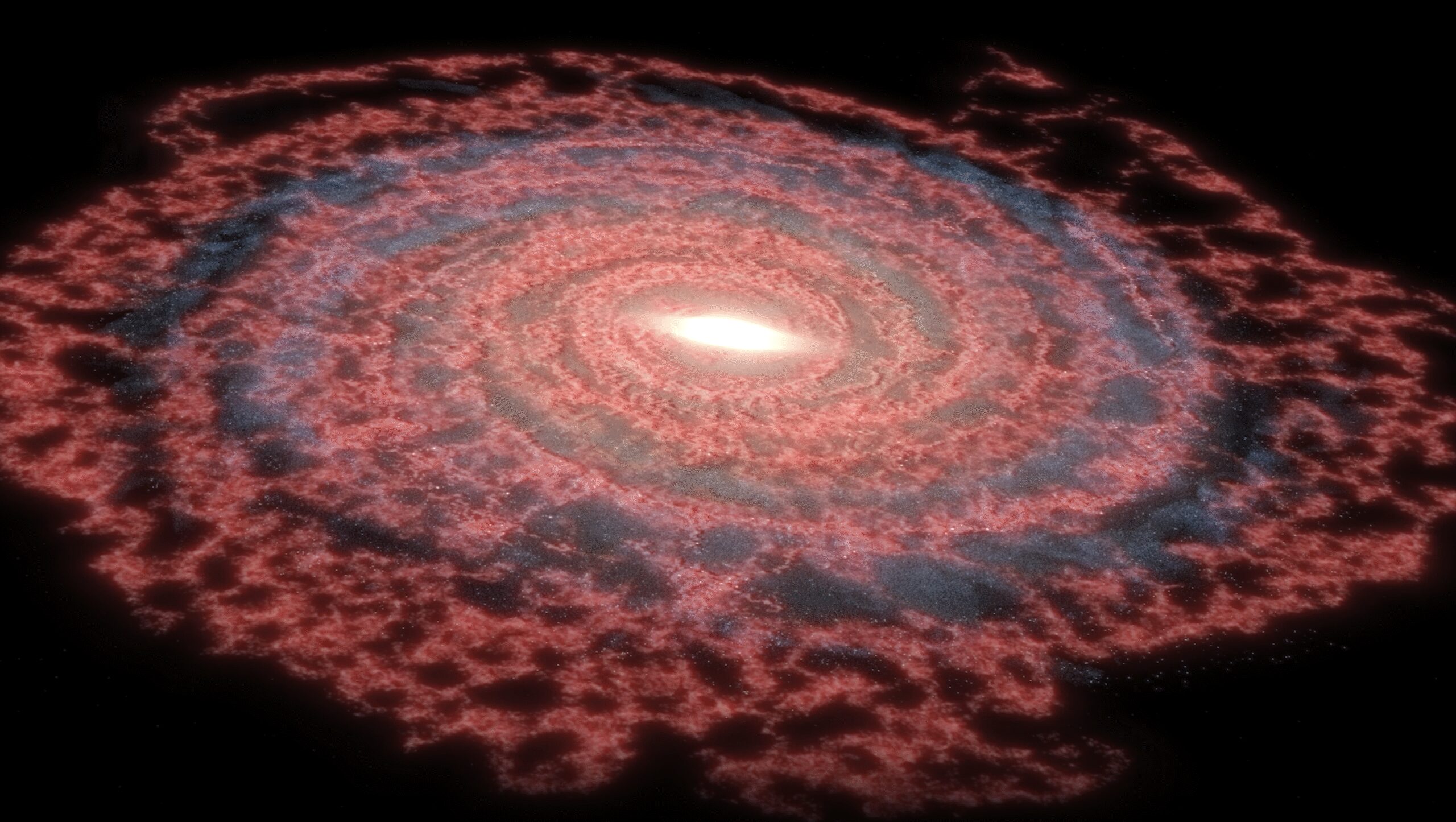
NASA’s Nancy Grace Roman Space Telescope is set to transform views of our home galaxy with a sweeping Galactic Plane Survey that will map roughly 20 billion stars and build the most detailed 3D atlas of interstellar dust to date. By observing in infrared light, the mission aims to see through the Milky Way’s dusty midplane, sharpen models of galactic structure, and advance understanding of where and how stars and planets form. After launch and processing, Roman’s data will be publicly available through open archives.
What the Galactic Plane Survey will deliver
Roman will scan the full breadth of the Milky Way’s disk, including some of its most obscured regions, capturing billions of stars whose colors and brightness encode how much dust lies along each line of sight. Combining these measurements across the sky will enable high-resolution, three-dimensional dust maps and a refined census of stellar populations from the solar neighborhood to the Galaxy’s far side.
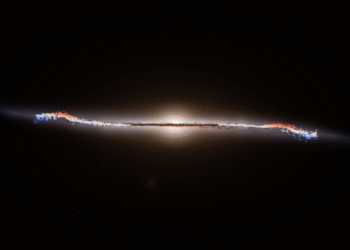
This scale represents a step change for Galactic science, expanding by several fold the number of stars mapped with sufficient precision to correct for dust extinction and reveal the Milky Way’s geometry, spiral arms, and central bar with new fidelity.
Why infrared matters
Interstellar dust scatters and absorbs shorter-wavelength light, dimming and reddening stars. Roman’s wide-field infrared imaging and filters are designed to mitigate this effect, allowing starlight to penetrate dusty regions. By comparing how stellar colors change across wavelengths, researchers can disentangle distance, intrinsic stellar properties, and dust attenuation to retrieve both stellar positions and dust characteristics, including grain size and composition.
Science targets across the Galaxy
- Spiral structure and dynamics: Merging dust maps with velocity measurements will test models for how spiral arms form and persist, and whether these structures trigger or simply collect star formation.
- Star and planet formation: Linking the 3D interstellar medium to young stellar clusters will clarify how molecular clouds collapse, evolve, and seed planetary systems.
- Galactic ecosystem and recycling: Mapping dust production and destruction across environments will illuminate the life cycle of grains that feed future generations of stars and planets.
- Milky Way context: A data-driven external view of our Galaxy will improve comparisons to other spirals and inform broader models of galaxy evolution.
Roman’s survey will also complement earlier catalogs of star-forming regions from missions such as Spitzer, extending them deeper into dust-obscured territory and across a much larger area.
Open data and community access
Following calibration and processing, Roman’s survey products—including imaging, catalogs, and value-added dust maps—will be released to the public via the Roman Research Nexus and the Barbara A. Mikulski Archive for Space Telescopes (MAST). These open-access releases are intended to support long-term community analyses, cross-mission synergies, and education and outreach.
Schedule and partners
Roman is slated to launch no later than May 2027, with teams working toward a potential earlier launch as soon as fall 2026. The mission is managed at NASA’s Goddard Space Flight Center in collaboration with NASA’s Jet Propulsion Laboratory, Caltech/IPAC, and the Space Telescope Science Institute. Primary industry partners include BAE Systems Inc., L3Harris Technologies, and Teledyne Scientific & Imaging.
Why it matters
By uniting an unprecedented star map with a Galaxy-wide 3D dust atlas, Roman will provide a foundation for precision studies of the Milky Way’s structure, origins, and ongoing evolution. The resulting datasets are expected to underpin research for years after launch, offering a shared resource for the global astronomy community.
Source: NASA – How NASA’s Roman Mission Will Unveil Our Home Galaxy Using Cosmic Dust