The UK National Space Operations Centre (NSpOC) reported a quieter month in orbit for August 2025, with both uncontrolled re-entry and collision alerts falling below the 12-month rolling average. According to the latest monthly snapshot from the UK Space Agency and UK Space Command, delivered in partnership with the Met Office, re-entries dropped by a 35% decrease from July and collision risks to UK-licensed satellites eased by 6% month over month. All warning and protection services operated throughout the period. Full source: GOV.UK report.
Re-entry activity
NSpOC tracked 34 objects re-entering Earth’s atmosphere in August, down from 52 in July. Of these, 32 were satellites and two were rocket bodies. August marked the year’s low for re-entries, compared with a high of 129 in February across the past 12 months. The decline suggests a temporary easing in disposal and decay events, although re-entry totals can fluctuate month to month due to orbital lifetimes, solar activity, and operational deorbiting schedules.
In‑space collision avoidance
Potential collision interactions affecting UK-licensed satellites totaled 971 in August, a 6% decrease from July’s 1,038 and the lowest monthly tally in the last year. The reduction reflects fewer close approaches between UK-licensed spacecraft and other satellites or debris over the previous 30 days. While positive, the sustained density of objects in low Earth orbit means conjunction risk management remains a routine operational requirement for satellite operators.
In-orbit population
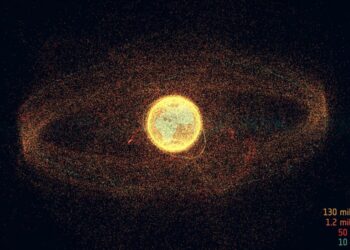
The cataloged in-orbit population continued to grow. The US Satellite Catalogue reached 31,245 objects at the end of August, a net addition of 151 during the month. Over the past year, the catalog expanded from 29,706 (September) to 31,245 (August), underscoring ongoing launches and fragmentation remnants that add to tracking and collision-avoidance complexity.
Fragmentation and space weather
NSpOC reported no new fragmentation events in August. Space weather activity was slightly elevated versus a quiet July, an environmental factor that can influence atmospheric drag and orbital decay rates. Operators typically monitor these conditions closely due to their potential impact on conjunction screening and maneuver planning.
What NSpOC does
NSpOC brings together UK civil and military space domain awareness capabilities to enable operations and protect UK interests in space and on Earth from space-related threats, risks, and hazards. The center provides warning and protection services and coordinates with partners to track, assess, and communicate on-orbit risks to the UK space sector.
Key figures at a glance (August 2025)
- Re-entries: 34 total (−35% m/m); 32 satellites, 2 rocket bodies
- Collision-risk interactions (UK-licensed): 971 (−6% m/m); lowest in 12 months
- US Satellite Catalogue size: 31,245 (+151 m/m)
- Fragmentation events: none
- Space weather: slightly elevated vs July
Counts of Resident Space Objects may be revised as tracking methods are refined. Figures reflect the most current available data and may differ slightly from previously published months. Additional details are available in the official NSpOC monthly report.