September 2025 brought a measurable uptick in space-traffic activity for the United Kingdom’s National Space Operations Centre (NSpOC), which is led by the UK Space Agency and UK Space Command in partnership with the Met Office. Conjunction alerts affecting UK‑licensed satellites rose by 58% compared with August to 1,537 over the 30‑day period. Monitored re‑entries increased 15% month on month to 39 objects. Space weather was slightly elevated, with geomagnetic storms recorded throughout the month. NSpOC reported overall risk remained below the 12‑month rolling average, and all warning and protection services operated normally.
Key numbers for September 2025
- Conjunction alerts involving UK‑licensed spacecraft: 1,537 (+58% vs August)
- Re‑entries monitored: 39 (+15% vs August), comprising 35 satellites and 4 rocket bodies
- US Satellite Catalogue total: 31,516 Resident Space Objects (RSOs), a net monthly increase of 159
- Fragmentation events: No new fragmentation incidents
- Space weather: Slightly elevated; multiple geomagnetic storms across the month
Re‑entry activity
NSpOC tracked 39 re‑entries in September (35 satellites, 4 rocket bodies), up 15% from August’s 34. Over the past year, monthly re‑entries ranged from 34 (August) to 129 (February), reflecting a variable cadence driven by orbital decay, space‑weather conditions, and spacecraft end‑of‑life timelines.
In‑space collision avoidance
Conjunction activity affecting UK‑licensed satellites increased to 1,537 in September from 971 in August, a 58% month‑on‑month rise. The jump was attributed to more interactions between UK‑licensed objects and other spacecraft or debris over the prior 30 days. Despite the increase, reported risk levels remained below the 12‑month rolling average. In the past year, monthly alerts peaked at 3,181 (last October) and trended lower through mid‑2025 before September’s rebound.
In‑orbit population
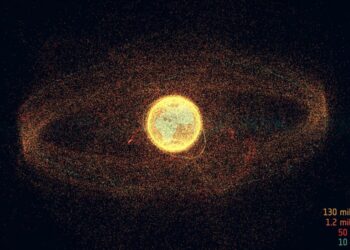
The in‑orbit catalogue expanded by a net 159 objects in September, bringing the US Satellite Catalogue to 31,516 RSOs. NSpOC notes that catalogue figures can be refined over time as tracking methods improve, and totals may be subject to small adjustments.
Space weather and operations
Space‑weather activity was slightly elevated, with geomagnetic storms recorded throughout September. NSpOC confirmed that all warning and protection services functioned as intended during the period, supporting civil‑military space domain awareness and operational decision‑making.
Why it matters
September’s combination of higher conjunction alerts, increased re‑entries, and elevated geomagnetic activity underscores the importance of responsive space situational awareness and disciplined collision‑avoidance processes. For operators, the data signal a transient rise in interaction rates amid a steadily growing on‑orbit population, reinforcing the need for robust tracking, timely maneuver planning, and continued coordination across the UK’s civil‑military space enterprise.
Source: GOV.UK – How we protected the UK and space in September 2025